
Roofing isn’t like other home services. Nobody casually browses for a new roof. They show up in crisis when a storm hits or a ceiling stains, collect one or two quotes, and pick the most trustworthy roofer online.
You won’t succeed with generic small-business advice. Your roofer marketing system should already be in motion before the storm rolls in. It’s also why two companies in the same market, at the same prices, land in different places: one clears $5M, the other stalls under $100K. The difference usually isn’t craftsmanship. It’s how visible and credible they are online after a crisis.
In 2023, our client Built to Last Roofing had no SEO, no web presence, and no digital lead flow. After we rebuilt their system, organic leads grew 633% in 14 months. Below are the 10 channels that do it, the math behind them, and what to fix first.
Why Roofers Need Digital Marketing in 2026
Business is great after a storm and unpredictable the rest of the time. You do quality work, referrals come, but the phone rings on the weather’s schedule, not yours. If that’s you, you have a visibility problem.
Most homeowners with a roof issue go straight to Google. They search “roof repair near me,” scan the Map Pack, read reviews, glance at a site, and decide, all before they contact you. Your digital presence does the talking.
Two things make 2026 harder. Google Ads now average around $124 per lead for roofers, and AI Overviews appear on roughly half of all searches, so a growing share of clicks never reach a normal blue link. The roofers getting clients consistently aren’t better roofers. They’re simply present everywhere a homeowner checks before calling.
Roofers Have Massively Grown Their Revenue in 12 Months
We constantly see residential roofers doing $700K–$900K a year, with 85% of business coming from referrals and storm work.
After building out local SEO, Google Ads, and a conversion-focused website, inbound leads typically jump by at least triple, and revenue follows.
That’s what a full system looks like when it runs properly. But SEO, AI search, and PPC alone are a 40+ hour-a-week job. Owners who try to run it do it at half-strength. Hand it to a pro team, and you could hit your $3M–$5M revenue targets.
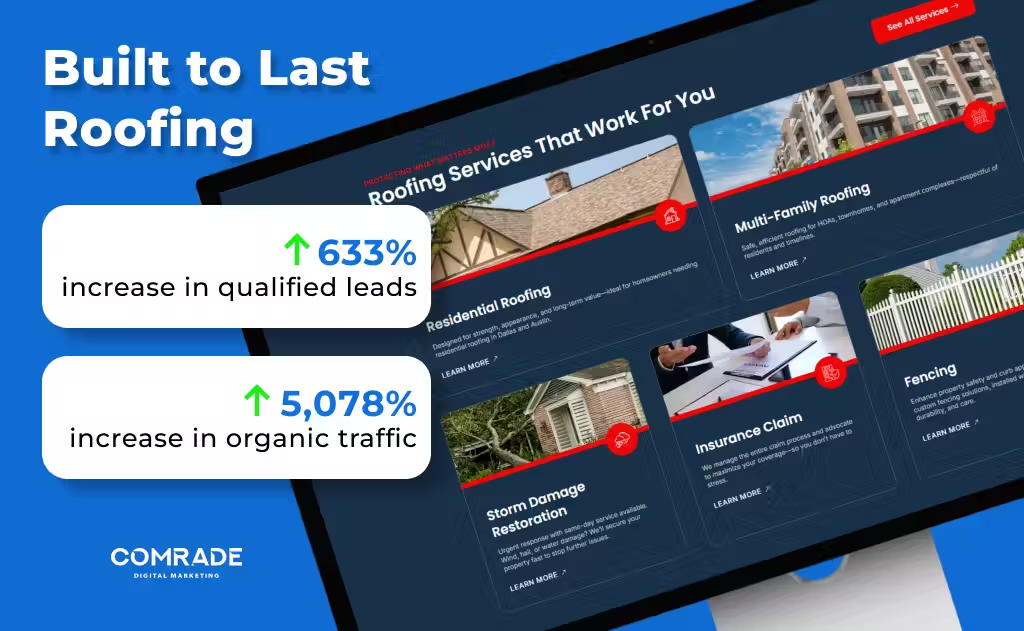
Get 750% More Leads in 6 Months With Comrade's Proven Digital Marketing Services for Roofers.
Start With the Revenue Math, Not the Leads
“I need more leads” is a bad starting point. Pick a revenue target and work backward:
| Step | The Math | The Number |
|---|---|---|
| Revenue target | $1,000,000 ÷ $12,000 avg job | 83 jobs needed |
| Close rate | 83 jobs ÷ 25% close rate | 332 estimates needed |
| Estimate conversion | 332 estimates ÷ 50% inquiry-to-estimate rate | ~660 inquiries needed |
| Monthly target | 660 ÷ 12 months | 55 inquiries per month |
Now the question stops being “rank #1” and becomes concrete: which channels reliably deliver 55 qualified inquiries in my area every month, at a cost that leaves margin? Plug in your own job size and close rate before reading on, because it changes what you prioritize.
The 10 Channels: How to Market a Roofing Company
By the time a homeowner calls, the decision is mostly made. They’ve already checked your Google profile, reviews, website, maybe asked ChatGPT. Miss two or three of those, and you’re off the shortlist. Here’s the full system.
1. Build a Roofing Website That Converts in 10 Seconds
Every other channel sends traffic here. Homeowners judge your site in about 50 milliseconds, on a phone, in the yard, and nearly 60% abandon a site that takes more than 3 seconds to load.
Non-negotiables: mobile load under 3 seconds, a tappable phone number in the top corner, real job photos (not AI or stock), live reviews on the page, and a 3-field lead form with name, phone, and ZIP. Fixing these alone can lift conversions by up to 200% on the same traffic.
| Website Element | Why It Matters |
|---|---|
| Mobile load speed under 3 seconds | 64% of people search on mobile; a slow site loses them |
| Tappable phone number in the top corner | Roof emergencies don’t wait; if calling requires hunting, they’ll call someone else |
| Real job photos, real crew | AI images signal inauthenticity; actual before-and-after shots are immediate trust boosters |
| Live reviews visible on the page | Customer testimonials on the page itself remove doubt at the moment of decision |
| Service pages with pricing signals | Homeowners self-qualify when they can see the scope and rough costs |
| Short lead form, 3 fields max | Name, phone, zip code. Every additional field cuts the conversion rate |
One easy win most roofers skip: embed a 30-second phone clip of a finished job. It’s the fastest trust signal you can add. This is the foundation for digital marketing for roofing contractors, so build it first.
Need ideas for your roofing website? Our article on the best roofing websites will give you plenty of inspiration.
2. Rank Locally With Roofing SEO
SEO keeps working whether you’re on a job or asleep. 97% of consumers go online to find a local business, and the roofers who get their attention rank for what homeowners actually type: “fix leaky roof fast,” not “roofing contractor.”
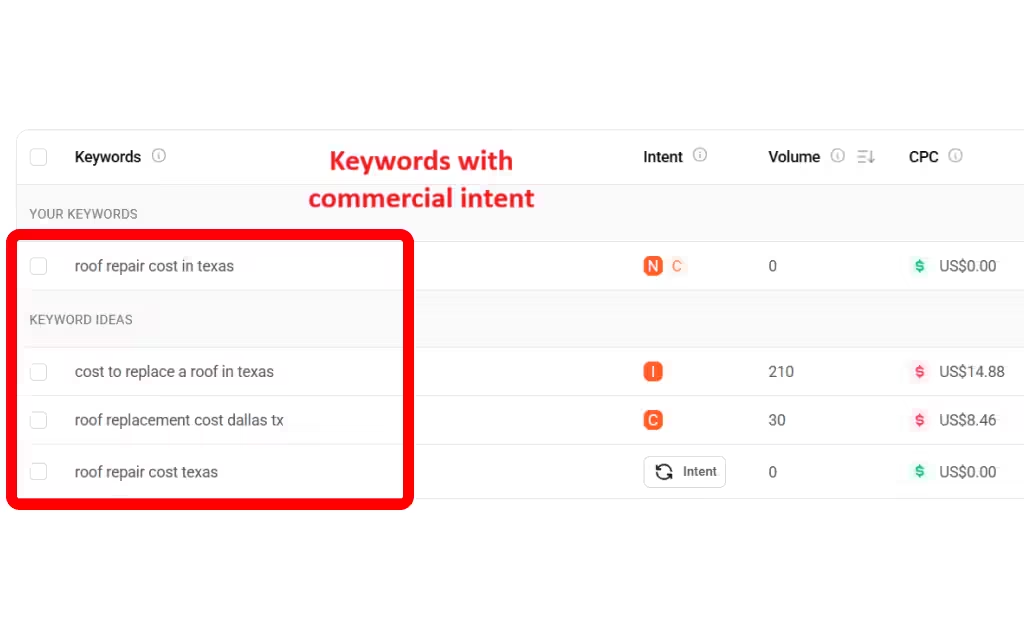
Three content types earn rankings: dedicated service pages (repair, replacement, inspection, storm, tarping), city and neighborhood pages that name the area and feature local reviews, and FAQ content answering real cost and timing questions.
One nuance worth catching: searches around contractors skew B2B, while searches around companies skew homeowner, so if you serve both, write for both.
SEO takes 3 to 6 months, then becomes your lowest cost-per-lead channel. Built to Last went from zero to 5,078% more search traffic in 14 months this way.
Want to rank on page #1? Check out our complete guide to SEO for roofers.
3. Claim Your Google Business Profile
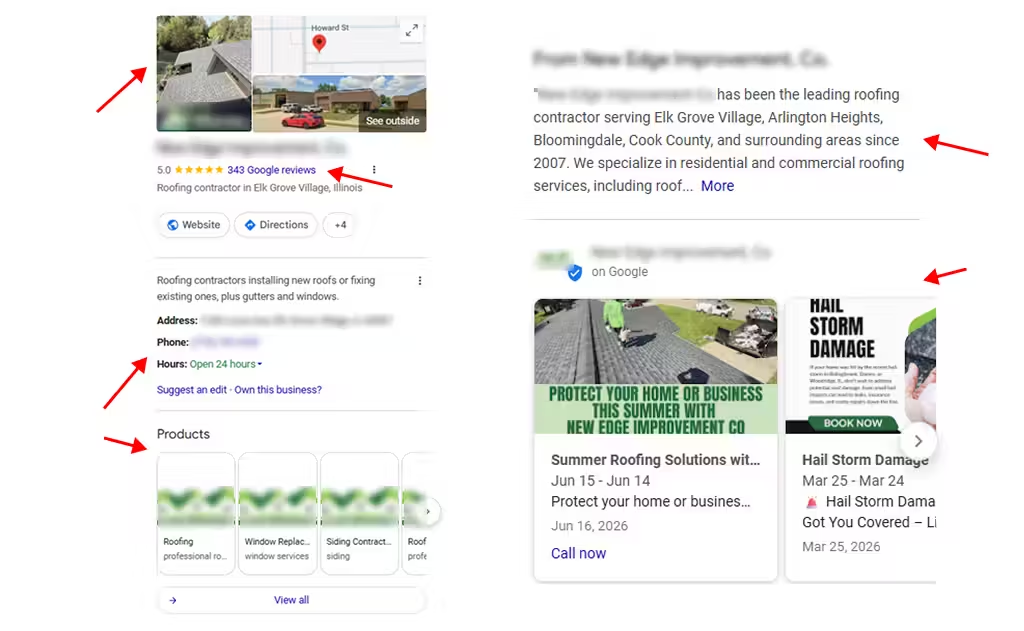
Your GBP is the highest-leverage free channel in roofer marketing. Roofers who show up in the Map Pack get 70% more clicks to visit and call, and that three-spot box captures a large share of local clicks.
Four moves, run together: rebuild the profile with a keyword-optimized description and full service list, upload fresh jobsite photos weekly, systematize a post-job review ask, and build service-area pages for nearby neighborhoods.
Do all four and invisible roofers typically claim a top-three spot within 6 to 9 months.
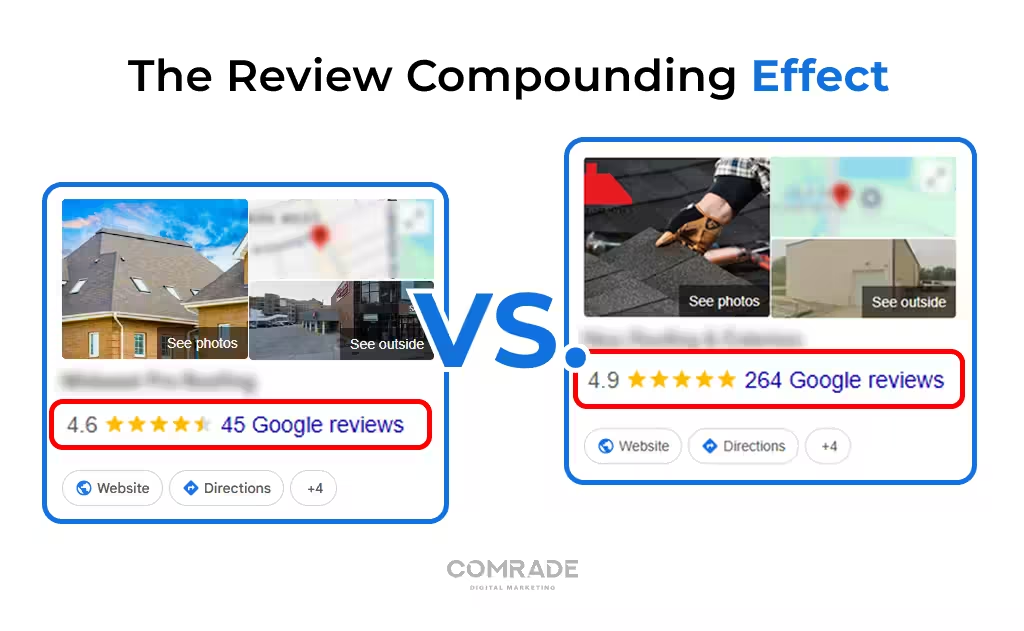
On reviews: in competitive markets, the top three average 80 to 120. Collect 2 to 5 a week, because a steady drip signals an active business, while ten in one day looks bought.
On the lookout for a great SEO agency? Check out our complete guide on the Best Roofing SEO Companies in 2026.
4. Drive Roofing Leads With PPC and Local Service Ads
SEO takes months, but paid ads bring leads within a week, so run them together. PPC charges per click; Local Services Ads (LSAs) charge per qualified lead, which is usually the better roofing buy.
The math: if you close 1 in 4 estimates at a $12,000 average job, every four LSA leads produces one job at a total lead cost of $300 to $350. Run 20 LSA leads a month and that’s five booked jobs, about $60,000, for roughly $1,500 to $1,750 in spend.
Point every campaign at a dedicated landing page rather than your homepage, lock the budget to your real service area, and track booked jobs, over simply form fills.
Struggling to grow your client base? Roofing company ads might be your missing piece!
5. Win Roofing AI Search (ChatGPT, Gemini, AI Overviews)
Homeowners now ask AI “who’s the best-reviewed roofer in Austin?” and Google’s AI Overviews answer roughly 50% of all searches with two or three company names. You can’t buy your way in, because there’s no ad slot.
Our testing shows AI visibility is largely downstream of your existing SEO: the roofers surfacing in ChatGPT already rank on pages 1 to 3 of Google.
Google themselves confirm it: “Our AI generative features are rooted in our core Search ranking and quality systems.”
The other piece is AI-specific: keep your name, address, and phone identical everywhere, build pages around extractable questions like “how much does a roof replacement cost in [city],” and stay listed on GBP, Yelp, BBB, and Angi.
Only about 9% of businesses have any AI strategy, so move now and lock competitors out.
6. Build Roofing Reviews and Reputation
When someone spends $20,000 on a roof, reviews reduce the fear of a mistake faster than anything you can say, and 88% of consumers trust online reviews as much as personal recommendations.
The curve is predictable. A roofer arrives with six reviews at 4.1 and a high cost per booked job. Six months of a systematic ask later, they’re at 130 to 150 reviews and 4.7 to 4.8, and the same traffic converts at nearly double the rate. Same budget, same audience, but the credibility changed.
Ask by text (opened faster than email), place reviews on your homepage and quote pages where decisions happen, and reply to every review in a human voice, including the negative ones.
7. Use Roofer Social Media Marketing to Build Trust
Be straight with yourself: social won’t deliver roofing leads consistently. Its job is making the homeowner who already found you think “these people are real and good.”
Post four things: before-and-after transformations (your single most compelling content), storm-damage updates immediately after weather events, your real crew on real jobs, and short answers to common questions.
For most residential roofers, Facebook ads for roofers are ideal, because repeat replacement buyers skew 56 to 62, and that’s who’s still there daily. Pick two platforms, not six.
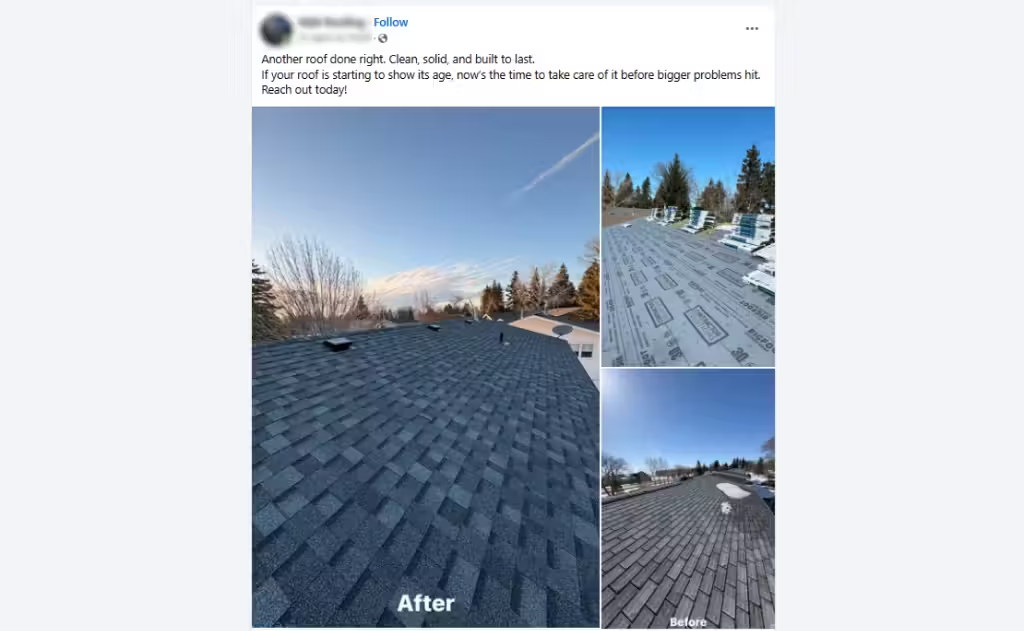
And if you do one video thing, film a 15-second final walkthrough with the homeowner at every job, the highest-converting piece of roofer video marketing there is.
Still relying on word of mouth? It’s time for social media marketing for roofers.
8. List Your Roofing Company on Home-Services Platforms
81% of consumers research online before making a purchase decision, and directories are an early stop. Complete, photo-rich profiles on Angi, HomeAdvisor, Yelp, BBB, and Houzz convert comparison shoppers and feed the citation consistency AI assistants rely on.
The underrated one is Nextdoor, where neighbors literally ask “who did your roof?” and tag a company by name. A few recommendations there can outperform a month of ads.
Here’s the full playbook we suggest:
| Platform | Why It Matters |
|---|---|
| Nextdoor | Hyper-local trust; neighbor recommendations carry enormous weight |
| Angi / HomeAdvisor | High homeowner traffic; often the first comparison point |
| Yelp / BBB | Credibility signals; heavily weighted by AI search engines |
| Houzz | Strong for higher-end replacement and remodeling-adjacent work |
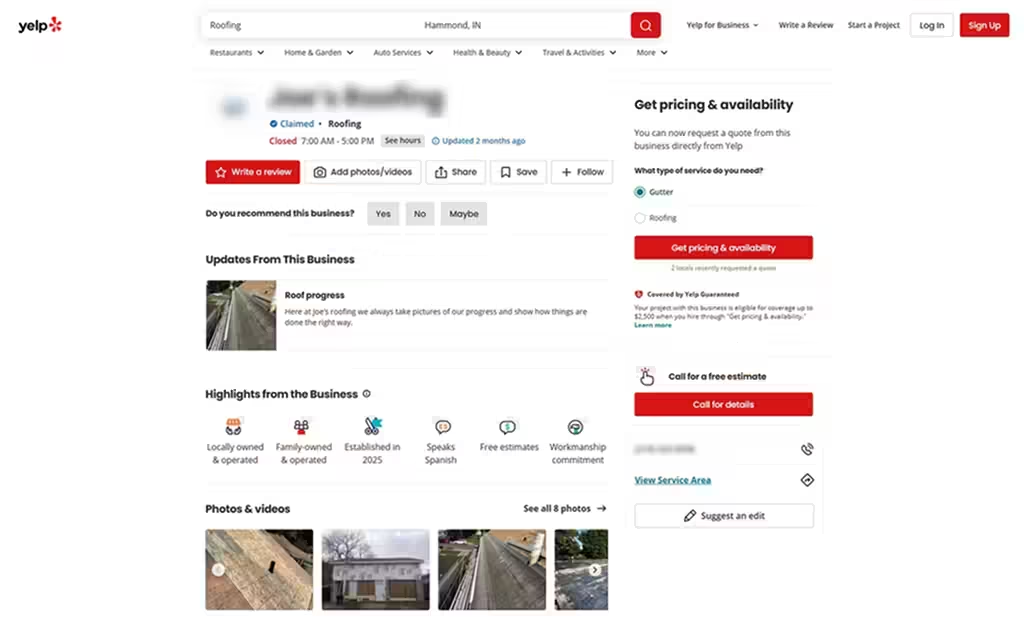
One warning: “shared leads” from Angi and HomeAdvisor ($15 to $100+ each) get sold to 4 to 10 contractors at once, so you’re racing on price. Be present, but remember your own leads will always be higher margin.
9. Automate Roofing Email and SMS Follow-Ups
A roofer won’t buy again for 20 years, but they’ll refer, review, and respond to seasonal offers. These warm contacts convert at 5 to 15% versus 1 to 3% cold, and email returns an average of $42 for every $1 spent.
Four automations do the work: a 60-second confirmation text on every new lead, a review-ask text within 24 hours of finishing, seasonal reminders to past customers, and a built-in referral ask (referrals convert about 30% higher).
One high-leverage offer to feature is financing. 73% of homeowners would consider it, but only 38% of roofers offer it, and “$189/month” closes jobs that “$24,000” loses.
Here’s how to map offers to the calendar in your roofer marketing:
| Season | Offer That Works |
|---|---|
| Spring | Free inspection after winter damage |
| Summer | Financing for full replacements — “as low as $189/month” |
| Fall | Winter-prep maintenance special |
| Storm season | 24-hour emergency tarping |
| Slow months | Free gutter cleaning with any repair |
| End of month | “Only 5 install slots remaining” |
| Year-round | Free insurance claim inspection |
Not using email? You’re missing prospects. Read our article on roofing email marketing to get started.
10. Respond to Roofing Leads in Five Minutes
A lead contacted within 5 minutes is 21× more likely to qualify than one reached at 30 minutes. The industry average is 47 hours.
When we pull new clients’ data, 70% of the time the ads work fine, but response time sits at 15 to 20 hours, meaning half their inquiries go cold before anyone calls.
Three cheap fixes: a 60-second auto-text on every form fill, a live answering service for after-hours calls, and a hard rule that weekend leads are contacted by 9 am Monday.
Just the auto-text plus after-hours answering routinely moves contact rates from the low 40s to near 80%. If you fix one thing this week, fix this.
Adapt the System for Commercial Roofing Marketing
Those ten channels are the core system, and they work just as hard for commercial roofing business, but the way you run a few of them changes. That’s because the buyer changes.
Commercial isn’t residential with bigger numbers. Instead of a homeowner deciding in an afternoon, you’re selling to property managers and building owners who weigh risk, disruption, and long-term cost over a much longer cycle. Your marketing has to feed that slower, more deliberate decision.
Three shifts do most of the work. Run LinkedIn campaigns alongside high-intent Google search (“TPO roof repair cost,” “commercial roof maintenance plan”) to reach decision-makers by role, not just by ZIP. Publish detailed case studies with square footage, materials, timeline, and how you minimized tenant disruption, because commercial buyers vet proof far harder than homeowners do. And offer downloadable inspection checklists to capture corporate emails well before budget season, then let your email sequences do the follow-up.
Commercial roofing is a beast! You’re fighting for big contracts against dozens of roofers. Explore our roofing marketing agency.
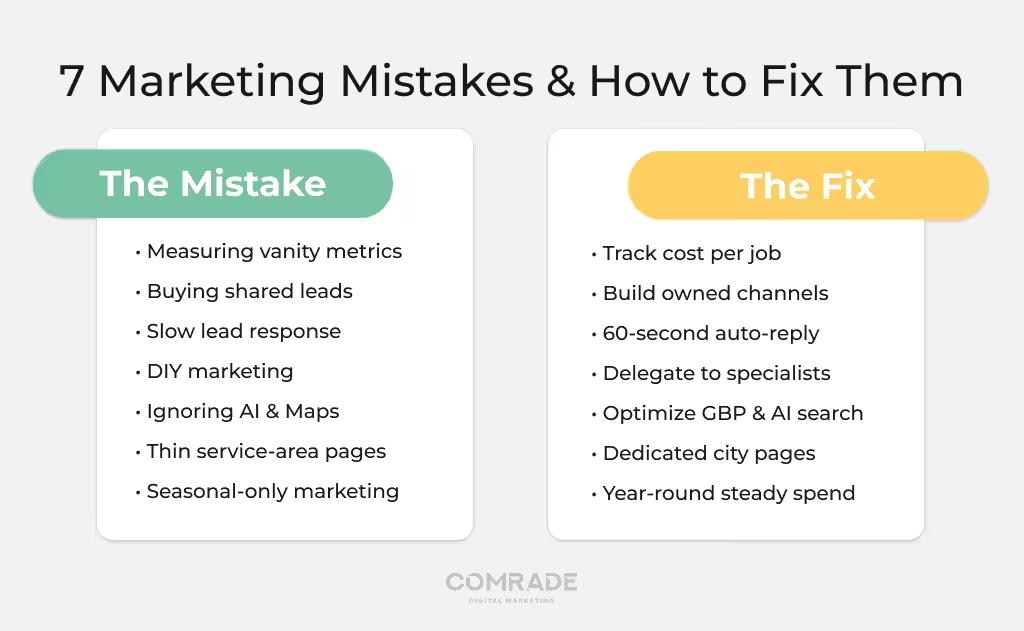
7 Roofing Marketing Mistakes That Cost You Jobs
Most roofers don’t lose jobs because they skip a channel. They lose them because a few quiet mistakes drain every dollar the system brings in. Here are the seven we see most often when auditing roofing accounts, and the fix for each.
Do It Yourself or Hire a Roofing Marketing Agency?
Honest answer: it depends on your hours, not your budget. If you have 40+ hours a month and instant follow-up in place, you can run the basics. But an in-house team covering all of this runs $150,000 to $200,000 a year in salaries alone, while a specialized digital marketing agency for roofers costs a fraction because the systems already exist.
The real cost of DIY usually isn’t the fee you saved. It’s the leads that went cold at hour 19. If you do evaluate agencies, ask exactly two things: what’s your cost per booked job for roofing clients, and can you show me the account?
Attract Clients Faster with Digital Marketing for Roofing Contractors!
In a perfect world…
Client inquiries come in steadily. Each one gets answered in minutes. You have plenty of 4- and 5-star reviews. You finally have the client stability to hire, expand, and go on vacation.
That’s what happens when all 10 channels above run together as one unified digital marketing system for roofers.
Do you have the time (or the tech expertise) to DIY this? Probably not. You need roofing digital marketing services at full strength.
That’s the part we handle. As a roofing marketing company, Comrade has helped 130+ contractors build exactly this system, including Built to Last Roofing, which saw a 633% lead growth within 14 months.
We run the system. Your team runs the jobs.
Ready to grow your business, minus the stress? Explore our Roofing Marketing Agency services and book your free consultation.
Roofing Digital Marketing Services FAQ
-
How effective is digital marketing for roofing companies?
It’s the highest-ROI way for roofing companies to book jobs in 2026, but only when the channels run as one system. Strong rankings or ad clicks still underperform without a conversion-ready site and fast lead response. Track cost per booked job, not traffic, to know if it’s working.
-
How much should a roofing company spend on marketing?
Most healthy residential roofers spend 5 to 12% of revenue, with faster-growing companies at the higher end. Rather than fixating on a percentage, track your cost per booked job, because that tells you whether the spend is producing profit or just activity.
-
Are Google Ads worth it for roofers?
Yes. Google is the highest-intent channel in roofing services since searchers want a roofer right now, and ads deliver leads within a week versus 3 to 6 months for SEO. They only pay off when pointed at a conversion-built page with a team that answers within minutes.
-
How fast do I need to respond to a roofing lead?
As close to five minutes as possible. A lead contacted within 5 minutes is 21× more likely to qualify than one reached at 30 minutes, while the industry averages 47 hours, making response speed one of the easiest wins available.
-
What’s the best roofer marketing strategy for a small roofing company?
Start with a fast mobile website and a fully built Google Business Profile, because they cost the least and show results within 60 to 90 days. Add Local Services Ads for immediate leads, then layer in SEO and content once the basics convert.
-
What are effective roofer marketing ideas beyond referrals?
The highest-impact ideas are posting jobsite photos to Google Business Profile weekly, running Local Service Ads (pay-per-lead, not per-click), collecting 2 to 5 reviews a week, and building presence on Nextdoor, where neighbor recommendations carry outsized local trust.
-
How long does roofing SEO take to work?
Roofing SEO typically takes 3 to 6 months to build momentum and 6 to 9 months to reach a top-three Map Pack spot in a competitive market. Once it ranks, it becomes the lowest cost-per-lead channel available, which is why most roofers run paid ads alongside it during the ramp-up.