Start with the ground. Cincinnati's hillsides sit on shale that weathers into thick, clay-rich soil, sometimes dozens of feet deep, and that soil moves when it gets saturated. Ohio's state hazard plan puts Hamilton County and the city among the highest per-capita landslide costs in the country. The city has drawn Hillside overlay districts across 23 hillside areas, where retaining walls and excavation get extra review and can require a geotechnical evaluation before a permit is issued. For homeowners in Mt. Adams, Price Hill, Clifton Heights, and the slopes above Columbia Parkway, a leaning retaining wall, a cracked foundation, or a driveway that keeps settling is not a quick quote. It's a high-ticket job they research for weeks before they pick up the phone.
Then the water. Heavy spring and summer storms overload the older combined sewers, and water comes up through floor drains in basements across the city. The Metropolitan Sewer District runs a Sewer Backup Response Program that offers cleanup and reimbursement for backups caused by the public sewer, but only if the homeowner reports it within 48 hours, so the first search after a storm is often a panicked one. The Ohio River adds its own risk: in April 2025 it crested above 60 feet at Cincinnati, eight feet past flood stage and its highest level since 1997. Humid summers wear out air conditioners and dehumidifiers, freeze-thaw winters open up mortar joints and foundation cracks, and in August 2026 a derecho knocked out power to well over 100,000 Duke Energy customers across the region in one afternoon.
The housing gives every trade a backlog. About 40% of the city's homes were built before 1940. Over-the-Rhine holds what is widely called the largest collection of 19th-century Italianate buildings in the country, Clifton and Northside are full of Victorians, and Hyde Park, Oakley, Mt. Lookout, and Walnut Hills hold early-1900s brick and frame homes with old wiring, old boilers, and old basements. Postwar brick ranches line the West Side and Anderson Township, while West Chester, Mason, Liberty Township, and Boone County, Kentucky keep adding subdivisions that need service and upgrades. And the river splits the market three ways. Ohio licenses HVAC, plumbing, and electrical contractors through the OCILB, and the City of Cincinnati adds its own contractor registration. Kentucky licenses the same trades through its Department of Housing, Buildings and Construction, and Indiana has no state HVAC license at all. Homeowners in Covington, Florence, or Lawrenceburg search by their own town name.
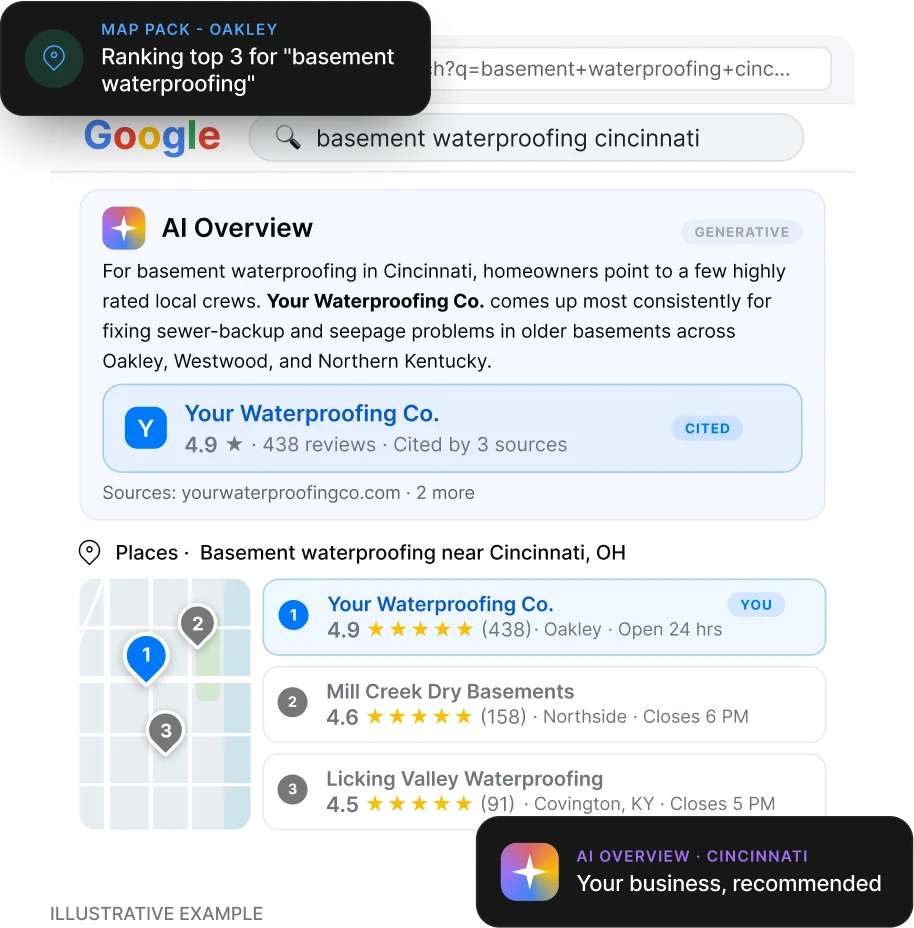
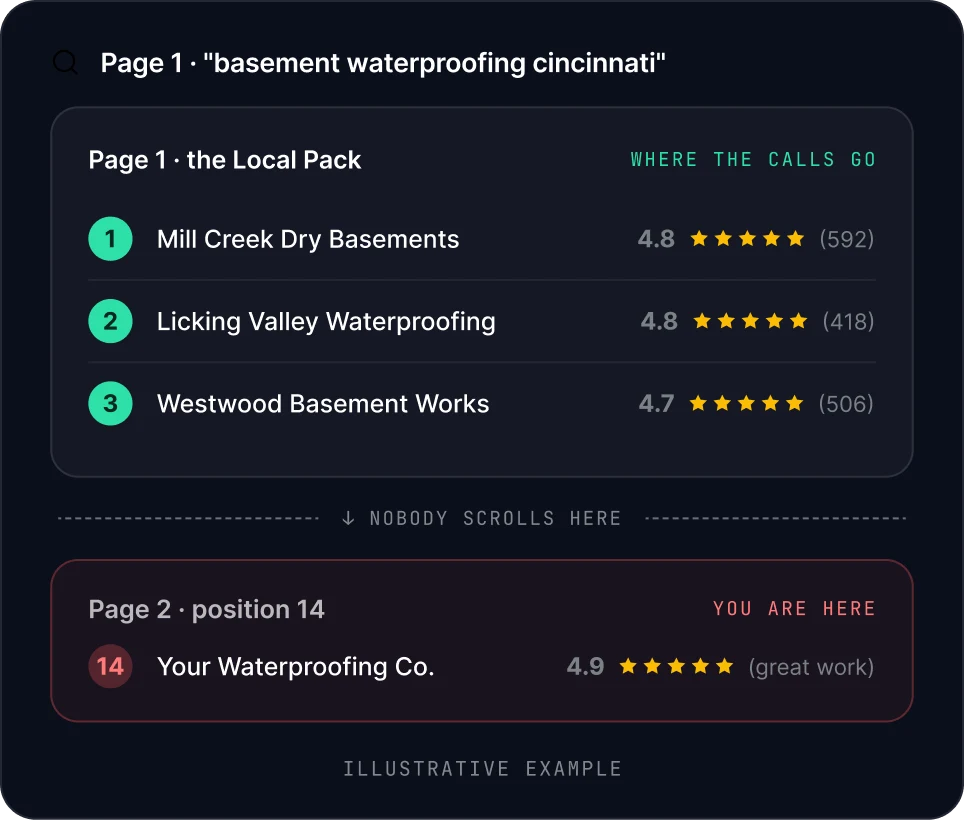
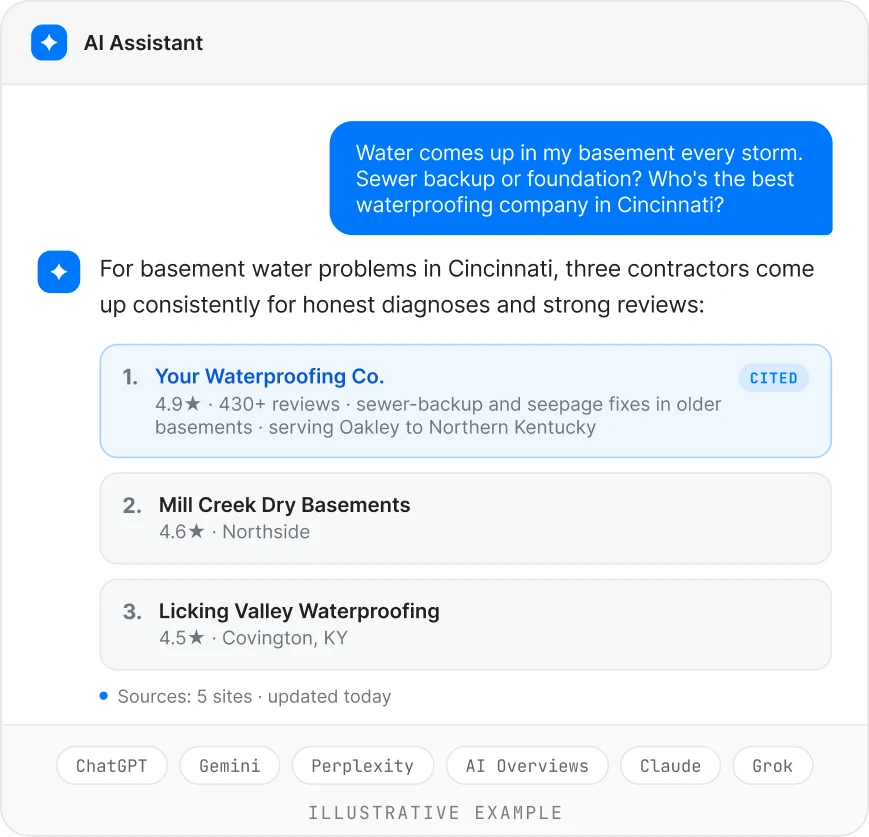
Here's what makes the opportunity real: for a lot of these jobs, nobody has given homeowners a good answer yet. Search "basement waterproofing cincinnati" and two Facebook group posts asking neighbors who to hire sit on page one, alongside an r/cincinnati thread, Yelp, the BBB, and a cost-estimate site. Google's own "People also ask" box shows "What is the best basement waterproofing company?" The contractor pages that do rank are mostly thin, with very few links pointing to them. Cincinnati is a mature market, and some trades are more crowded than this one, so it takes steady work. But neighborhood and town pages for both sides of the river, honest content on sewer backups, hillside drainage, and old-house systems, a Google Business Profile with your Ohio or Kentucky license in plain view, and quality local links are enough to pass most of the field.