
You could build the dreamiest homes in town, but chances are, most buyers don’t know you exist.
In 2026, getting clients is HARDER than building a snowman in July. You’re in a visibility war with over 445,000 home builders fighting for a small pool of jobs.
That is why more builders are turning to home builder SEO services to get found before the buyer ever asks for a referral.
SEO for home builders is the process of optimizing your construction company’s website and online presence to rank higher in search engine results for keywords like “custom home builder in [city].”
Where do you begin? Start with our 12-step SEO playbook. These strategies are behind the success of clients like Cedar Rustic Fence, who saw a 461% increase in qualified leads in under 12 months.
It’s time to boost your job pipeline. Let’s go.
Home Builder Marketing: Key Takeaways
- Local SEO is the backbone of home builder marketing. Most buyers search locally, compare several builders, and choose from the companies they see first.
- City pages help builders rank in nearby markets. Use localized keywords like “luxury home builder in Dallas” to reach homeowners within 10-20 miles.
- Google Business Profile, reviews, fast mobile pages, schema, listings, blogs, backlinks, and call tracking all work together to bring better leads over time.
What Is SEO for Home Builders?
SEO (search engine optimization) is the process of improving your home building website’s rankings on search engines like Google.
It aims to bring you local clients by increasing your visibility for specific keywords (e.g., “custom home builder in (city).”
SEO for builders is vital. 9 out of 10 people search for local businesses on the internet, and the top 3 Google results get 54.4% of all clicks!
As you read this article, you’ll notice a throughline: SEO for home builders isn’t just about traffic.
Traffic doesn’t pay the bills. Traffic doesn’t keep the lights on.
It’s about attracting qualified leads. You need people ready to invest $400K to $1M+ in a custom home project. A good home builder SEO strategy puts your business in front of those serious buyers.
How Smart SEO Brings You More Home-Building Projects
Why is it worth spending $10K a month on SEO?
As per Konstruct Digital, 57% of marketers confirm that SEO brings in more leads than any other marketing channel!
When you put solid SEO strategies into play, you:
- Boost website traffic: A steady flow of serious buyers looking for floor plans, project galleries, and custom build options.
- Build authority: A strong local presence online (with reviews) makes you look trustworthy. 90% of consumers trust online reviews
- Drive home builder lead generation: Home builder SEO isn’t a one-time spike. It keeps your pipeline full month after month with qualified inquiries. And SEO leads have a 14.6% close rate, which is pretty good.
- Outrank competitors: SEO gives you a boost to the first page — 75% of users never scroll past the first page.
- Maximize ROI: Your SEO campaign could offer one of the HIGHEST returns on investment. Our own data shows it can generate an 820% return on investment ($8 received for $1 spent)… in the first 12 months!
We want to really harp on the long-term value.
SEO for home builders is what brings you home-building projects for months and even years down the line! And your results will be especially pronounced if you partner with a home builder SEO agency.
The proof is in the pudding: One of our clients, Built to Last Roofing, saw a 4X lead increase in 6 months and is now ranking at #2 for critical keywords like “hail damage roof repair.”
12 SEO Tips Every Home Builder Should Know in 2026
You know how to build homes. But do you know how to build your pipeline?
We have you back :)
Follow these 12 home-builder SEO tactics below to get visible online. You’ll attract high-intent buyers, and keep your calendar well-fed like a Turkey at Thanksgiving.
1. Perform Keyword Research for Home Builders

A keyword is the exact phrase someone Googles when they’re looking for your services, e.g., “custom kitchen renovation” or “modern farmhouse builder Austin.”
Think of them like breadcrumbs! They lead your future clients straight to you.
SEO for home builders is dependent on optimizing for these keywords.
But broad keywords like “home builder” are insanely competitive. You’ll have much better luck targeting localized, long-tail keywords tied to specific services, styles, and cities.
For lead generation, focus on a long-tail keyword strategy that includes phrases like:
- “luxury home builder in Scottsdale”
- “custom lake house builder in Michigan”
- “energy-efficient home builder in Denver”
These searches usually come from buyers who already know what they want, meaning, they’re closer to hiring! In fact, around 70% of search traffic comes from long-tail keywords.
Use tools like Google Keyword Planner, SEMrush, or Ahrefs to:
- Analyze competitor websites to understand which keywords are driving traffic
- Review monthly search volume to prioritize real-world demand
- Align keywords with search intent (research-focused vs ready-to-hire queries)
- Target location-based phrases such as “custom home builder + city”
Be sure to integrate these keywords naturally throughout your content. They help boost keyword rankings and ultimately attract more qualified leads.
Do keywords really help? Yes! One of our clients, Absolute Home Services, is now ranking at #1 for the “painting services” keyword, and at #3 for all “handyman” keywords in Ontario, driving a 109% lead growth.
Need a head start? We already did a little keyword research for your home building business!
| Top Home Builder SEO Keywords | ||
| Keywords | Volume | Difficulty |
| custom home builder | 14,800 | 71 |
| home builder | 12,100 | 91 |
| home builder near me | 5,400 | 81 |
| how much would it cost to build a home | 5,400 | 48 |
| metal building homes | 5,400 | 31 |
| new build homes | 5,400 | 93 |
| new build homes near me | 5,400 | 86 |
| new home builder | 5,400 | 95 |
| builder for custom homes | 4,400 | 68 |
| building a tiny home | 4,400 | 40 |
| custom home builder near me | 4,400 | 70 |
| home building | 3,600 | 88 |
| luxury home builder | 3,600 | 56 |
| steel building homes | 3,600 | 37 |
| custom home building | 2,900 | 72 |
| home building kits | 2,400 | 24 |
| home building plans | 2,400 | 69 |
| how to build a home | 2,400 | 33 |
| tiny home build | 2,400 | 52 |
| tiny home building | 2,400 | 25 |
| value build homes | 2,400 | 38 |
| build a home | 1,900 | 72 |
| building your own home | 1,600 | 47 |
| how long does it take to build a home | 1,600 | 7 |
| how much does it cost to build a tiny home | 1,600 | 36 |
| is it cheaper to build or buy a home | 1,600 | 42 |
| modular home builder | 1,600 | 64 |
| home plans with cost to build | 1,300 | 39 |
| steps to building a home | 1,300 | 21 |
| home building calculator | 1,000 | 22 |
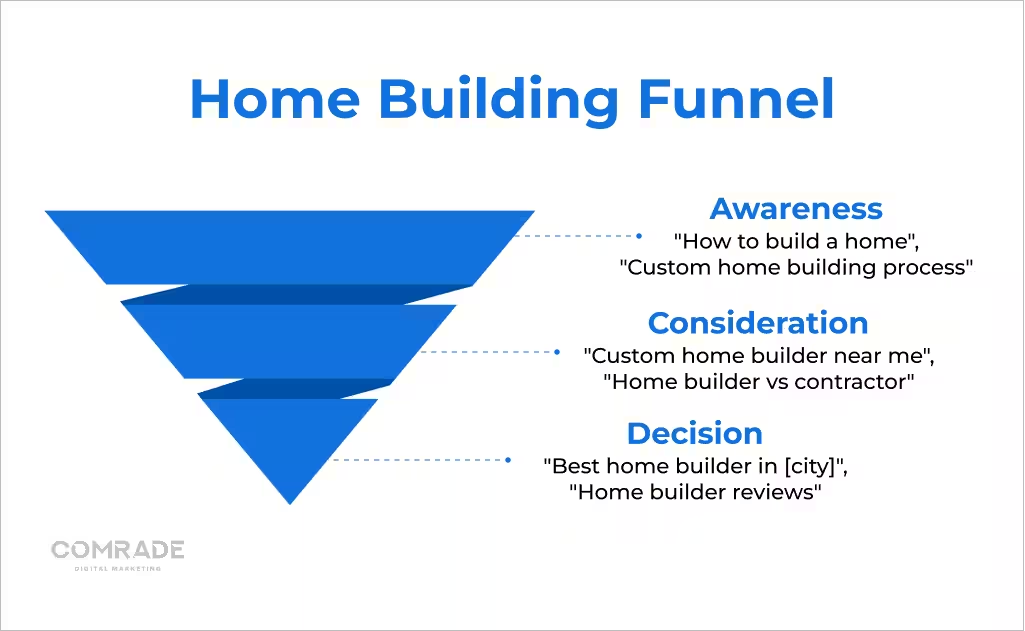
AI Tip: Use AI keyword clustering tools (like Surfer SEO or Semrush’s AI assistant) to group related keywords together automatically, so you can build pages that rank for multiple high-intent searches at once, not just one.
2. Improve Website Load Speed

People are impatient.
53% of mobile users abandon your site if it takes longer than 3 seconds to load.
And beware: Home builder websites are especially vulnerable. High-resolution project galleries, multiple before-and-after photos, and heavy design elements can drag your site to a crawl.
Google notices, and this will tank your SEO for builders.
How to optimize your website speed and page load time:
Compress and optimize images: Use tools like TinyPNG to shrink file sizes without losing quality. Images are the BIGGEST culprits for a webpage’s total weight.
Enable browser caching: Store static elements so returning visitors load pages faster.
Streamline your code: Combine CSS and JavaScript files, remove unnecessary plugins, and minimize HTTP requests.
Upgrade your hosting: If your site slows during traffic spikes, invest in faster hosting like WP Engine.
Make your website mobile-friendly: Your site should load in under 3 seconds, and work perfectly on a smartphone, where most buyers scroll.
Use schema markup: Think of schema markup like labels for Google. It labels your services, locations, reviews, hours, FAQs, and home-building projects, which can improve your visibility.
AI Tip: Run a free AI-powered audit with tools like GTmetrix or Screaming Frog to instantly identify slow-loading elements like oversized images, bulky code, or third-party scripts that are dragging down your site speed.
3. Technical SEO Issues Specific to Home Builder Websites
Home builder websites are a different beast.
Most local businesses have 10–20 pages. But builders have HUNDREDS of floor plans, subdivisions, communities, galleries, design packages, and lot listings floating.
That creates technical SEO issues. If Google gets confused, it can tank your rankings, and it even sabotages how you convert visitors.
Here are the biggest technical SEO issues home builders run into:
| Issue | Why It’s Critical | Example |
|---|---|---|
| Crawl budget | If your site has 500–2,000+ thin or outdated lot pages, Google may waste time indexing those instead of your highest-value pages. | A builder with 700 sold-out lot pages may struggle getting new subdivision pages indexed for weeks. |
| Duplicate content | Similar subdivision or city pages can confuse Google if the copy is nearly identical. This can dilute rankings. | “Custom Homes in Plano” and “Custom Homes in Frisco” using the same text, floor plans, and photos may compete against each other. |
| Core Web Vitals | Builder websites often use HUGE galleries, drone footage, and renderings that hurt loading speed. | A homepage with 40+ uncompressed project photos can easily push load times past 5–6 seconds. And 53% of users leave sites that take longer than 3 seconds to load. |
| Mobile performance | Most homebuyers now browse communities, floor plans, and galleries from their phones. | Tiny text, slow image sliders, or menus that are hard to tap on mobile can cause visitors to bounce. |
Technical SEO may sound boring (we know), but trust us, it directly impacts your lead flow!
Pay attention to it today and fix these issues before they crush your pipeline. Your home builder SEO performance depends on it.
Comrade Is a Home Builder SEO Agency Focused on One Thing: Qualified Leads from Organic Search.
4. Refine On-Page SEO Elements
You could build the nicest homes in the state, but if your website is crappy, you’ll barely get found by prospects.
On-page SEO efforts help search engines understand your services, locations, and content strategy through optimized titles, keywords, headings, images, and URLs.
And it matters BIG time. The #1 Google result gets 27.6% of all clicks, according to Backlinko.
Crafting Clear Titles and Descriptions
Your title tag and meta description are the first things potential clients see on Google.
They directly impact your click-through rate (the percentage of people who click and visit your site).
SEO expert Neil Patel says Google rewrites 70% of meta tags… but it’s still worth writing quality ones to give Google context.
A strong title tag (55–60 characters) clearly states what the page offers, while a meta description (155–160 characters) briefly explains why someone should click.

Bad meta tag example for home builder SEO:
- Title: Home Builder | Best Homes | Quality Construction
- Description: We build homes. Quality construction services available. Contact us today for more information about our home building services.
Good meta tag example for home builder SEO:
- Title: Custom Home Builder in Chicago | Modern & Luxury Homes
Description: Build your dream home with the best custom home builder in Chicago. Explore luxury designs, transparent pricing, and expert craftsmanship.
Why should you go to the trouble of writing a great title and description? Because well-written titles and descriptions 100% help improve rankings, attract qualified traffic, and lead the right homeowners to you.
AI Tip: Use Surfer SEO or PageOptimizer Pro to scan your pages and get instant AI suggestions for improving titles, meta descriptions, headings, and internal linking — all tailored to your target keywords.
Making Your URLs Simple and SEO-Friendly
A clean, descriptive SEO-friendly URL helps users and search engines understand what your page is about.
For effective SEO for builders, your URLs should be short, readable, and keyword-focused.
Go a step further: Pages that include a keyword in the URL see up to 45% higher click-through rates, according to AIOSEO

And remember: No one likes a URL that looks like keyword throw-up. Stick to real words, use hyphens to separate them, and skip random numbers or symbols like “=” or “@”.
Bad URL example:
yourwebsite.com/page?id=8472&service=homebuilder123
Good URL example:
yourwebsite.com/luxury-home-designs
Rule of thumb: If a homeowner can’t instantly tell what your page is about, your URL is doing you zero favors.
Optimizing Images for Speed and Search
Visuals are great for on-page engagement.
But — and there’s a big BUT — they must load in under 3 seconds
Smart image optimization improves SEO for home builders by boosting the time spent on the page and indirectly boosting your rankings.
Use descriptive filenames and alt text so search engines can “read” each image (and screen readers can interpret them properly). For example:
- Filename: custom-home-exterior-chicago.webp
- Alt text: Modern custom home exterior in Chicago with stone facade
- Format: WebP or compressed JPG
Photos of real objects must include accurate, descriptive alt tags for visibility and accessibility.
And this is vital: 36% of websites feature oversized images, according to SE Ranking. Compress files, keep sizes lean, and keep doing this on an ongoing basis.
Smart Schema Markup for Better Visibility
Schema markup for home builders is code you add to different elements on your site to help Google (and now AI tools) differentiate between your services, location, and offerings.
Yes, this is nerdy… but it’s important.
As we said earlier, think of a schema like adding labels to your pages for your ratings, FAQs, and even pricing.
For example, the LocalBusiness schema helps Google understand your business name, address, phone number, and service area. Service schema highlights offerings like custom homes, renovations, or design-build projects. FAQ schema can even have your questions appear directly in organic search results.
What’s the point of this? Well, search listings using schema typically attract 30 to 50% more clicks because they stand out visually on Google!
Not sure where to begin? Yoast SEO is an excellent plug-in that adds structured data for you. It can generate schema markup without coding.
5. Create Helpful Content for Home Buyers
Content is at the heart of your SEO!
HubSpot itself confirms that companies that blog get 68% more leads than those that don’t.
That’s why your BIGGEST assets are blog posts, web pages, social media, and more… i.e., content!
But you must write content that offers value.
Marketing executive, David Beebe, points out, “Content marketing is really like a first date. If all you do is talk about yourself, there won’t be a second date.”
Major Pro Tip: Optimize for Voice Search and Google AI Overviews by using natural language, FAQ-style headers, and concise answers in the first 100 words.
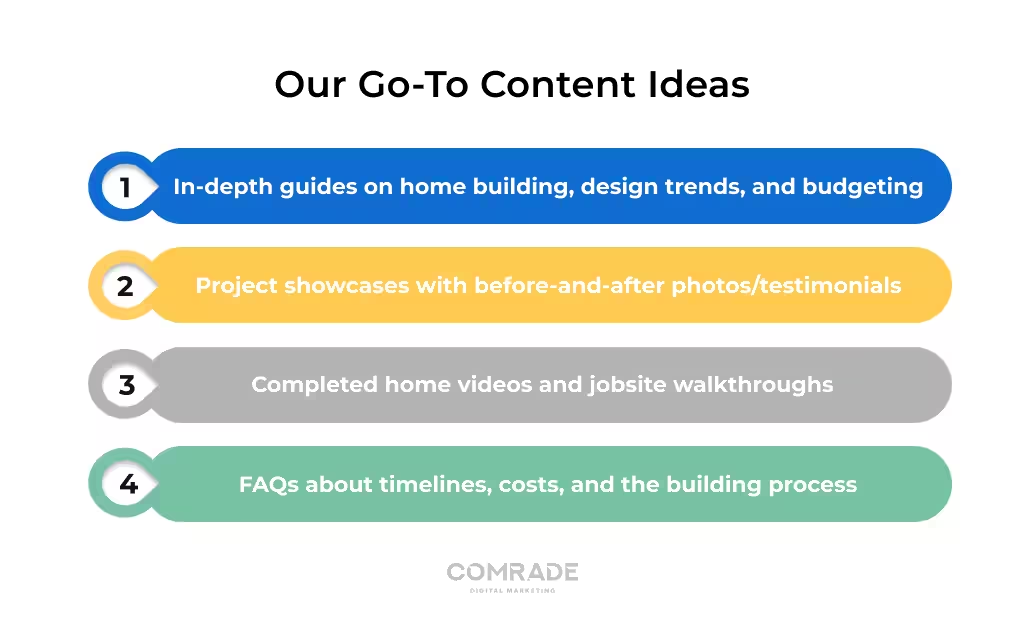
But volume is critical. We’ve worked with 130+ contractors, and we can confidently say: you must post at least 3 to 4 educational blog posts every month. Aim for topics that are relevant to home buyers, like “Building vs. Buying: Which Makes More Financial Sense?”
Want to make your life easier? Create a content calendar to manage the production and publishing of your content. That ensures you never miss posting day, AND that all your content stays consistent with effective SEO for home builders.
The average blog post length is approximately 1,333 words, as per Orbit Media, but quality matters more than length.
AI Tip: Use ChatGPT or Claude to brainstorm a batch of 20 blog post ideas based on trending homeowner questions — then expand the best ones into outlines or even draft starter articles you can refine and publish faster.
Build a Home Builder SEO Topic Cluster
One blog post will not make Google trust you.
A stronger approach is to build a topic cluster: one main pillar page supported by 8-12 related pages that answer specific buyer questions.
For example, your pillar page could be:
Custom home builder in Dallas
Then supporting cluster pages could include:
- Custom home cost in Dallas
- Best neighborhoods to build a custom home in Dallas
- Modern farmhouse floor plans
- Luxury custom home design ideas
- How long does it take to build a custom home?
- Custom home financing guide
- Dallas home building permits
- Energy-efficient custom homes
- New construction vs. custom home
- Custom home builder in Plano/Frisco/Highland Park
This helps Google understand your expertise, builds topical authority, and gives buyers helpful answers before they ever call you.
Video Content That Sells New Homes
People process visuals 60,000 times faster than text.
Video takes work, but by gosh, is it worth it!
In 2026, video consumption directly influences Google rankings by increasing time on site and engagement signals.
And your traffic goes up too. 87% of marketers say video has increased sales, as per Marketing LTB.
Short-form content (TikTok, Instagram Reels) drives awareness, while long-form YouTube videos inspire trust. Both fuel your home builder SEO services.
Video ideas used by the top home builder SEO services:
- Process walkthroughs: Foundation to final walkthrough
- Cost breakdowns: “What Does a $500K Custom Home Include?”
- Timeline expectations: “How Long Does It Take to Build?”
- Common mistakes: “5 First-Time Buyer Mistakes to Avoid”
Embed videos on your service pages and industry blogs to boost rankings. And yes, adding video on landing pages increases conversions by 80% (Eyeview Digital).
Be sure to use high-quality visuals, such as high-definition photos, drone footage, and virtual tours. Pixellated, blurry photos are worse than no photos at all.
We tested the latest generative AI algorithms to see what actually drives local citations. See our findings and learn how to get ChatGPT to recommend your business.
6. Earn Buyer Trust Using Google E-E-A-T
Google rewards websites that demonstrate real-world Experience, Expertise, Authoritativeness, and Trustworthiness (E-E-A-T)
It is a framework used by Google to identify high-quality, trustworthy content and rank it higher.
Brian Dean points out, “Users are hungry for insights from people with actual experience on the topic they’re reading about.”
This is why Google cares about practical familiarity with the topic!
Here’s how to strengthen your Google E-E-A-T signals for SEO for builders:
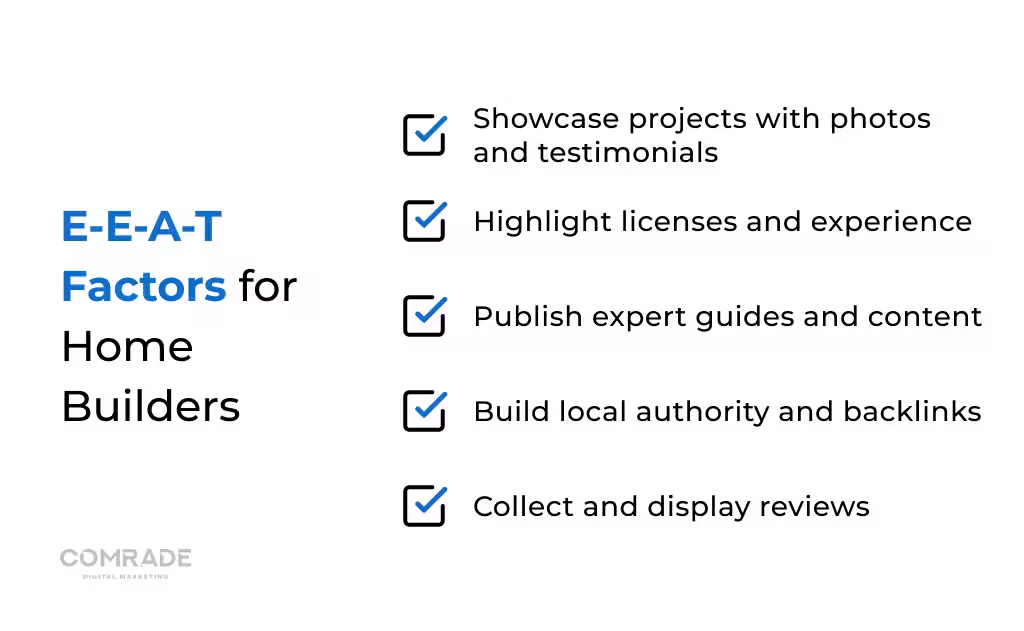
- Showcase completed projects: Add before-and-after photos, project timelines, and client testimonials that prove your hands-on experience. Articles with images get 94% more views than those without.
- Highlight credentials: Display licenses, certifications, insurance, and years in business prominently on your site.
- Publish expert content: Write guides like “How to Choose the Right Floor Plan” or “What to Expect During Construction” to demonstrate knowledge.
Author bios help! The article you’re reading right now has an author bio backed by real expertise, boosting our E-E-A-T.

- Build local authority: Get featured in local news, join your chamber of commerce, and earn backlinks from trusted industry sites with a higher domain authority (i.e., reputable sites).
- Collect and display reviews: Forbes points out that 88% of consumers trust online reviews as much as personal recommendations. Collect them!
Whether you run a small or big construction company, building out your GBP is a small but mighty step, so whatever you do, do not underestimate it.
7. Local SEO for Home Builders
Google is not a mind reader. It won’t magically know where you build.
If your website simply says, “We build beautiful custom homes,” Google might rank you in California even if you operate in Ohio.
46% of all Google searches are location-based searches, so you must make it obvious where you operate.
Create dedicated pages for every major city, subdivision, and community you serve. Use URLs like /custom-homes-dallas/ or /oakwood-estates-homes/to help Google rank you in specific neighborhoods.
But there’s a deeper layer.
Many builders create 30 nearly identical subdivision pages, just swapping city names. Google hates duplicate content. It jeopardizes your rankings.
Include unique details like nearby schools, amenities, architectural styles, commute times, and authentic project photos.
You can also add HomeAndConstructionBusiness schema markup. It identifies your business as a specialist in building, renovating, or repairing homes.
8. Optimize Your Google Business Profile

Your Google Business Profile (GBP) is a free listing that displays your business info (address, phone, hours, photos, and reviews) directly on Google Search and Maps.
Users confirm that as many as 30% of their leads (roughly 1,300 leads) come from their GBP. The potential is certainly there… IF you do it right:
- Choose the right primary category: Select “Custom Home Builder” or “Home Builder” to match what clients are searching for.
- Complete your Services section: List every service (custom homes, remodels, additions, design-build).
- Add at least 100 high-quality photos: You could see 520% more calls!
- Fill out every field: Business hours, service areas, phone number, website, and attributes like “free estimates” or “licensed and insured.”
- Post regular updates: Share project completions, design tips, or community news to keep your profile fresh.
- Collect and respond to reviews: And encourage clients to mention your city or neighborhood to boost local relevance.
An optimized GBP helps you dominate the Local Map Pack… this section alone gobbles up 42% of all clicks.
AI Tip: Need a helping hand? Use AI tools like BrightLocal to audit your GBP and spot missing fields or engagement opportunities.
9. List Your Business in Builder Directories

Google doesn’t just look at your website.
It also checks trusted directories to confirm your business is legitimate, active, and well-reviewed locally.
BrightLocal analyzed 8,000 search results and found that directories like Yelp ranked on page 1 at least 31% of the time!
Pretty neat, right? Think of it as using Yelp’s reputation to boost your own visibility!
| Directory | Why It Matters |
|---|---|
| Houzz | Excellent for showcasing project galleries, reviews, design styles, and before-and-after photos. Huge for visual credibility. |
| NewHomeSource | One of the most recognized directories specifically for new construction and community builders. Great for subdivision visibility. |
| HomeAdvisor | Helps connect builders with homeowners actively searching for construction and remodeling services. |
| Angi | Strong review platform that helps build trust with local homeowners by comparing builders. |
| Yelp | Still highly trusted by consumers and often appears prominently in Google search results. |
AI Tip: Ask ChatGPT or Claude to create a custom outreach script you can use to quickly claim and update dozens of directory listings, saving you hours of manual work.
Why Is NAP Consistency Important for Home Builders?
NAP stands for Name, Address, and Phone Number. It’s the core information that identifies your business and helps customers online get in touch with you.
NAP consistency is important for local SEO. When you list your business in online directories, you want to ensure that your NAP information is consistent across all of them. That means using the same name, address, and phone number for your business.
To achieve NAP consistency for your home builder business, follow these best practices:
Start by auditing every directory and platform. Check for outdated phone numbers, old addresses, duplicate listings, or inconsistent business names.
Then update everything so your NAP (Name, Address, Phone Number) matches exactly across your website, Google Business Profile, and directories.
If you move offices, rebrand, or change phone numbers, update every listing immediately.
10. Collect and Manage Customer Reviews

Customer reviews are like rocket fuel for your SEO.
Demand Sage points out: 93% of consumers read online reviews before choosing a local business. Google uses these reviews as a key ranking signal.
Here’s how to collect more customer reviews consistently:
- Send post-project follow-up emails: Within 24-48 hours of completion, send a personalized email with a direct link to leave a Google review. Emails sent within 24 hours have a 50% higher response rate.
- Use QR code cards: Hand clients a card with a QR code that takes them straight to your review page.
- Add review links to invoices: Include a “Share Your Experience” button in your final invoice or payment confirmation.
- Set up automated reminders: Use tools like Birdeye or Podium to send review requests 1-2 weeks after completion when the satisfaction is fresh.
- (Important) Encourage and reply to customer reviews across platforms like Google and Yelp. A polite reply shows future buyers you’re accountable!
Marketing Course confirms the value of reviews: “Individuals look to the behavior of others to guide their own actions, particularly in situations of uncertainty.”
AI Tip: Use AI to help draft personalized follow-up emails or SMS templates that encourage happy clients to leave a review, and ask AI to suggest great wording that makes it easier for them to say “yes.”
11. Build High-Quality Backlinks
Having a website is just the starting line. To compete in SEO for local builders, you need quality backlinks.
What are backlinks? Backlinks (or inbound/incoming links) are hyperlinks from other websites that point to your website, telling Google your business is credible and worth ranking.
50% of searchers click a result within 9 seconds and 25% within just 5 seconds, according to Backlinko. People are impatient. Backlinks are just another way to get more clicks.
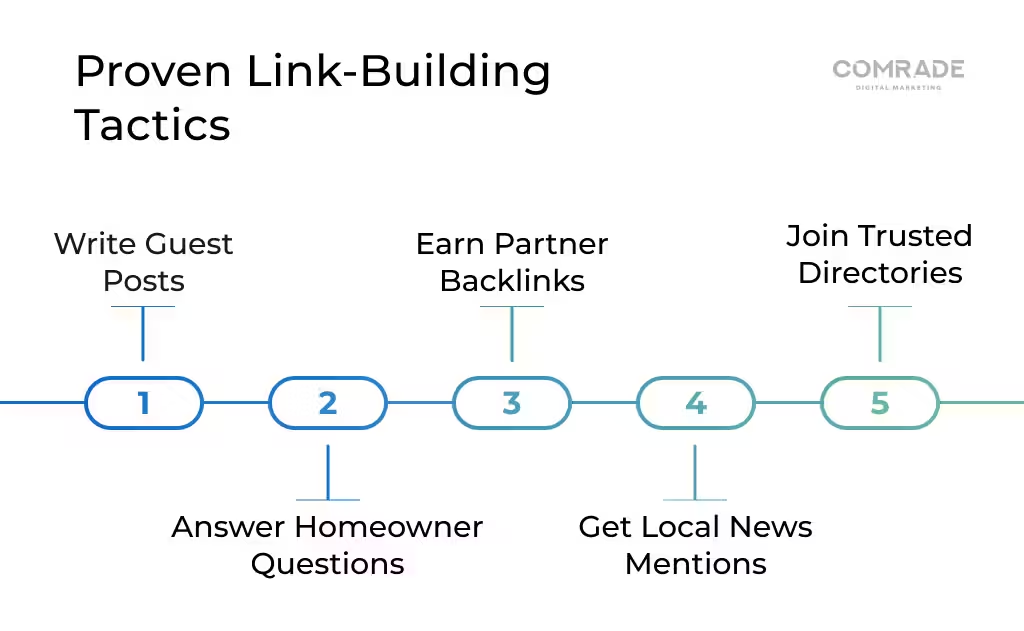
All in all, focus on links from relevant, authoritative sources like home improvement sites, design publications, real estate blogs, and local organizations.
Do not buy links or participate in link exchanges. Google penalizes these “black-hat” tactics. And be sure to run an SEO audit of your links every 3 months and fix broken links.
12. Track and Refine SEO Performance
Good home builder SEO calls for one final step.
Tracking your work!
Start with Google Search Console and Google Analytics to see which keywords generate clicks, impressions, and engagement. But these alone don’t pay the bills!
This is a great way to monitor user behavior and page performance!
Go deeper with SEMrush or Ahrefs to connect rankings to lead-driving pages.
Focus on metrics that drive business results:
- Which pages generate contact form fills or phone calls
- Which keywords bring homeowners ready to pull the trigger on hiring
- Which service pages convert best (custom homes, renovations, new builds)
- Where visitors drop off before contacting you
- Which cities or neighborhoods produce the most inquiries
If a page gets impressions but no leads, refine the offer. If rankings rise but calls don’t, improve CTAs. From there, track monthly and adjust as needed.
AI Tip: Use AI dashboards from tools like Semrush or Ahrefs to automate weekly SEO reports — showing you ranking changes, traffic shifts, and technical issues at a glance, so you can adjust your strategy in real time.
Home Builder Marketing Agency vs. DIY SEO
Yes, DIY SEO is possible.
If you’re a smaller builder in a less competitive market like Boise, you can handle some basics in-house like adding location keywords, publishing blogs, improving title tags, and setting up Google Search Console.
But as many as 68% of businesses that attempt to DIY their SEO end up abandoning it within 6 months.
Once you start competing in larger markets or targeting high-value custom home projects, things get sticky very quickly.
Algorithms change constantly. Technical SEO gets complicated fast. And while you’re juggling projects, your competitors are grabbing the top rankings.
Let’s do a quick side-by-side of DIY SEO vs Pro SEO:
| Factor | DIY SEO | Professional SEO |
|---|---|---|
| Time investment | 10–20+ hours/week learning + executing | 0–2 hours/week (reviews + approvals) |
| Monthly cost | $100–$400 in tools + your own labor | $1,500–$4,000+ depending on market |
| Lead volume | Slow, inconsistent growth | Faster, predictable lead flow |
| Ranking speed | 6–12+ months | Often 3–6 months with strategy |
| Error risk | High (technical issues, bad links, missed opportunities) | Low (managed by specialists) |
| SEO strategy | Trial-and-error | Data-driven, competitive, scalable |
If you hire an agency, look for one that understands home builders.
A good home builder marketing agency should understand local SEO, technical SEO, AI search optimization, and how to rank subdivision, community, and portfolio pages. They should also know how custom home builder marketing works, because attracting a $900K custom build is not the same as getting a basic remodeling lead.
Agencies promising “instant rankings,” refusing to show reporting, or using vague jargon without explaining how they track revenue are MAJOR red flags.
Ultimately, professional SEO drives 67% more organic lease volume and 32.26% higher rental income compared to DIY efforts, according to Reach by RentCafe.
Want to 4X your leads in 2026? Check out our digital marketing services today.
Grow Your Home Builders Business with Comrade
You know how to build homes. We know how to build your online presence!
In today’s market, your future clients are actively looking on Google for a home builder near them. But between managing projects, crews, and deadlines, you don’t have time to keep up with SEO optimized content, and digital strategy!
That’s where Comrade Digital Marketing comes in.
We specialize in helping home builders like you scale your client base and revenue to new heights. Our team will work side-by-side with you to create a custom SEO strategy that drives real traffic growth, real leads, and real growth, while you stay focused on what you do best.
Don’t lose the next $130,000+ home-building job to a competitor.
Schedule your free consultation today
FAQs
-
How long does SEO take for home builders?
Most home builders start seeing meaningful SEO improvements within 3–6 months, though highly competitive markets may take longer. Technical optimization and local SEO can create early momentum, while content, local backlinks, and authority-building drive long-term rankings and qualified leads.
-
How much does SEO cost for a home builder?
Home builder SEO typically costs between $3,000 and $5,000+ per month, depending on your market size, competition, and goals. Larger builders targeting multiple cities or subdivisions usually require more aggressive content, technical SEO, and local optimization strategies.
-
What’s the difference between local SEO and national SEO for builders?
Local SEO helps home builders rank in specific cities, neighborhoods, and communities using location-based relevant keywords and Google Maps optimization. National SEO targets broader searches across multiple markets and is typically used by larger regional or nationwide builders.
-
Do home builders need a separate page for each city they serve?
Usually, yes. Dedicated city and subdivision pages help Google understand exactly where you build and improve rankings for location-specific searches like “custom home builder in Austin.” Just make sure every page includes unique content, photos, and local details.