Walk Heritage Hill, East Hills, Eastown, Midtown, Creston, or the John Ball and West Side blocks and you are looking at the reason this market never goes quiet. Heritage Hill alone is one of the largest urban historic districts in the country, with well over a thousand homes dating back to the mid-1800s, and the bungalows and cottages of the West Side, Alger Heights, and Garfield Park were mostly built between the 1920s and 1950s. Houses that old fail in specific ways: tired boilers and furnaces, old panels and wiring, galvanized and mixed-metal plumbing, drafty original windows, and roofs that have been patched for decades. On top of that sits a city-wide lead service line replacement program that has been running for years, with state rules calling for every line to be gone by the early 2040s. Homeowners get a letter or see their address on a map, and then they go to Google asking what happens inside the house when the line changes. The plumber with a clear answer gets the call.
Then winter does its part. Grand Rapids averages roughly 73 inches of snow a year, January is the snowiest month, and the freeze-thaw swings between them are hard on every roof edge, gutter, and pipe in the metro. Heavy snow on a steep Victorian gable or a poorly insulated bungalow attic means ice at the eaves, leaks into plaster ceilings, and a furnace that has to run flat out through the coldest week of the year. When it quits, the search is immediate and the budget is whatever it takes. Summer brings its own spike. Severe wind storms in recent summers have taken down trees and power lines and left tens of thousands of West Michigan customers without electricity for a day or more, which sends people looking for roof repair, tree-damaged siding, and electricians who can install a generator inlet or a transfer switch.
The river is part of the story too. In April 2013 the Grand River crested at about 21.85 feet downtown, a record and well above the 18-foot flood stage, and anyone who lived through it still thinks about sump pumps, water heaters, and electrical panels sitting low. Meanwhile the growth is out in the ring. The metro now holds about 1.18 million people, and Kentwood, Wyoming, Walker, Grandville, Hudsonville, Byron Center, Caledonia, Rockford, Ada, Cascade, Jenison, and Allendale keep adding subdivisions that want installs, upgrades, finished basements, and decks, while East Grand Rapids and the lakeshore towns of Holland and Grand Haven buy bigger remodels. Behind all of it is a deep employment base: furniture and manufacturing heritage, a downtown medical corridor, and a lot of small-business owners who can afford to maintain their homes.
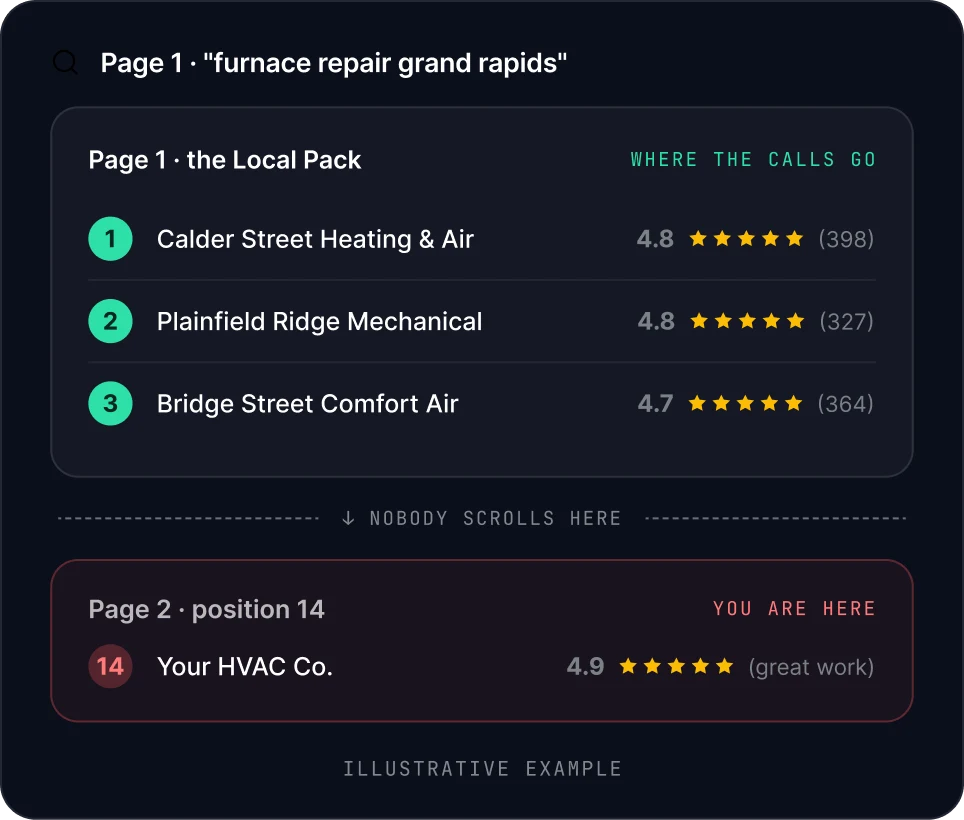
Here's what makes the opportunity real: the local search results are weaker than the market deserves. Search "furnace repair grand rapids" and, below a Local Pack of three established heating companies, the organic results are Facebook group threads where neighbors ask who to call, Yelp pages, a manufacturer's dealer listing, and a few contractor pages with almost no links pointing to them. People are asking strangers because the businesses haven't given them a good answer. Neighborhood and suburb pages, honest cost and "repair or replace" content, a Google Business Profile with your Michigan license and reviews front and center, and a little real local authority are enough to compete here, and the sooner they're in place, the harder it is for anyone to catch up.