You have a fantastic product. It lowers bills, promotes energy independence, and results in a smaller carbon footprint. On paper, it sells itself. But in practice, where are the clients?
The problem isn’t your service. It’s your SEO (search engine optimization).
A homeowner considering a heat pump might spend 6 weeks researching before requesting a quote. They’ll Google it, ask ChatGPT, and even read reviews on Yelp and TrustPilot.
In 2026, your visibility must hold up across all those touchpoints. In the next 10 minutes, we’ll walk you through the 8 exact steps we use to rank our clients at #1 for their top keywords and fill their job pipeline.
SEO for Energy Companies: Key Takeaways
- Nearly half of all clean energy searches have local intent. Optimizing your Google Business Profile and creating localized service pages is the fastest way to capture the Map Pack clicks that national brands miss.
- By 2026, half of your prospects will use AI tools like ChatGPT and Perplexity to find contractors; winning these recommendations requires a GEO (Generative Engine Optimization) strategy built on top of your SEO foundation.
- Focus on hyper-specific, long-tail phrases that target active buyers researching actual equipment and installation costs.
- True SEO success must be measured by bottom-line business metrics, like inbound calls, form fills, and actual booked project revenue.
What Is Renewable Energy SEO?
Renewable energy SEO is the process of improving your website to rank higher when potential customers search for clean energy services on Google, AI tools, and local directories.
That’s the simple version.
The fuller version: It’s every decision you make about your content, site structure, keywords, reviews, and online reputation. SEO is a 20-piece puzzle to boost your online visibility and book top-dollar renewable energy jobs.
Unfortunately, most energy business owners treat SEO for renewable energy like an IT task. Set it up once, move on.
That’s the wrong attitude. SEO for energy companies is a long-term strategy. Every service page you publish, every keyword you target, helps generate website traffic for the next 2 to 5 years.
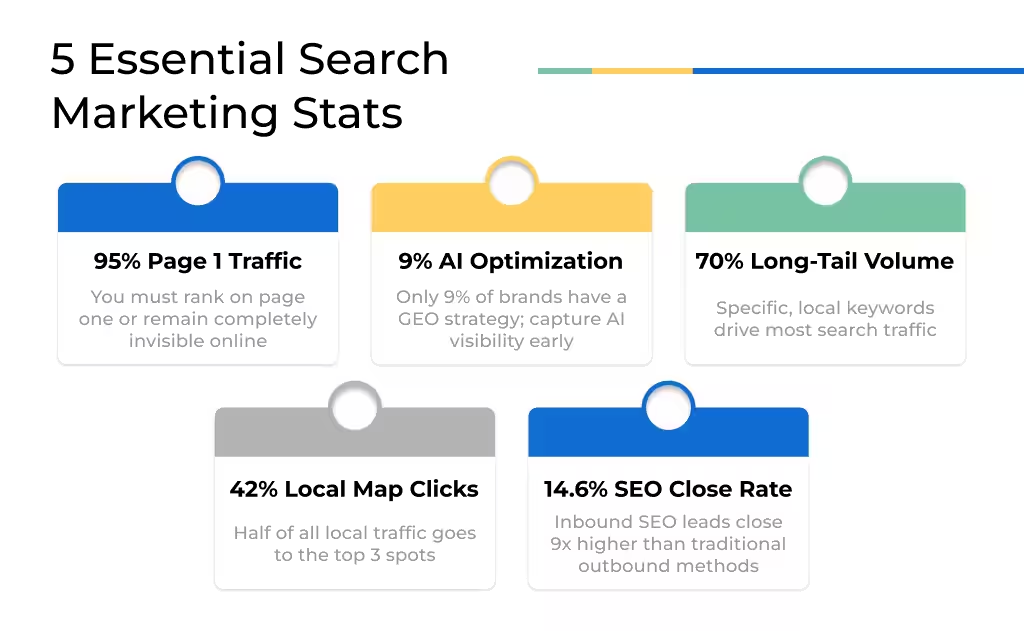
Here’s the debate ender: SEO-sourced leads close at 14.6%, compared to just 1.7% for traditional outbound methods. These clients convert!
Why is SEO for Energy Companies Important?
Think about the last time you needed a plumber or dentist. You probably Googled it, maybe asked ChatGPT, and then made a decision.
Your customers do the exact same thing. Someone’s electricity bill spikes. A neighbor gets a heat pump installed. They go online first and look up:
- “Heat pump installation near me”
- “How to lower my energy bill this winter”
- “Best clean energy provider in [city]”
- “Is community solar worth it?”
The number is higher than you think. 80% of people find local businesses online every single week. About 95% of search traffic goes to first-page websites. That’s where you need to be. It really is that binary.
AI Search is Now a Major Source of Traffic
Renewable energy SEO services get more complicated in 2026.
Google isn’t the only arbiter. 47% of people have used AI tools like ChatGPT, Perplexity, and Google’s AI Overviews to find a business, product, or service.
The companies showing up in those AI answers didn’t buy their way in. They earned it through consistent, credible SEO efforts over time.
Fun fact: Your AI visibility depends upon 80% of your existing SEO foundation. If you’re already on page #1 and across local directories, you have a shot at being suggested by AI.
That’s what makes renewable energy SEO a strategic asset. It boosts your Google and AI search visibility over the long-term, attracting new leads looking for your energy services.
8 Proven Energy SEO Strategies
Since 2008, we’ve worked with dozens of clean energy companies. The SEO gaps are very apparent.
We’ve refined an 8-step customized renewable energy SEO firm strategy to improve your visibility and attract new energy clients non-stop, year-round.
1. Take Time Doing Keyword Research
Keyword research is the process of finding the exact words and phrases your potential customers type into Google like “EV charging station installer near me.”
The #1 problem we see with keyword research is the mismatch.
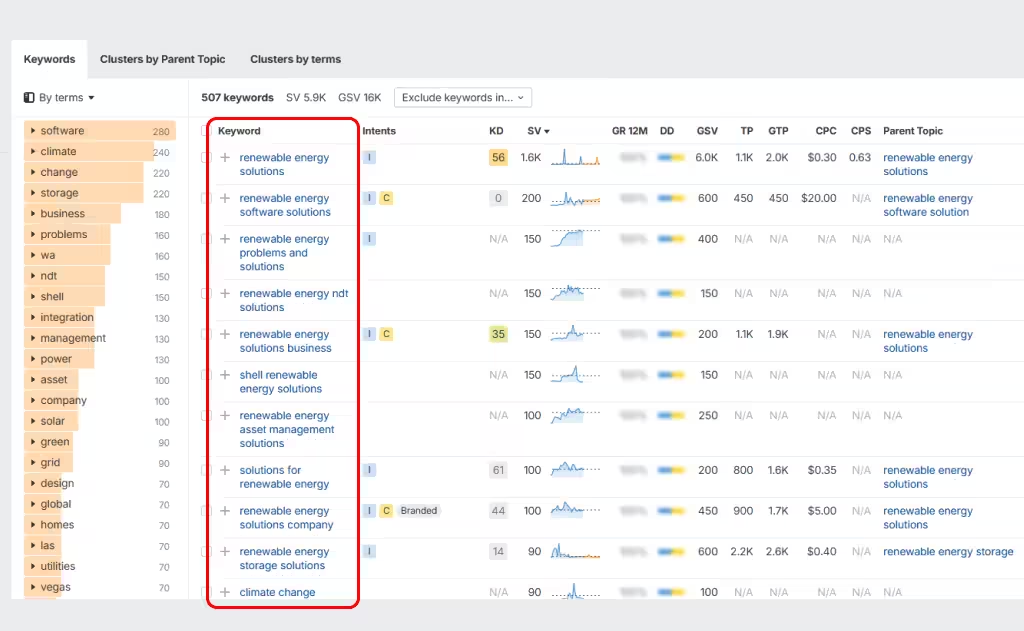
You may target terms like “renewable energy solutions,” but your customers are typing in “how much does a heat pump cost to install?” Different language. Different intent.
As a renewable energy SEO agency, we like to say: Keywords are a bridge between your business and your customers. Do not take them lightly.
In our time as an SEO consultant for the power industry, we met a residential clean energy installer in Chicago who had been doing blog content creation for 2 years with zero traction.
When we audited their keywords, every page targeted hyper-competitive terms like “solar installer.” That won’t yield the SEO results you want. It’s terrible online marketing.
Check Out the Search Data
The WordStream numbers tell a humbling story.
“Solar” gets 450,000 searches a month. “Renewable energy” gets 135,000. Both are completely unwinnable for a smaller company, dominated by Wikipedia, national industry news, and utility giants with content teams you can’t match.
Long-tail keywords (4+ words) like “geothermal heat pump installation cost” are more specific, reach a more precise audience, and come with significantly less competition.
HubSpot reports long-tail keywords drive 70% of all search traffic; so focus on them.
How Do You Find the Right Keywords
Tools like Google Keyword Planner, Ahrefs, and Semrush show you exactly what people search for.
Run your main services through each tool. Look for phrases with clear purchase intent, words like “cost,” “near me,” “installation,” “best,” and “how long does it take.”
Follow the Pillar-Cluster Model
Create pillar pages around your core services. Then surround each one with supporting articles answering every question a prospect might ask along the way.
A “heat pump installation” pillar might anchor articles like “heat pump vs. gas furnace,” “heat pump cost by home size,” and “best heat pump brands in 2026.” Each article links back to the pillar. Google loves sites that own the topic and ranks it accordingly.
Sick of piecing together all the marketing advice out there? We put our best renewable energy marketing in one place. Check it out!
| Top SEO Keywords for Energy Companies | ||
| Position | Keyword | Search Volume (US) |
| 1 | heat pump | 67K |
| 2 | renewable energy | 48K |
| 3 | wind turbine | 38K |
| 4 | geothermal energy | 38K |
| 5 | heat pump installation | 34K |
| 6 | electric company | 26K |
| 7 | what is a heat pump | 24K |
| 8 | what is renewable energy | 21K |
| 9 | renewable energy sources | 18K |
| 10 | ev charging stations | 17K |
| 11 | what is geothermal energy | 17K |
| 12 | wind energy | 15K |
| 13 | ev charging station | 11K |
| 14 | wind power | 9.8K |
| 15 | green energy | 8.9K |
| 16 | ev charging stations near me | 8.1K |
| 17 | electric company near me | 8K |
| 18 | ev charging station installation | 8K |
| 19 | clean energy | 7.9K |
| 20 | battery storage | 7.3K |
| 21 | hydroelectric power | 6.8K |
| 22 | energy storage | 6.6K |
| 23 | geothermal heat pump installation | 5.3K |
| 24 | renewable energy storage | 4.8K |
| 25 | electricity provider | 4.7K |
2. Create Compelling, Interactive Content
Your next client looking for clean energy services may not fully understand their options yet.
They’re still trying to figure out whether a heat pump makes sense, or whether EV charging installation qualifies for a rebate.
Your job? To answer their questions with accurate, easy-to-understand content.
That does not mean blindly posting AI-written blogs. You must create content that puts real clarity in front of people.
| Content type | What it does | Why it’s crucial |
|---|---|---|
| Savings calculators | Lets prospects see their exact savings based on home size, usage, and location. | Interactive content generates 2x more conversions than static content |
| Short and long-form video | Explains complex installs, program eligibility, and what to expect on day one. | Videos generate 1,200% more shares than text and images combined |
| Blog posts and FAQs | Captures long-tail searches from prospects early in the research phase. | 70% of your prospects prefer to learn about you through blog posts rather than ads |
| Original local data | Rebate updates, regional energy trends, real install numbers. This gives Google and AI tools something unique to surface. | Content with original research earns 200% more backlinks |
Should your business goals be to “create more content”? Not quite.
The best SEO for green industry businesses writes content that helps customers understand their options (without being pushy) and feel confident taking the next step.
How One Calculator Boosted Quote Requests By 60%
We once met a clean energy installer in Colorado, who struggled with leads. We suggested they add a simple “how much will I save on my energy bill?” calculator to their homepage.
Nothing fancy, just home size, current monthly bill, zip code. Within 90 days, inbound quote requests from that page alone increased by 60%. The calculator didn’t close the deal. It just gave people a real number to get excited about.
You’re forgetting something… Email! Grow your business with our email marketing for renewable energy companies guide.
3. Use Local SEO and Fix Your Google Business Profile Optimization
46% of clean energy searches are local in nature.
A homeowner in Phoenix isn’t searching for the best heat pump installer in Brooklyn. They’re searching for the best one within a 15-20-mile radius.
You must show up to grab those clients from local search results. But, where do you start your local SEO practices? Your Google Business Profile.
Your Google Business Profile (GBP) is a free tool that lets you manage how your business appears on Google Search and Google Maps for local searches like “EV charging installation near me” or “geothermal heating company in [city].”
Google surfaces a Map Pack — 3 local businesses with star ratings, reviews, and a call button. That Map Pack captures 42% of all local clicks.
P.S. That means for every 1,000 people who look up “solar panel installer near me,” 420 of them click one of 3 businesses!
How do pro SEO for power companies build your GBP?
- Claim and verify your profile (if you haven’t already) on Google’s official site
- Write a keyword-rich description that covers all your services and service area
- Upload 2-3 fresh jobsite photos weekly, like before and afters, crew shots, completed installs
- Use the Q&A feature to pre-answer questions prospects ask most: “Do you serve [city]?”, “How long does an installation take?”, “Do you offer financing?”
- Turn on Direct Messaging so prospects can reach you instantly without picking up the phone
- Build a steady drip of new reviews, 2 to 5 per month at a minimum
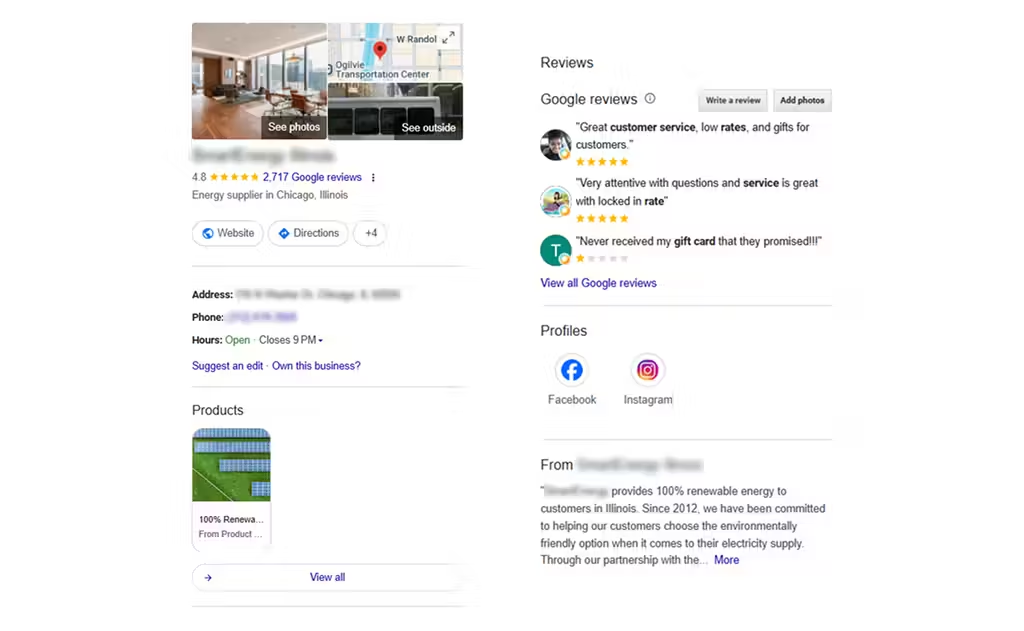
Beyond your GBP optimization, build dedicated location pages for every city you serve. This is vital for utility companies, doctors, lawyers, and every local business alike.
In your SEO for the energy industry, each page must reference local neighborhoods, nearby high-value projects, and customer reviews from that zip code.
Customers can’t find you right now. Why? We identify your #1 issue and how to fix it in our solar SEO guide.
4. Improve Your AI Search Visibility with a GEO Plan
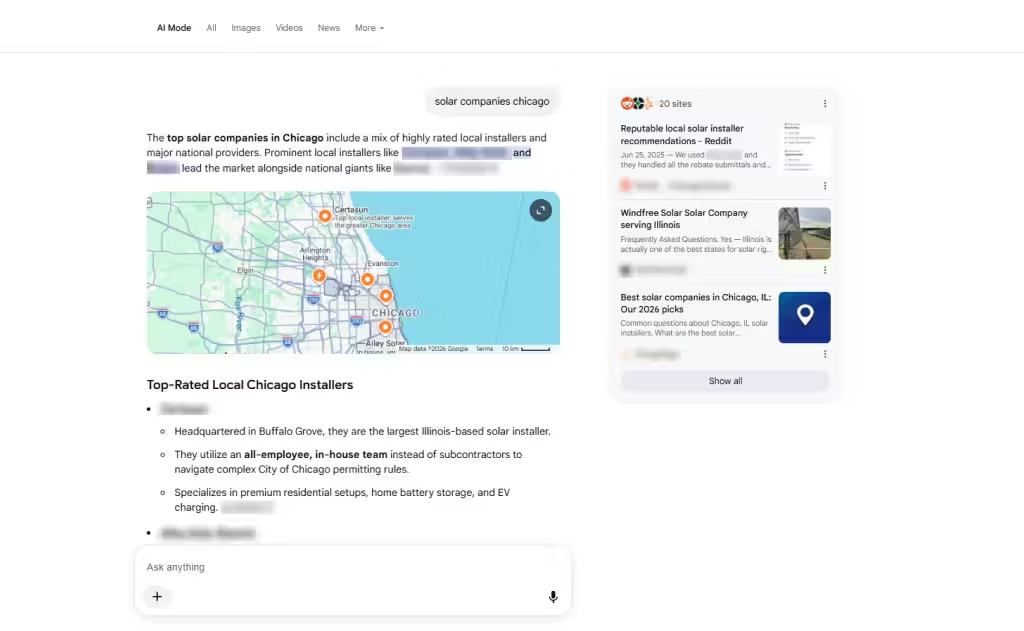
By the end of 2026, half of your prospects will use AI to find a contractor.
They’ll open ChatGPT, Perplexity, or Google AI Overviews and ask things like “which clean energy company should I call in [city]?”
AI gives them a confident answer on the spot with 2-3 company names.
Only 9% of businesses have any GEO strategy right now. That’s your window.
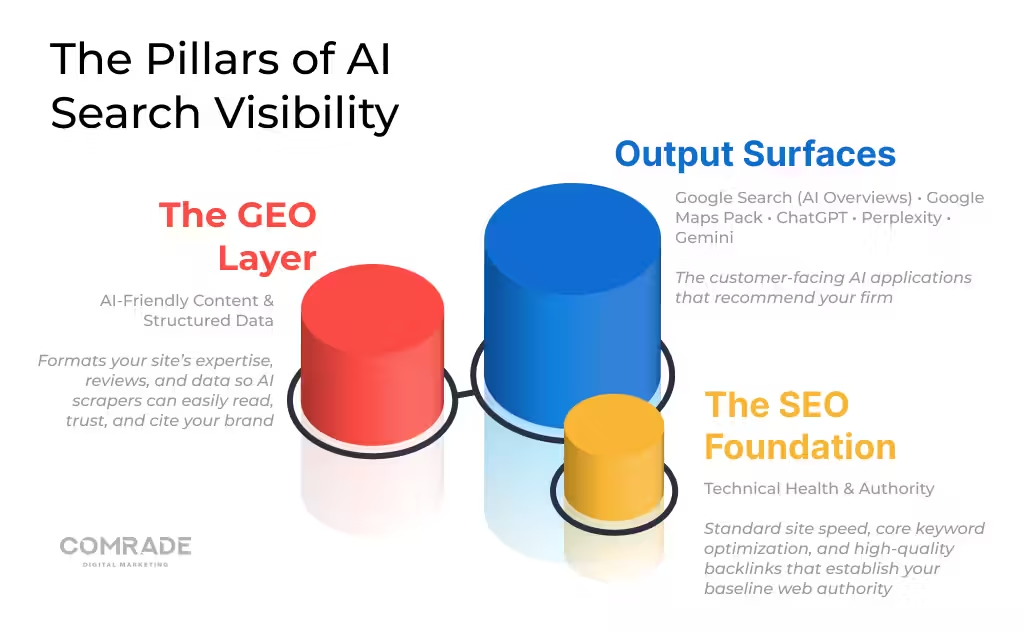
You don’t need to start from scratch. AI visibility is built on 80% of your SEO foundation. Every AI platform pulls its answers from websites Google already trusts. If you’re ranking on page one, you’re already most of the way there.
The remaining gap comes down to a few AI-specific moves:
- Entity clarity: Your business name, address, phone, and service descriptions must match exactly everywhere they appear online
- Extractable content: Pages built around direct questions like “how much does a geothermal heat pump cost in [city]?” are what AI pulls from
- Citation sources: ChatGPT and Perplexity pull from specific directories like your Google Business Profile, Yelp, BBB, Angi, when constructing recommendations
- E-E-A-T signals: Real credentials, named team members, verified client results, and a strong review profile
Being cited by ChatGPT is great for brand awareness. It carries a third-party authority signal that no ad budget can replicate to get you more qualified leads.
Move on this now in your search engine marketing plan.
Build your AI authority today, and you’ll be the default recommendation, making it harder for your competitors to catch up.
5. Finesse Your Website with Technical SEO
We like to tell our clients: Technical SEO is like the plumbing in your house. Nobody sees it. But if it’s broken, you’ll know it.
You could have the best content in the renewable energy industry, a fully optimized Google Business Profile, and a killer backlink profile, and still rank poorly.
Why? Because if your website loads too slowly, has bad mobile responsiveness, or is missing a security certificate, it is effectively serving as a poor lead generation tool.
How does Google evaluate your site behind the scenes?
| Technical element | What it means | Ranking impact |
|---|---|---|
| Page speed | Pages must load in 3 seconds or less. Compress images, minify code, enable browser caching (especially if you’re running interactive calculators) | 🔴 Critical |
| Mobile responsiveness | Mobile devices drive over 62% of global search traffic. Google ranks your mobile site first. If it breaks on a phone screen, your rankings follow. | 🔴 Critical |
| SSL security | That padlock in the browser bar is important. Google actively favors HTTPS sites in rankings. Still on HTTP? You’re leaving ranking points on the table. | 🟠 High |
| Site structure | Clean URLs, logical navigation, and proper internal linking tell Google (and AI) what your site is about and which pages matter most. | 🟠 High |
| Web design | Clean layouts, real project photography, and an eco-conscious aesthetic tell a prospect they’re in the right place. | 🟡 Medium |
| Schema markup | Structured data tells Google and AI platforms exactly who you are, what you offer, and where you operate. | 🟡 Medium |
Pro Tip: Technical SEO is the one area we’d strongly recommend not DIYing.
It’s genuinely easy to break something like a robots.txt file blocking the wrong pages or a caching plugin conflicting with your theme.
A renewable energy SEO company will know exactly where the landmines are, and fix issues in a matter of minutes to fetch you more high-quality leads.
6. Set Up a Strong Backlink Portfolio and Boost Your Digital PR
Every time a reputable website links back to your content, Google takes notice. By “reputable,” we mean a local news outlet, an industry publication, or a government energy program page.
In today’s digital age, Google interprets that as a trust signal. The more credible the source, the more weight the vote carries!
According to a Backlinko and BuzzSumo study of 912 million blog posts, 94% of all content earns zero external backlinks. Most energy companies are publishing content nobody links to.
So, how do clean energy companies earn backlinks? As an agency that does SEO for renewable energy companies, here’s what we suggest:
Original Data and Research
Publish in-house numbers from your installs, local rebate program updates, or regional energy trends. Journalists and bloggers need statistics to cite.
Digital PR
Share newsworthy updates with local media. A major installation milestone, a community clean energy initiative, or a partnership with a local municipality are all legitimate news hooks.
Industry Directories and Associations
Get listed on every platform your customers and Google already trust: SEIA, Energy Star, your local Chamber of Commerce, BBB, and government energy program pages.
Guest Contributions
Contribute expert commentary to industry publications covering clean energy trends, policy changes, or technology updates.
Quality Over Quantity
Internalize this: One authoritative backlink from a reputable source is better than 10 low-quality ones.
How Clean Energy Companies Can Attain Page #1 Rankings
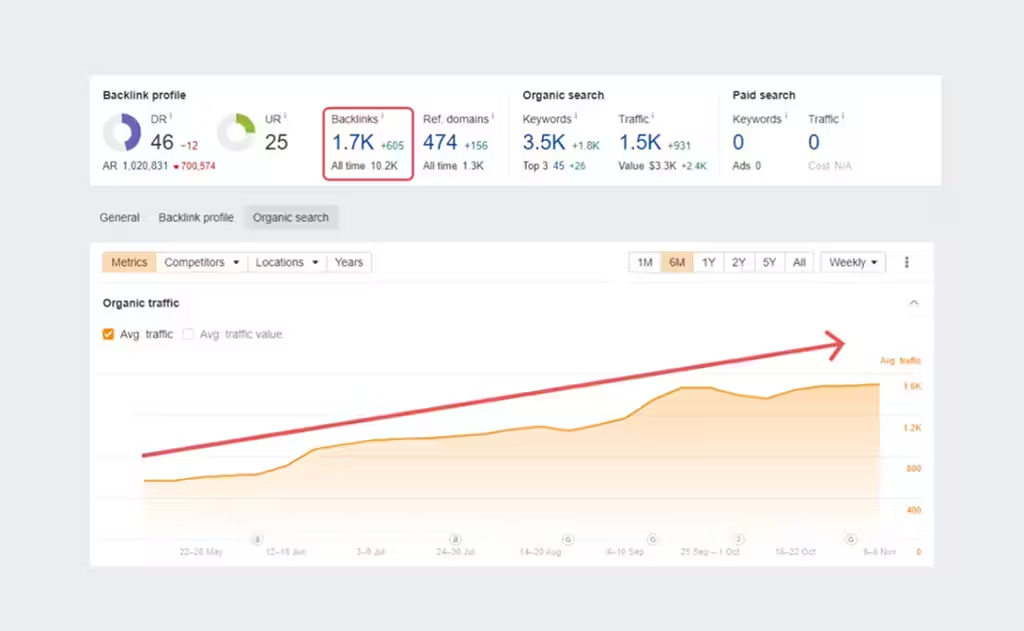
We’ve seen so many solar companies drop the ball here. One, in particular, had no backlinks on their main service page — “geothermal heat pump installation in Oregon.” This page sat at position 34.
We suggested they build a presence across energy industry directories (like SEIA and Energy Star) and secured 2 features in regional publications. That one page went from 0 to 14 referring domains in 90 days.
That same page climbed from position 34 to position 6 for their target keyword!
Backlinks work. In 2026, you need them to show up in AI Overviews and ChatGPT recommendations.
Every company on AI search is well-cited across the web. Digital PR and link building are how you build the kind of presence on AI platforms.
7. Gather More Reviews and Boost Your Reputation
Imagine this: A potential client finds you on Google and sees a 3.2-star average. What do you think they’ll do next? Move on to a better-rated competitor.
Reviews, ratings, and public feedback shape your hireability.
For clean energy companies, this carries extra weight. You’re asking someone to spend $15,000–$40,000 on an installation they’ve never done before. That’s a nervous purchase.
What does active review management look like in practice?
- Send a review request text within 24 hours of every completed install. SMS review requests get a 38% engagement rate versus 27% for email.
- Respond to every review, good and bad, in a human voice
- Address negative feedback publicly and fast; 89% of future customers are reading your business’s responses.
- Set up alerts across Google, Yelp, Angi, and BBB so you know the moment a new review drops.
When your reputation is actively managed, customers have fewer doubts about taking the next step.
We audit a LOT of clean energy companies. At least 5 out of 10 have unanswered negative reviews sitting on their Google profile.
That silence reads as suspicious, and it invites more of the same.
8. Measure Your SEO Performance and KPIs Like a Hawk
Most measure their SEO success by rankings and traffic. That’s the wrong scoreboard.
Rankings tell you where you sit. Traffic tells you how many people showed up. Neither tells you whether any of it is generating revenue.
Are people filling out a quote form? Calling your office? Booking a consultation? That’s what your SEO should be measured against!
Here’s what we track for clean energy clients specifically:
| KPI | What it actually tells you |
|---|---|
| Quote requests and form fills from organic | Is your SEO generating real buying intent or just curious clicks? |
| Service page engagement | Are website visitors reading your heat pump or EV charging pages or bouncing immediately? |
| Location page performance | Which service areas are pulling leads and which are dead weight? |
| Conversion paths | Where does a prospect drop off between first search and booked job? |
| Cost per lead by channel | Is organic search beating paid ads over time? Within 12 months, it should be. |
Google Analytics and Google Search Console give you this data for free.
If your SEO agency leads every monthly report with rankings, ask them what those numbers generated in terms of high-ticket projects and actual revenue.
No answer? Well, then that’s your answer.
Power Up Your Pipeline with a Top-Tier Renewable Energy SEO Strategy
Somewhere in your service area right now, a potential client needs your help.
Unfortunately, they don’t know you exist. You have a visibility problem, and it’s exactly what a well-built, customized SEO strategy fixes.
The 8 strategies can’t be bolted on one at a time. They work because they feed off each other.
But running all of this at full-strength while managing installs, crews, and quotes is impossible. That’s a 40-hour-a-week job on its own.
Partner with the SEO experts at Comrade today. We’ve helped 130+ contractors gain unstoppable visibility and attract new clients every month, with clients often hitting an 820% ROI in the first 12 months.
Don’t miss another job in your neighborhood.
Book Your Free Strategy Call Today
FAQs on SEO for Power Companies
-
Can SEO help with both residential and commercial (C&I) energy clients?
Yes, but they need separate strategies. Residential clients search differently than property managers or facility engineers. A smart SEO content strategy for the energy industry builds distinct pages, keywords, and content for each audience rather than trying to serve both with one generic approach.
-
Is SEO worth it for a small or local solar/renewable company?
Absolutely. Local and small companies actually have an advantage. You can dominate a specific geographic market far more easily than a national brand can. A customized SEO strategy targeting your city and surrounding service areas levels the playing field fast.
-
How long does renewable energy SEO take?
Most clean energy companies start seeing meaningful movement in three to six months. Significant lead growth typically kicks in around the 9 to 12-month mark. SEO is a long-term strategy but the leads it generates cost far less than paid ads over time.
-
How much does renewable energy SEO cost?
Most renewable energy SEO services range from $2,500 to $5,000 per month, depending on market competitiveness, scope, and starting position. The better question is cost per lead; a well-run SEO program typically beats paid search on that number within 12 months.
-
How do I rank when I’m competing against big national energy brands with huge budgets?
Stop competing on their terms. National brands dominate broad keywords. Your edge is specificity; long-tail keywords, local service area pages, and hyper-relevant content that a national brand would never build for your zip code. That’s where smaller companies consistently win.
-
How do AI search engines decide which energy companies to recommend?
AI tools pull from sources they already trust like strong Google rankings, consistent directory listings, verified reviews, and clearly structured content that directly answers customer questions. Build those and your chances of being recommended by ChatGPT or Perplexity increase significantly.