
Dave’s neighbor spots it first: a massive oak, leaning right over the fence line. She texts him a photo with three words: “Is this normal?” Dave doesn’t know. To be safe, he does what almost every homeowner does next: he grabs his phone and Googles “tree removal near me.”
If your business isn’t in that first fistful of results, you won’t make Dave’s shortlist. Tree service PPC closes that gap.
Pay-per-click advertising drops your tree care company directly in front of people who are already searching, already ready, and already local. When well executed, it beats organic timelines by months and beats traditional advertising on every measurable front.
In this guide, we break down how PPC for tree services works in 2026: the platforms worth your budget, the strategies that convert clicks into booked jobs, the benchmarks to hold yourself to, and the mistakes that drain your ad spend.
Why PPC for Tree Services Works So Well
Tree care is an unusually good fit for PPC, and the reason comes down to intent. When someone searches “emergency tree removal near me” at 6 a.m. after a storm, they’re not browsing. They’re most likely ready to hire a tree removal company. PPC captures that moment.
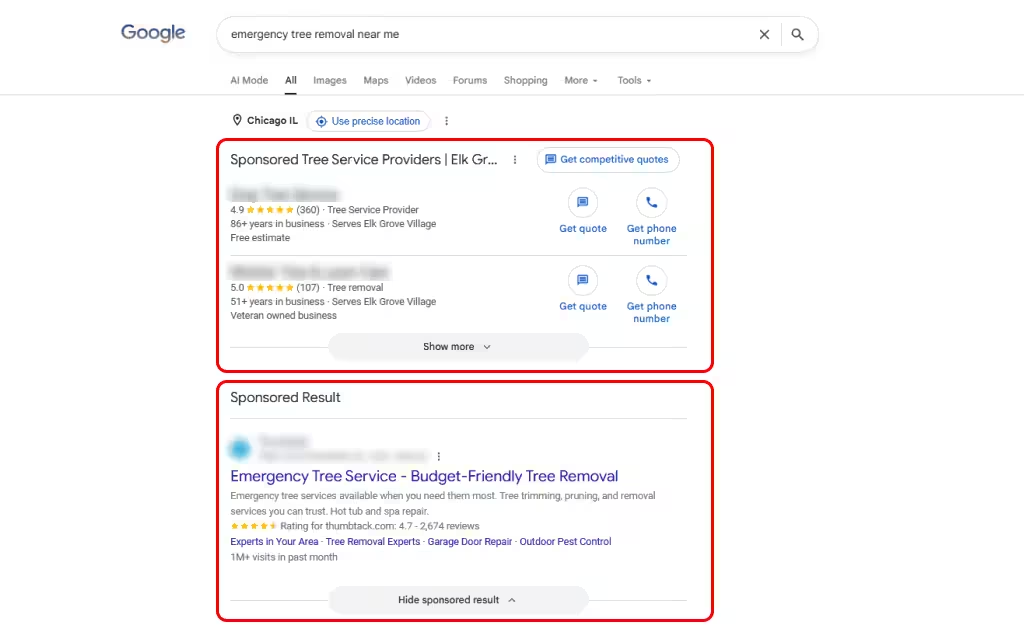
Unlike SEO, which builds authority over 6-12 months, paid ads put your tree service at the top of the page the moment your campaign goes live. The beauty of it is, you can serve those ads to specific ZIP codes or a radius around your yard and nowhere else, so every dollar of your budget stays inside your service area. And because you only pay when someone clicks, your spend flows exclusively toward warm prospects, rather than a crowd that scrolls past.
The channel is also uniquely suited to how tree work actually happens. Demand isn’t steady; it spikes with storms, seasons, and sudden hazards. PPC lets you scale visibility on the days it matters and pull back when it doesn’t. Every click, call, and form fill is tracked, so you can trace revenue back to the exact keyword that produced it. That accountability matters more every year.
Yelp reported that home services led the way in new-business openings across every U.S. state throughout 2024, and Google Search CPCs across the sector jumped roughly 45% year-over-year in 2025 according to LocaliQ’s benchmark data. Even when a homeowner doesn’t click today, repeated top-of-page exposure builds the name recognition that wins the call tomorrow.
For a home services vertical with high job value and urgent, local demand, few marketing channels pay back this cleanly.
Which Platforms Should a Tree Service PPC Company Focus On
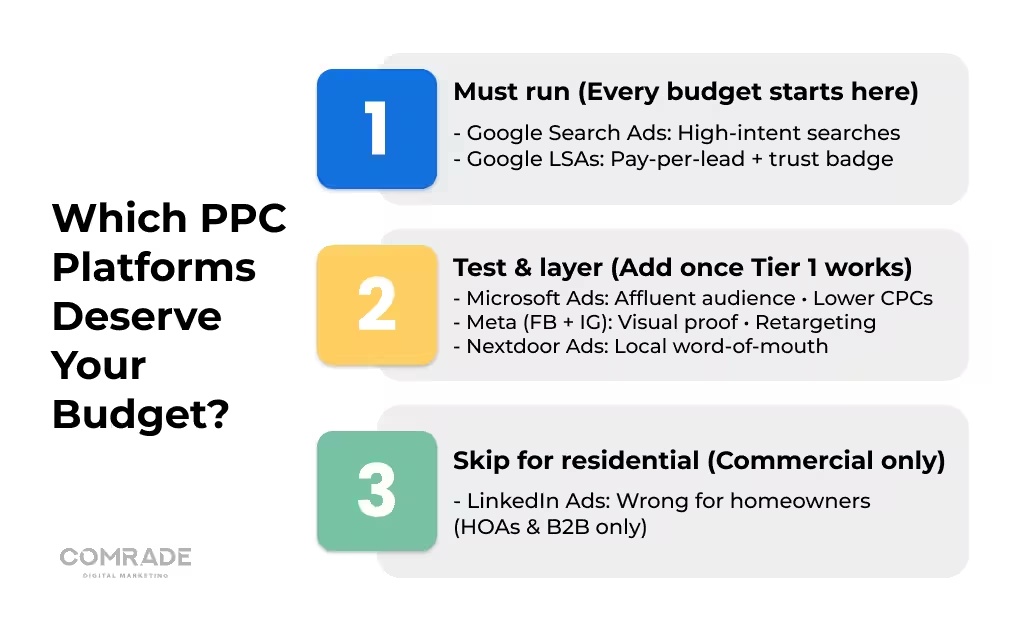
Not every ad platform is worth your budget. For the tree care industry, the mix that produces leads consistently is narrower than most agencies pretend. Google Ads on the search network is non-negotiable. This is where high-intent searches like “tree removal near me” and “stump grinding cost” happen. If you run only one channel, run this one.
Google Local Services Ads
The channel most tree companies underuse, though, is Google Local Services Ads (LSAs). You pay per lead instead of per click, Google’s “Google Guaranteed” badge lends you more credibility, and LSA slots sit above regular search ads on mobile. Getting verified takes background checks and insurance proof, but the payoff is qualified phone calls at a predictable cost. It’s often the highest-ROI channel in the entire mix.
Microsoft Ads
Beyond Google, the picture gets more selective. Bing Ads (now Microsoft Ads) are worth 10–15% of your search budget as a test. Smaller volume, but older and more affluent homeowners tilt toward Bing, and CPCs run cheaper.
Facebook and Instagram Ads
Facebook and Instagram aren’t for capturing urgent demand; they’re for building it. Before/after photos of a big oak removal or a clean stump-grind cut through the feed and work especially well for seasonal offers, storm-prep reminders, and remarketing to site visitors.
Nextdoor Ads
Nextdoor Ads are uniquely valuable for local trades. Your ad sits next to neighborhood conversations, and Nextdoor recommendations still function as online referrals from neighbors.
LinkedIn Ads
LinkedIn Ads can be skipped unless you’re chasing commercial contracts with HOAs, property managers, or municipalities; for residential, it’s the wrong audience.
8 Tree Service PPC Strategies Proven to Work
Launching a campaign is simple; converting pricey leads is where the profit lies. We’ve ordered these 8 PPC strategies the way you’d build a campaign, with the targeting first, as everything downstream is wasted if you’re chasing the wrong leads.
1. Keyword Research and Intent Mapping
Every effective campaign starts with the right keyword list, and the fastest way to sort a long list is by intent. Emergency-intent terms like “emergency tree removal,” “fallen tree service,” and “storm damage tree cleanup” convert fastest and command the highest bids, usually worth every cent.
Service-intent terms like “tree trimming near me,” “stump grinding [city],” and “tree pruning cost” produce steady, high-quality lead volume at a more moderate cost. And research-intent terms like “how much does tree removal cost” convert lower but feed valuable remarketing audiences you’ll monetize later.
Whatever bucket you’re bidding on, layer in long-tail variations, like “crane tree removal [neighborhood],” “ISA certified arborist [city].” They cost less per click and often convert better because the intent to hire is sharper.
2. Geotargeting for Local Reach
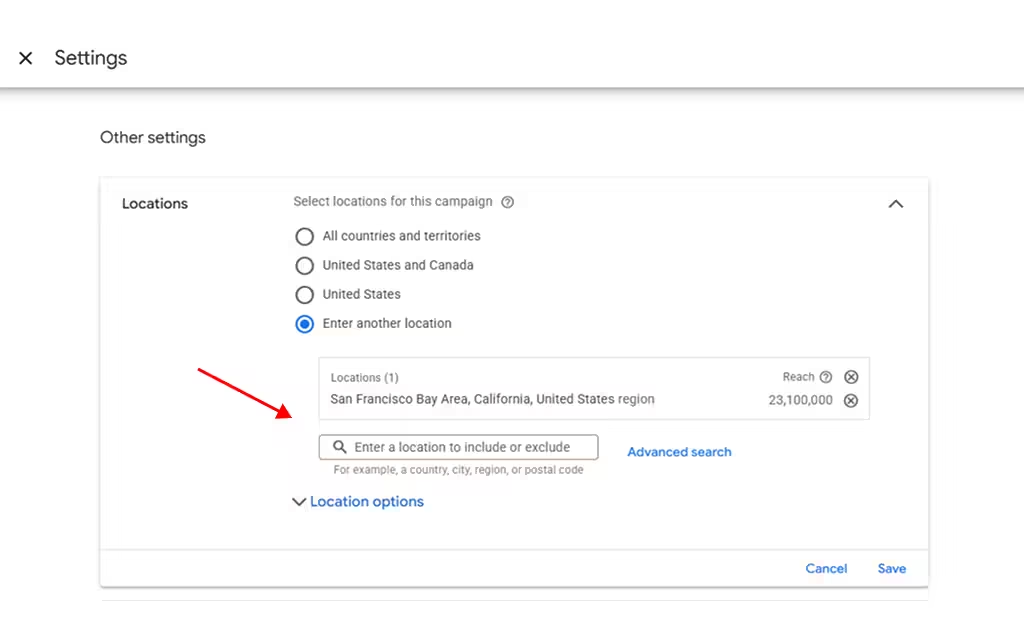
Tree service is a radius business, so every dollar spent showing your ad outside your service area is wasted. In Google Ads, define your targeting by ZIP code, neighborhood, or a radius (typically 15–25 miles) around your yard, and use bid adjustments to spend more aggressively in the neighborhoods where jobs are most profitable and less on the fringes.
Geographic pricing swings are severe; aggregated 2024–2025 agency data compiled by PipelineOn shows urban home-service CPLs running 20–50% above national averages, with major metros hitting $90–$120 per lead for the same job that costs $25–$40 in a rural market.
Then mention the city or neighborhood in the ad copy itself. “Trusted tree removal in [City]” is better than generic copy. If you serve multiple areas, build separate campaigns per region so budgets and messaging can flex independently.
3. Ad Copy and Extensions for Maximum CTR
Your headline has one job: get the click. Lead with what a homeowner in a hurry needs to know: 24/7 availability, ISA-certified arborists, free estimates, fully insured.
Then use every ad extension Google offers, because extensions are free, they expand your ad’s real estate on the page, and they measurably raise click-through rate.
| Extension type | What it does | Why it matters for tree service |
|---|---|---|
| Call | One-tap phone number on mobile results | Emergency callers dial before they click |
| Location | Pulls your Google Business Profile (GBP) address into the ad | Signals “we’re local” instantly |
| Sitelink | Deep-links to service pages | Splits traffic across removal, trimming, stump grinding |
| Callout | Short trust boosters like “Licensed & Insured” | Fits in objections before the click |
| Structured snippet | Lists your service types | Helps qualify leads before they click |
| Image | A photo of clean crew work | Stops the scroll on mobile SERPs |
4. Landing Page Optimization (Where Most Ad Spend Gets Wasted)
This is the biggest fix in almost every tree service PPC account we audit. Sending an ad to your homepage is a leak. Your homepage is designed for general browsing, while a landing page is designed for one action. The gap is measurable and brutal: homepages average a 2–3% conversion rate while purpose-built landing pages regularly hit 6–11%, a roughly 300% performance delta for the same ad spend. Even a MarketingSherpa study found businesses saw a 64% average lift in conversion rate simply by switching to dedicated landing pages.
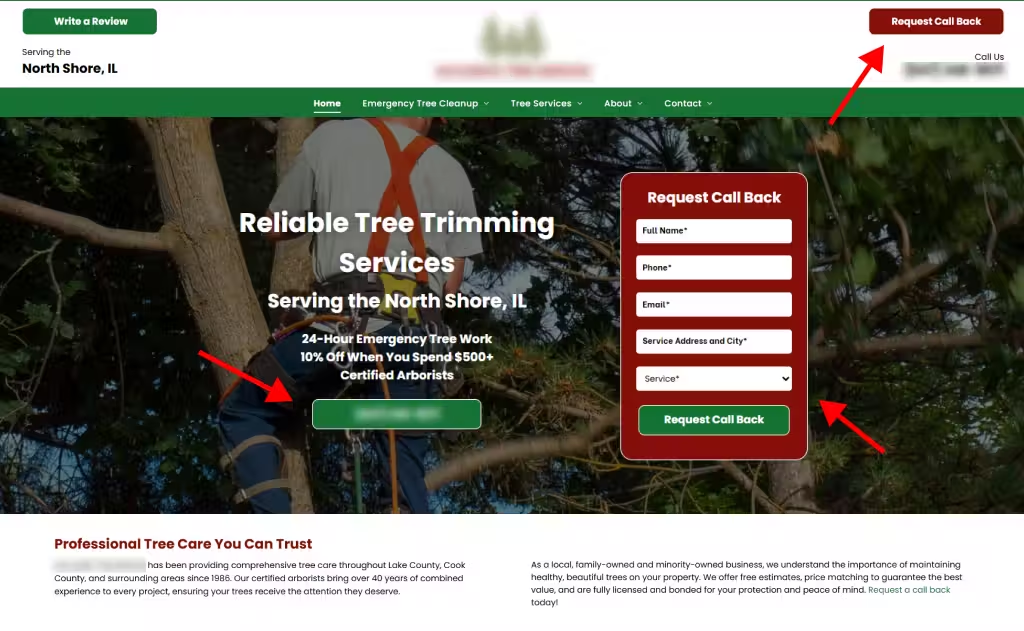
A landing page that earns its ad spend matches the ad’s promise in the H1 (“Emergency Tree Removal in [City]”), puts a click-to-call button and a short form above the fold, and shows real photos of your crew and finished work. No stock or AI-generated images.
It stacks trust signals like ISA certification, insurance, license, Google review stars, and BBB accreditation where a scanner will actually see them. Speed matters as much as design; Google’s own research shows 53% of mobile users abandon a page that takes longer than three seconds to load, and Google Ads penalizes slow pages with higher CPCs. Strip out the site navigation so the only actions are “call” or “request a quote.”
Paid traffic and organic traffic compound when both sides of the funnel are strong. Our tree removal SEO guide walks through the organic side in detail.
5. Remarketing to Visitors Who Didn’t Convert
Most first-time visitors don’t book, and that’s normal. Tree work is a considered purchase, and homeowners often shop three or four quotes. Remarketing keeps you visible while they compare.
Segment audiences by page: someone who viewed your emergency-removal page gets different creative than someone who read your stump-grinding guide.
Run remarketing across the Google Display Network, YouTube, Facebook, and Instagram, and rotate creative every two or three weeks so ads don’t burn out. A 10–15% remarketing budget allocation is usually the sweet spot.
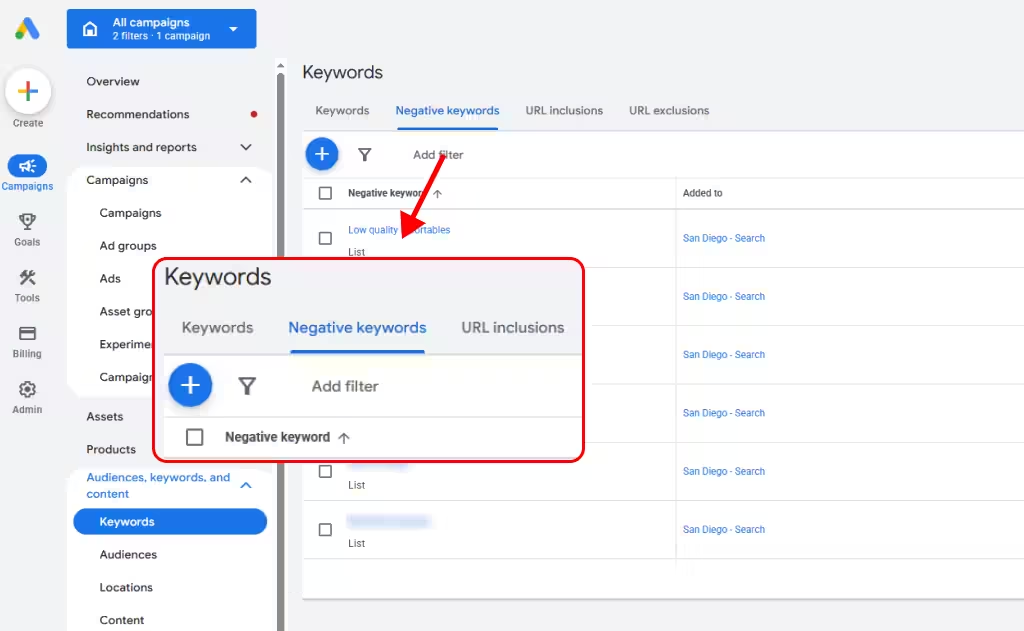
6. Negative Keywords: Stop Paying for Bad Clicks
Negative keywords stop your ads from showing on search engines that will never convert. For tree services, a baseline list should block job-seeker terms (jobs, employment, hiring, salary), info-only intent (DIY, how to, free), rental terms, and off-topic matches like “Christmas tree” or “family tree.” Add commercial or municipal terms if you only serve residential.
Then review the Search Terms report in Google Ads weekly for the first month and monthly after that. This single habit typically cuts wasted spend by 15–30%.
7. Ad Scheduling for When Homeowners Actually Call
Tree service demand isn’t flat. Emergency searches spike after storms; routine service inquiries peak on weekday evenings and Saturday mornings.
Pull 60 days of conversion data, identify your top-performing hours, and use Google Ads’ ad schedule to bid more aggressively during those windows and pull back during dead hours.
During storm events, override the schedule entirely and go 24/7 with higher bids on emergency keywords.
8. Call Tracking and Conversion Tracking Done Right
You can’t optimize what you don’t measure.
Serious tree service PPC campaigns run dynamic call tracking numbers through CallRail or WhatConverts so each lead can be attributed to a specific keyword and ad, track form conversions in Google Ads and GA4, record calls to score lead quality (a click that produces a wrong-number call isn’t a real conversion), and import offline conversions so booked jobs flow back into Google Ads to train Smart Bidding. Without that stack, you’re optimizing for clicks and forms, instead of revenue.
Tree Service PPC Benchmarks
Numbers to set your expectations against, drawn from home-services PPC data:
| Metric | Tree Service Range | Home Services Avg |
|---|---|---|
| Cost per click (CPC) | $8–$15 | $6.50 |
| Emergency keyword CPC | $15–$40+ | — |
| Click-through rate (CTR) | 5–8% | 4.8% |
| Landing page conversion rate | 8–14% | 10.22% |
| Cost per lead (Search Ads) | $60–$150 | $73 |
| Cost per lead (LSA) | $30–$90 | — |
LocaliQ 2025 Search Advertising Benchmarks analyzed over 3,200 home-services campaigns and pegs the industry average cost per lead at $70.11, while PipelineOn’s aggregated agency data shows outdoor services converting at 12–16% and CPLs varying from $28 to $80+.
Tree service CPCs run higher than most home-service verticals because job values are high and competition is fierce, especially in storm-prone regions. But average job value ($500–$3,000+) means the math works, provided your conversion rate and lead quality stay strong.
WordStream’s Senior Manager Cliff Sizemore summed up the 2025 shift bluntly: “Costs are rising, but so is performance. 65% of industries saw better conversion rates in 2025. The main takeaway here is that a smart strategy beats cheap clicks.”
How to Track Tree Service PPC Success in Google Ads
If you’re managing campaigns in-house, this is the minimum tracking setup, done in order:
- Set up conversion actions under Tools & Settings → Measurement → Conversions. Create separate actions for phone calls from ads, phone calls from your tree service website, click-to-call on mobile, and form submissions.
- Install the Google tag on every page of your site, plus event snippets on your “thank you” pages, and verify installation with Google Tag Assistant.
- Link Google Analytics 4 to Google Ads so audience data and engagement metrics flow both ways.
- Import LSA leads into Google Ads for a unified reporting view.
- Review the Campaigns → Conversions column weekly for the first 90 days, watching cost per conversion, conversion rate by keyword, and the search terms report.
- Set up automated rules or scripts to pause underperforming keywords, adjust bids by device, and raise budgets on high-converting days.
The goal is a dashboard that answers, in under a minute: which keyword produced our last ten booked jobs, and what did each one cost?
Why Work With a Tree Service PPC Agency
Running a tree care business is already a full-time job. Managing keyword bids, negative-keyword lists, landing page tests, call tracking, and Smart Bidding on top of that is where most owner-operators either burn out or burn budget.
A specialized tree service PPC agency earns its fee on three fronts. First, vertical experience: we already know the negative-keyword baselines, the emergency-keyword bidding patterns, and the landing page structures that convert for tree companies, which cuts six months off the learning curve.
Second, tooling: call tracking, heatmapping, competitor bid intelligence, and offline conversion imports aren’t cheap individually, but agencies bundle them into the retainer.
Third, accountability: weekly optimization, monthly reporting, and quarterly strategy reviews keep the account improving whether or not you have time to look at it.
At Comrade Digital Marketing, we’ve spent over 18 years running paid campaigns for home service contractors, including tree care companies. Our tree service PPC experts handle keyword strategy, ad creative, landing page design, call tracking, and monthly optimization as a single system.
Schedule a free consultation if you want a second opinion on your current campaigns.
Frequently Asked Questions
-
How much should a tree service company budget for PPC?
Most tree service companies should start with $2,000–$5,000 per month in ad spend for a single service area, plus management fees if working with an agency. Emergency-focused campaigns in storm-prone metros can justify $10,000+ monthly. PipelineOn’s guidance is blunt: under $2,000/month you don’t have enough conversion volume for Google’s algorithm to optimize, and no agency will give you real attention; manage it yourself. Between $2,000 and $10,000/month, hire a freelancer or small agency. Above $10,000, a specialist agency is worth the retainer.
-
Is tree service PPC or SEO better?
They solve different problems. PPC delivers leads within hours and lets you scale on demand. It is ideal for emergency work and new service areas. SEO builds compounding, lower-cost lead flow but takes 6–12 months. Most successful tree companies run both: PPC for immediate demand capture, SEO for long-term authority.
-
How long does it take to see results from a tree service PPC campaign?
Clicks and calls typically start within 24–48 hours of launch. Meaningful optimization data, enough to know which keywords and ads convert, takes 30–60 days. A campaign should be profitable by month three; if it isn’t, the setup needs auditing.
-
What’s a good cost per lead for tree service PPC?
$60–$150 per lead is a healthy range for Google Search Ads in most U.S. markets, though the industry-wide average sits around $70. Google Local Services Ads typically deliver leads in the $30–$90 range. Emergency and storm-response keywords cost more per lead but convert to higher-value jobs.
-
Should I use Google Local Services Ads or regular Google Ads?
Both, if you can. LSAs deliver cheaper, phone-first leads with the trust of a Google Guaranteed badge, but volume is capped, and setup requires verification. Regular Google Ads give you keyword-level control and unlimited scale. Running them together typically produces the best cost per booked job.
-
Can I run tree service PPC campaigns myself?
Yes, but expect a learning curve. The tactical work, including bidding, negative keywords, ad copy tests, and landing page optimization, is manageable if you can commit 5–10 hours per week. The strategic work (attribution modeling, call quality scoring, offline conversion imports) is where most in-house campaigns plateau. If your billable-hour value is over $75, outsourcing usually pays for itself.
-
What’s the biggest mistake tree service businesses make with PPC?
Sending paid traffic to the homepage instead of a purpose-built landing page. A homepage is designed for general browsing; a landing page is designed for one action. The conversion-rate gap is roughly 3x: 2–3% for homepages versus 6–11% for dedicated landing pages, meaning most companies are paying triple for every lead they get.