
1 in 3 people use social media to discover new local businesses. You need active, engaged accounts, and no, you don’t have to worry about going viral. Even connecting with 100 local homeowners is huge for a pest control business. As digital marketing expert Jay Baer puts it, “Activate your fans, don’t just collect them like baseball cards.”
This guide breaks down a battle-tested pest control social media marketing playbook: platform picks with real numbers, 15 practical pest control social media ideas, posting frequency, budget, KPIs, and an expanded FAQ. Whether you handle it in-house or outsource your pest control social media management, you’ll leave with a plan you can start executing today.
Key Takeaways
- Narrow down to your ideal client so you don’t write posts for people who’d never hire you.
- Geo-tag everything as research shows posts with a location get 79% more engagement.
- Lead with education and safety content; “value first, sales second” earns trust faster than a promo.
- Prove your work with before-and-after visuals and review screenshots to shorten the decision cycle.
- Reply to comments and DMs inside 5 minutes, as response speed is the single biggest lever on conversion.
- When you run pest control social media advertising, target by ZIP code and homeowner status, not “everyone in my state.”
Why is Social Media Marketing for Pest Control Companies Important?
Data Reportal reports 93.8% of the global population uses social media every month. That’s undefeated reach for local visibility and trust-building.
As Seth Godin puts it, “People do not buy goods and services. They buy trust.” Social media is one of the cheapest trust-building machines a pest control business has.
A solid pest control social media strategy does five things at once for a home-services company:
- Reaches buyers earlier (before they’re panicking about a rodent);
- Speeds trust-building (71% of consumers are more likely to buy from a social referral);
- Shortens the decision cycle by answering common pest questions publicly;
- Boosts response rates on inquiries because active accounts get better organic distribution;
- Protects revenue year-round by keeping you visible outside peak season.
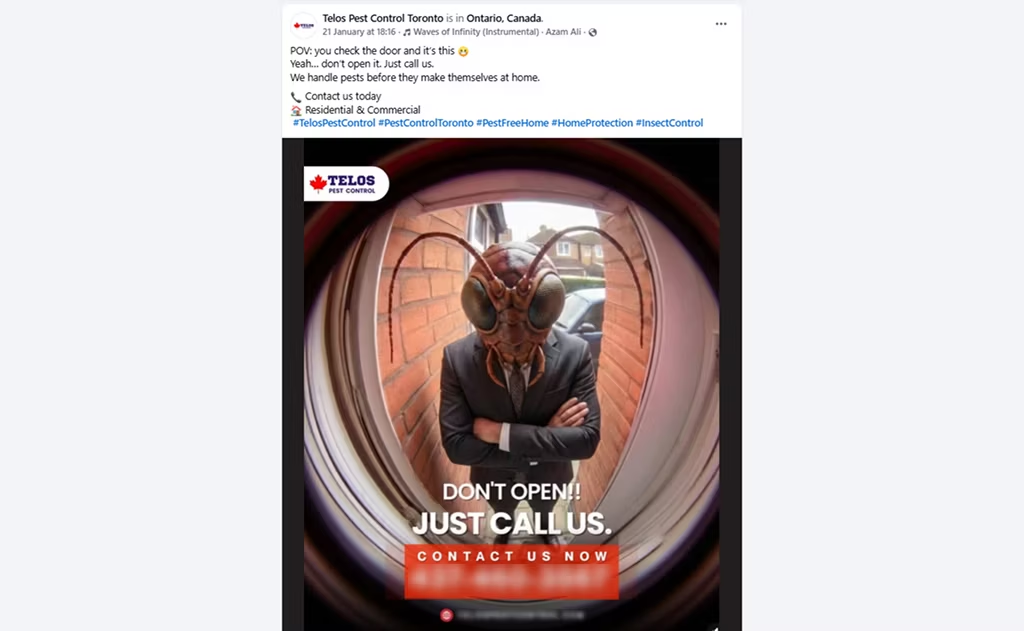
Telos Pest Control Toronto does this well on Facebook with funny bug images captioned “POV, you check the door and it’s this.” Humor sells when it lands.
Pest Control Social Media Platforms Compared (2026)
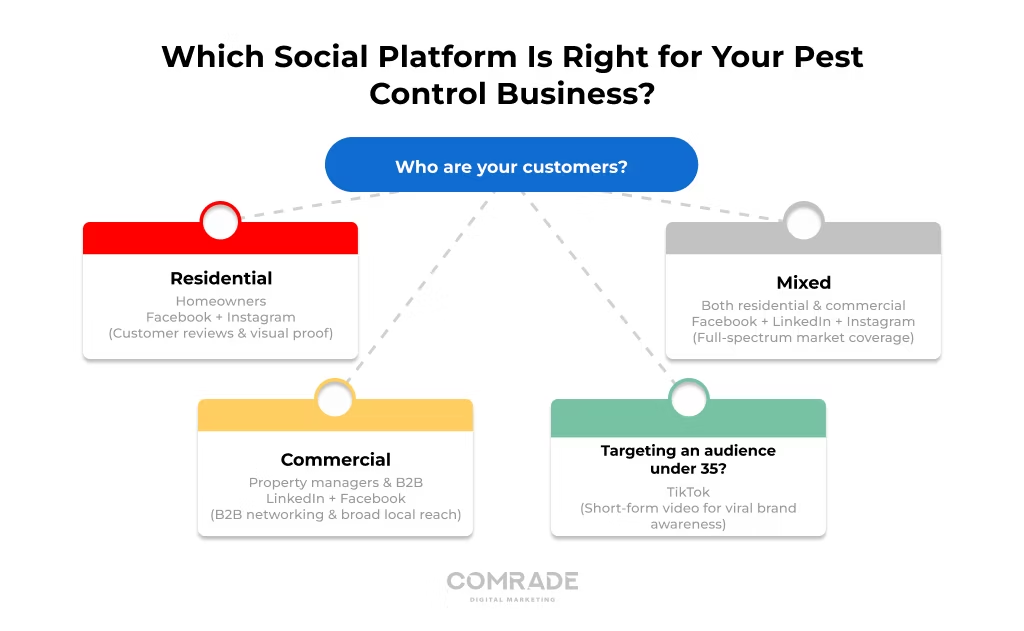
Social media is not Pokémon. You don’t gotta catch ’em all. Pick 2–3 platforms that match your target audience, then dominate those. Here’s how the platforms stack up for pest control specifically, based on a Pest Control Technology industry poll and current ad benchmarks:
| Platform | Preferred by PCOs | Best for | Avg. CPC | Conv. rate | Top content that hits |
|---|---|---|---|---|---|
| 47% | B2B, commercial contracts, property managers | High | ~6.1% | Certifications, case studies, safety compliance | |
| 38% | Residential leads, local community, reviews | ~$0.97 | ~9–12% | Before/after, testimonials, local job posts | |
| 7% | Visual proof, younger homeowners, brand feel | ~$3.56 | ~18% (paid + organic) | Reels <30 sec, carousels, behind-the-scenes | |
| YouTube | 9% | Long-tail SEO, how-to videos, authority | Medium | Varies | Tutorials, seasonal explainers, testimonials |
| TikTok | Emerging | Younger audiences, viral educational content | Low–Med | Varies | Short “gross” cleanups, red-flags-to-avoid, POV |
| X (Twitter) | Low | Quick seasonal alerts, timely tips | Low | Low | Weather-tied warnings, one-liners |
LinkedIn is the B2B goldmine. Luminous PR reports ~80% of B2B social leads come from here, making it ideal if you sell commercial pest control to property managers, HOAs, or restaurants.
Facebook is where homeowners book (52% use it to find local services); pair organic posts with our Facebook ads guide for pest control for the ad-set structure.
Instagram favors raw over polished: Reels under 30 seconds get 2x engagement, location-tagged posts reach ~40% more local users, and before/after carousels average 3x more saves.
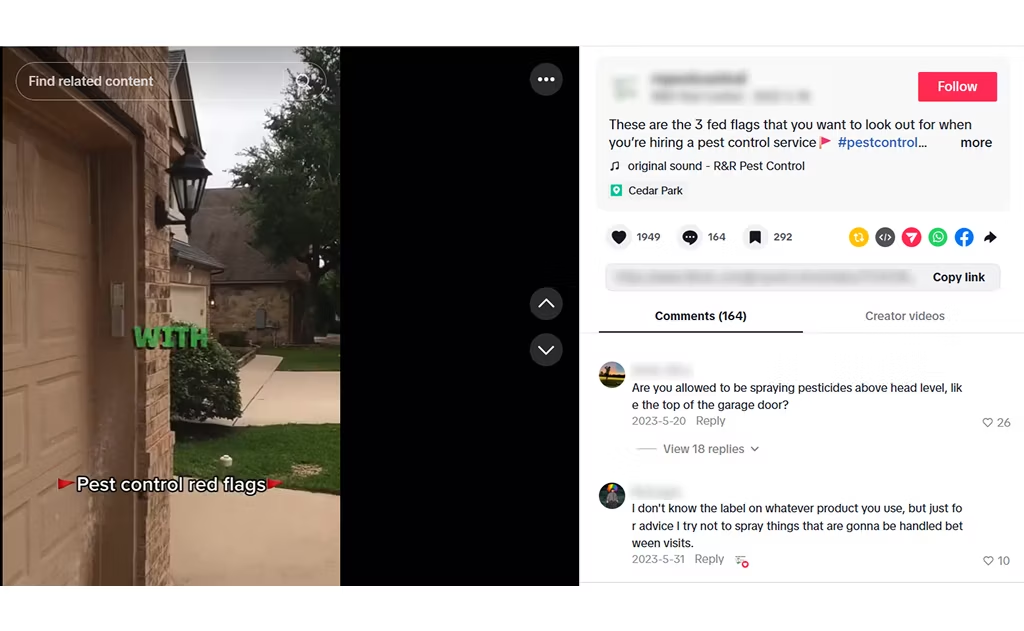
TikTok is built for viral “gross” pest content like R&R Pest Control’s 26-second red-flags TikTok, which sits at ~2,000 likes.
X (Twitter) is built for quick seasonal alerts (“Ant activity spikes after heavy rain”) like Grace Gym‘s mosquito-tips tweet, which hit ~4,000 likes with pure DIY value.
15 Pest Control Social Media Ideas to Get Bookings
The 15 ideas below consistently move the needle with real brand examples to inspire you. Pick two or three that fit your bandwidth, layer the rest in over the quarter.
1. Define Your Local Target Audience Clearly
Brian Chesky (CEO of Airbnb) nailed it when he said: “It’s better to have 100 people love you than 1,000,000 people sort of like you.”
Homeowner targeting is different from property-manager targeting. Lumping them together dilutes everything.
Get specific about the ZIP codes you serve, the property types (single-family, apartments, commercial, HOA), the seasonal pain your ideal client feels, and the concerns that keep them up at night (safety around kids and pets, speed, prevention).
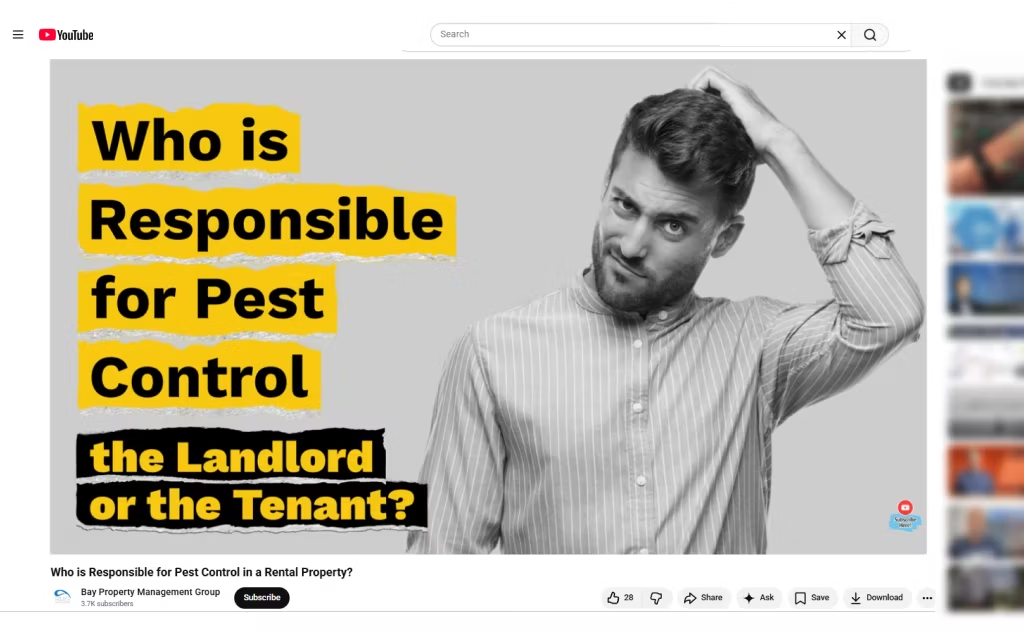
Bay Property Management Group’s YouTube nails this. Every video targets rental owners, and the algorithm rewards that clarity. Overwhelmed? A pest control marketing agency can zero in on your best-fit clients faster than trial-and-error.
2. Geo-Tag Every Post to Capture Nearby Leads
No one wants an exterminator three states away. Stack Influence reports posts with a location tag get 79% more engagement than posts without, because when you add location metadata, platforms know exactly which local users to show it to.
The rules for geo-tagging like a pro:
- Hashtag exact suburbs and neighborhoods (#LincolnParkChicago, not #GreaterChicago).
- Use names locals actually say out loud (“West Loop” or “Plano”) instead of vague metro descriptors.
- Pair geo-tags with real job visuals: “Garage seal-up in Naperville.”
- Also tag high-value areas you want to expand into, not just where the job happened.
3. Optimize Your Profiles for Local Search
Sprinklr found that 58% of people discover new businesses on social media, beating traditional search and even TV ads. Your profile is a landing page: it needs to work as hard as your website.
Use your exact business name across every handle, spell out service areas directly in your bio (“Serving Plano, Frisco, and McKinney”), put your phone and booking link on the profile itself, and weave service keywords like rodent control, termite treatment, mosquito services into the About section naturally.
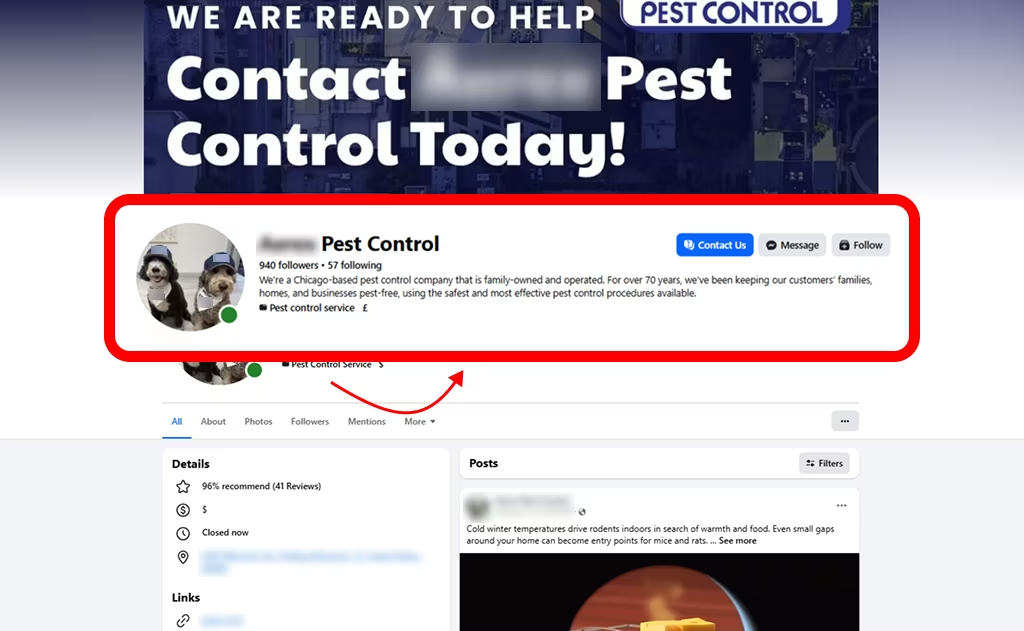
Pair this with strong pest control SEO so local search and social reinforce each other. Aerex Pest Control’s Facebook profile is a clean model with service area and keywords baked into the header.
4. Keep Branding Consistent Across All Platforms
Marq reports that 68% of businesses say brand consistency drives 10%+ more revenue. Jeff Bezos himself reinforced this idea when he said: “Your brand is what people say about you when you’re not in the room.”
Your logo, colors, service descriptions, and contact info should be identical across Facebook, Instagram, LinkedIn, YouTube, and TikTok.
Audit your profiles today. The fix is usually 20 minutes of work with a disproportionate payoff.
5. Post Safety and Prevention Tips Homeowners Can Use
Nobody wants to be “sold” to. As Mary Kay Ash said, “Pretend that every single person you meet has a sign around their neck that says, ‘Make me feel important.'”
That’s the core of good social media for pest control: value first, sales second. Quick prevention tips work because they’re actionable in the same scroll (“Wipe down pet bowls at night to avoid ants”), weekend checks reward small effort (“Seal gaps around utility lines with caulk”), and seasonal reminders tie your brand to weather (“After heavy rain, check basements for moisture”).
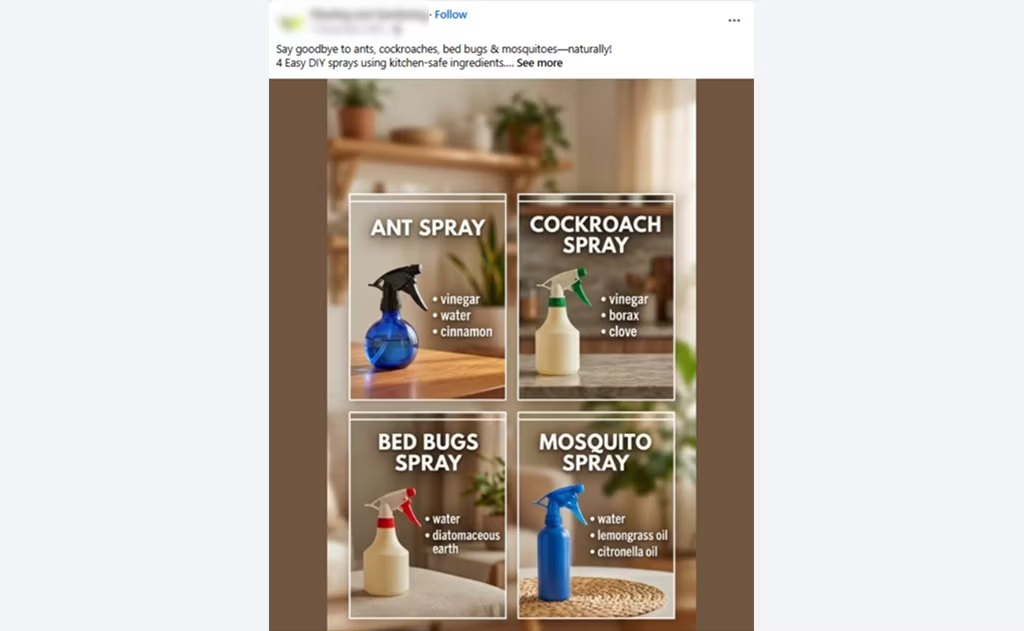
Always explain the why. Planting and Gardening’s post on natural DIY pest sprays hit 1.4K likes and 46 comments with pure educational content.
6. Share Before-and-After Pest Control Results
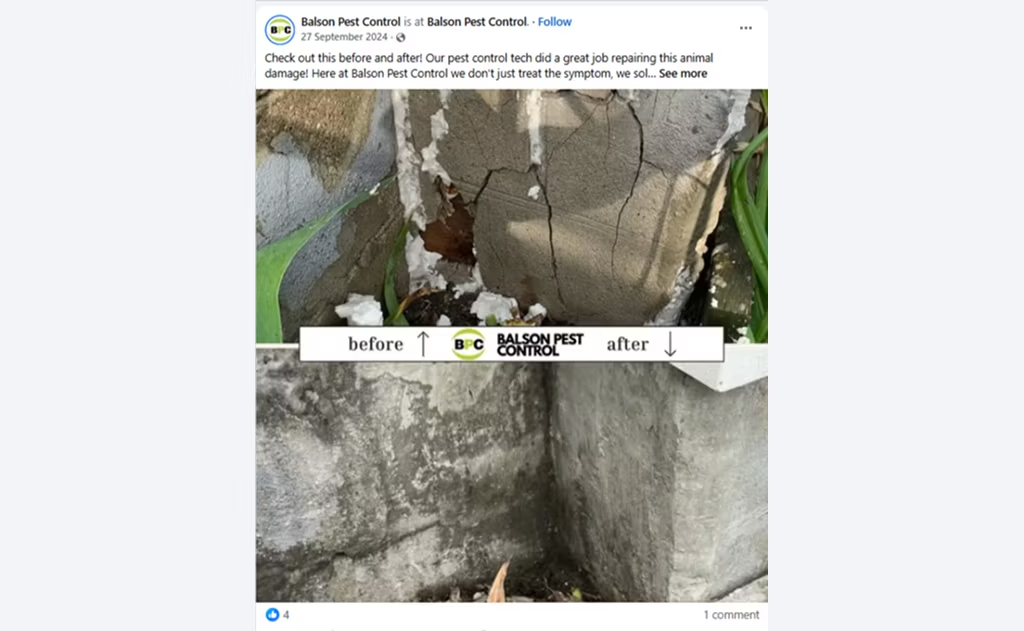
Before/after posts are undeniable visual proof. They turn anxiety into a satisfying result. Balson Pest Control’s damaged-wall repair post caught our eye even though we’re not shopping for pest services.
A great before/after shows the full transformation, explains exactly what you did in the caption (“Sealed entry points and added bait stations: ants gone in 48 hours”), localizes it (“Bed bug treatment in Elmwood Park”), and pairs the visual with a quick testimonial to double credibility.
7. Use Short Videos to Explain Your Services
72% of prospects prefer short-form video, and short videos consistently earn higher engagement than static posts across every platform in 2026.
The formats that convert for pest control are simple: a quick walkthrough of a typical treatment visit (transparency wins), a plain-English explanation of why ants or roaches keep coming back, a “what we look for first” inspection clip, and a “when it’s time to call a pro” video that helps homeowners spot warning signs early.
8. Run Targeted Pest Control Social Media Ads
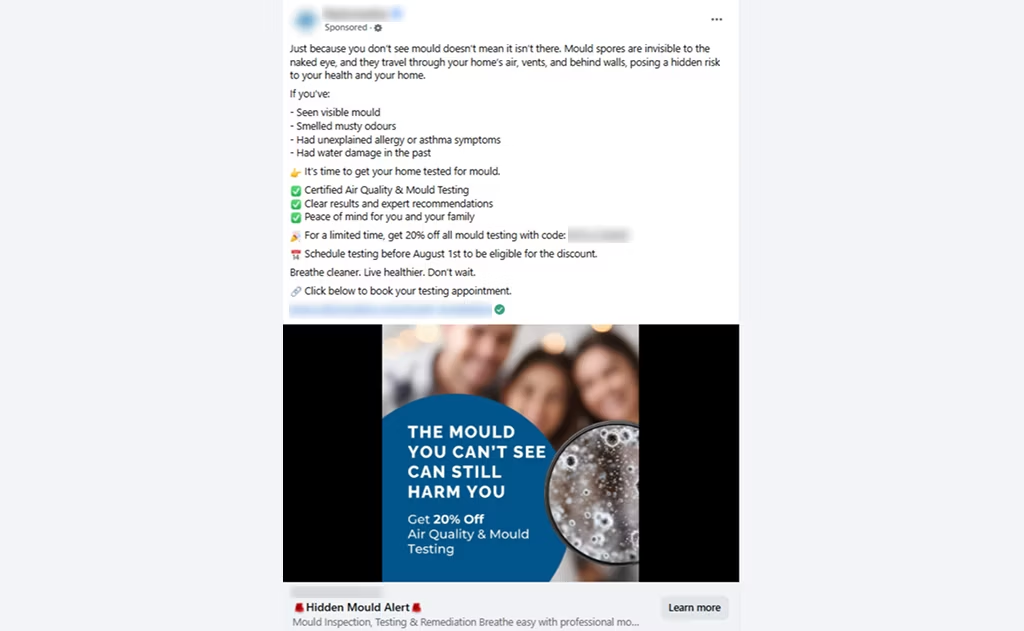
Paid ads are the ultimate cheat code around limited organic reach. 98% of brands run paid social. Restoranation’s Facebook ad (20% off mold testing, opening with relatable warning signs) cleared 400+ likes because it did the fundamentals right.
Those fundamentals: one clear service + one clear location + one clear CTA per ad, real photos and video instead of stock or AI-generated images (62% of people prefer authenticity over polish), tight targeting by location and homeowner status plus retargeting for site visitors, constant A/B testing, and mobile-first design (95% of social users are on their phones).
For the full playbook by service, see our step-by-step pest control marketing guide.
9. Showcase Real Customer Reviews and Success Stories
99% of people read reviews before buying, but counter-intuitively, Whistler Billboards found 4.5 stars beats a perfect 5 because it reads as authentic instead of manufactured.
Build your review flywheel by asking customers to name both the problem and the result (“Rodents gone in 2 days” beats “Great service!”), turning testimonials into short emotional stories, posting real photos of techs with real customers (no stock, no AI), and offering a small incentive like 20% off next service.
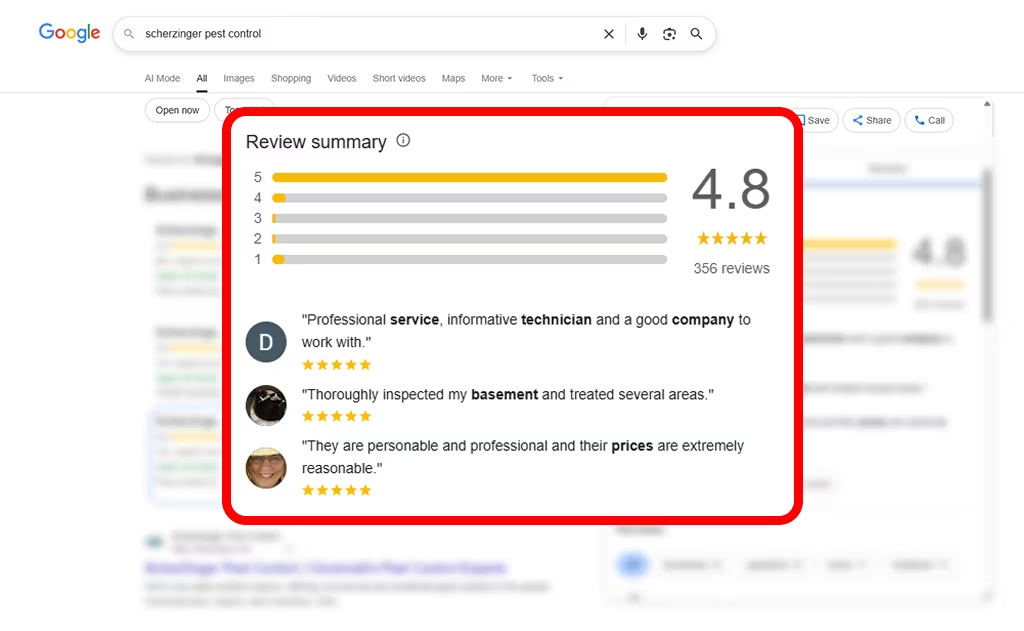
Scherzinger Pest Control’s 4.8-star Google reviews specifically call out “informative technicians” and “reasonable pricing.” That specificity is what convinces the next scrolling prospect.
10. Respond to Comments and DMs Within 5 Minutes
Chili Piper‘s research on the golden response window is brutal: replying within 5 minutes makes you up to 100x more likely to convert that lead than waiting even a few minutes longer.
Speed beats sophistication. Make it realistic by turning on push notifications, building saved replies for pricing/service areas/availability, assigning one person per shift to sweep messages, and sending a fast acknowledgement (“Got this, we’ll follow up shortly”) even when the full answer takes longer.
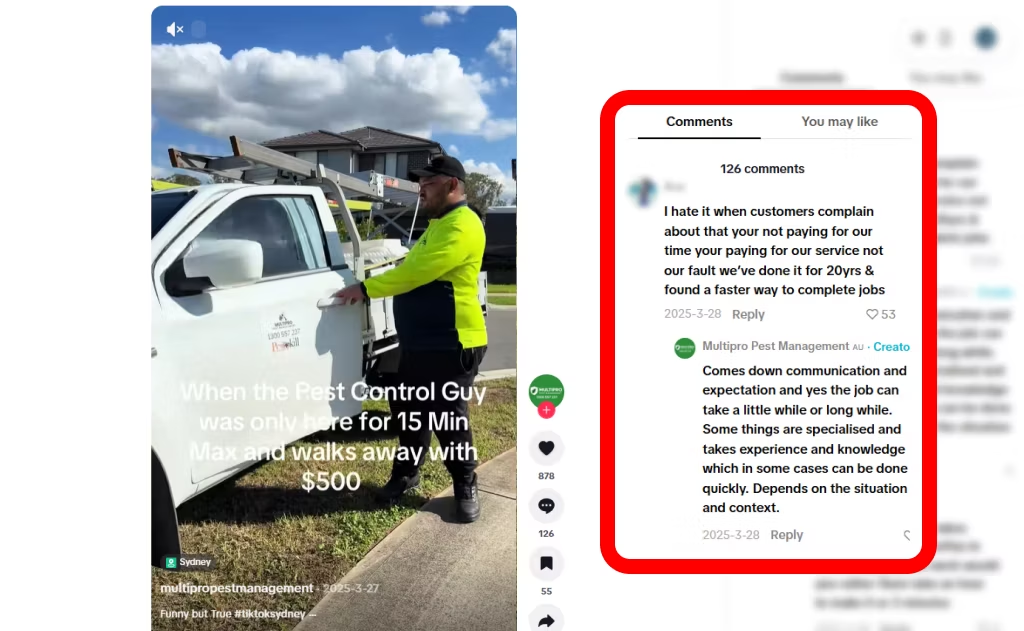
Multipro Pest Management stays super active in TikTok comments, even leaving likes on questions they can’t fully answer yet. That signal alone tells lurkers you’re responsive.
11. Pin Your Strongest Post to the Top
Your pinned post is a permanent billboard. It’s the first thing new visitors see. Refresh it monthly, so it never goes stale.
Four pin categories work reliably for pest control:
| Pin type | What it shows | Example |
|---|---|---|
| Trust | Screenshot of a 5-star review | “After 3 companies failed, they finally got rid of our roaches” |
| Proof | Before/after like a termite-damaged wood vs. sealed result | Photo of damage next to the repaired section |
| Urgency | What’s happening in your area this week | “Carpenter ants spotted in Plano: we’re in your neighborhood today” |
| Offer | A time-boxed deal | “10% off your first service this month” |
R&R Pest Control’s pinned termite cleanup video hit 18 million views on TikTok because it checked several of those boxes at once.
12. Repurpose Blog Content Into Pest Control Social Media Posts
Do you already have a blog? You’re sitting on a content buffet!
Use these gems from your pest control website on your social media. This is called content repurposing.
One post like “How to Kill Termites” can be sliced into five or more social pieces without writing anything new: each blog section becomes a quick-tip post, the long-form blog becomes a swipeable Instagram carousel, FAQ answers become 30-second video scripts, and prevention steps become a simple infographic.
This cuts content-planning time in half and keeps your messaging consistent across every channel.
13. Show Local Community Involvement
Harvard Business School reports 77% of consumers prefer companies that host charities, sponsor local events, or give back.
Familiarity breeds trust. A logo on a Little League jersey is better than a logo in a stock photo. Post your team at real community moments (your logo on youth-sports jerseys, your truck at a school fundraiser, techs volunteering at a cleanup) and shout out local partners like HOAs, property managers, and schools. Tagging them multiplies your reach through their networks.
14. Show Off the Team Behind Your Pest Control Service
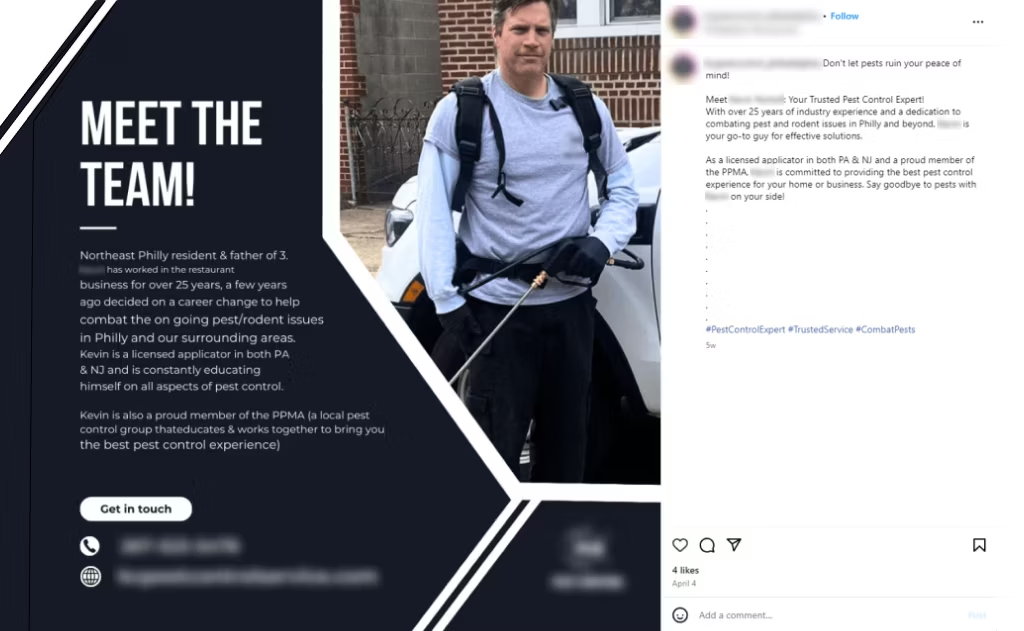
Opening the door to a stranger is nerve-wracking. Customers want to know who’s coming, and putting faces on your pest control business humanizes you instantly.
Post a clear photo of each tech in uniform with their first name (“This is Jake: certified pro in wildlife exclusion”), a one-line specialty (“Our go-to guy for bed bug treatments”), and one personal detail that sticks (“Paranoid in a good way: always double-checks entry points”). Tagging employees multiplies your reach organically through their networks.
15. Promote Seasonal and Limited-Time Offers
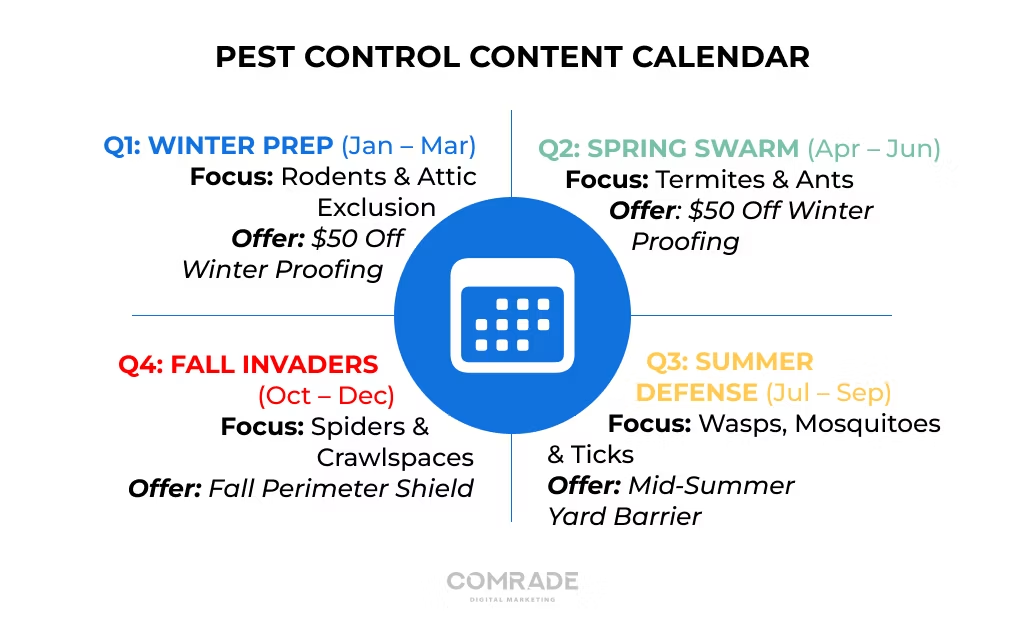
Pests run on a calendar; your offers should too. Fish Agency found limited-time offers can lift sales by up to 300% by compressing the decision timeline. The seasonal blueprint writes itself: spring is termite inspections and ant prevention; summer is mosquito control when backyards become unusable; fall is rodent prevention as pests move indoors; winter is crawl space and entry-point sealing.
Telos Pest Control Toronto’s 25%-off promo with a big red visual, tight offer, and clear service is a clean template to be inspired by.
Pest Control Social Media Posting Frequency
We want to stress the importance of consistency over volume. If you can only sustain three posts a week for six months, that is far better than seven posts a week for two months and then silence. Use this table as a baseline and adjust based on what your analytics tell you:
| Platform | Recommended frequency |
|---|---|
| 5–7 posts / week | |
| 5–7 posts / week | |
| Instagram (feed + Reels) | 1 post / day + 2–5 Stories |
| TikTok | 3–5 / week |
| YouTube | 1 long-form / week or 3–5 Shorts |
| X (Twitter) | 1–3 / day |
The way to make that sustainable is batching. Shoot photos and videos once a month, script FAQ answers weekly, and let saved templates handle the day-to-day formatting.
What Pest Control Social Media Management Costs
According to CMO Survey data, service businesses allocate 13–15% of their total marketing budget to social: split roughly 20–30% content creation, 30–40% paid ads, 10% tools, and 20–30% management (in-house or agency). Dollar ranges depend heavily on company size:
| Company size | Monthly social budget | Platform focus |
|---|---|---|
| 1–3 techs | $500–800 | Facebook only + light ads |
| 4–10 techs | $1,500–2,500 | Facebook + Instagram + monthly ads |
| 10+ techs | $3,000+ | Full stack + LinkedIn for commercial |
Wrapping It Up: 4x Your Leads With a Real Pest Control Social Media Strategy
You now have the framework: the right 2–3 platforms, 15 field-tested pest control social media ideas, posting cadence, budget tiers. That’s a real pest control social media strategy, not just “post more.”
But be honest: do you have 40 extra hours a week to plan content, respond in 5 minutes, run ads, and track ROI? Probably not; you’re running crews.
Contact Comrade Digital Marketing today. Over 18 years, we’ve helped 130+ contractors grow with SEO, PPC, web design, and social. Our clients see 400% more qualified inquiries in the first 12 months. Book a pest control marketing consultation now: $499 value, free for a limited time.
FAQs on Pest Control Social Media Marketing
-
What type of content should a pest control company post on social media?
Post a mix of educational tips (prevention, seasonal alerts, pest ID), before-and-after job photos, short videos (treatment walkthroughs, tech intros), customer reviews and testimonials, community involvement posts, and time-limited seasonal offers. Follow the 80/20 rule: 80% value-driven content, 20% promotional. Educational posts inspire trust; before/after and reviews close deals.
-
How often should a pest control business post on social media?
Post 5–7 times per week on Facebook and LinkedIn, once a day on Instagram (plus 2–5 daily Stories), 3–5 times per week on TikTok, once a week on YouTube (or 3–5 Shorts), and 1–3 times per day on X. Consistency matters more than volume, so pick a cadence you can sustain for 6+ months.
-
Can social media actually generate leads for pest control services?
Yes. 52% of consumers use Facebook to find local services, and more than two-thirds of online marketers report social media ads drive real leads. Pairing organic pest control social media posts with targeted ads by ZIP code and homeowner status typically delivers DM inquiries, quote requests, and phone calls at a lower CPL than Google Ads in less-competitive markets.
-
What is the best social media platform for pest control companies?
For residential leads, Facebook wins with cheap ads (~$0.97 CPC), broad reach, and it’s where homeowners ask for referrals. For commercial contracts (property managers, restaurants, healthcare), LinkedIn leads as 47% of pest control operators prefer it and conversion rates hit ~6.1%. For visual proof and younger homeowners, Instagram delivers ~18% conversion. Pick 2–3 platforms based on your ideal client, not on trend.
-
How much does pest control social media marketing cost?
Small pest control companies (1–3 techs) typically spend $500–800/month, growing operations (4–10 techs) spend $1,500–2,500/month, and larger companies $3,000+/month. Budget splits roughly: 20–30% content creation, 30–40% paid ads, 10% tools, 20–30% management. Facebook and Instagram ads average $0.97 and $3.56 CPC, respectively.
-
Should pest control companies use TikTok?
Yes, strategically. TikTok has 1.04 billion monthly users watching an average of 260 videos per 30-minute session, and short “gross” pest content (termite reveals, red-flags clips, POV inspections) routinely goes viral. TikTok is best for brand awareness and reaching younger homeowners; pair it with Facebook or Google Ads for the booking layer.
-
How do I measure ROI on pest control social media marketing?
Track cost per lead (CPL) by platform, conversion rate from DM/comment to booked job, customer acquisition cost (CAC), average job value from social-sourced customers, and lifetime value. Compare against your CAC from Google Ads or referrals. If a Facebook lead costs $40 and books a $600 termite treatment with an 80% show rate, ROI is straightforward math.
-
How fast should we respond to comments and DMs?
Within 5 minutes if possible. Chili Piper’s research shows businesses that respond within 5 minutes are up to 100x more likely to convert that lead than those who wait even a few minutes longer. If 5 minutes isn’t realistic, set an auto-reply acknowledging the message and follow up within an hour during business hours.
-
Do I need a social media manager or can I do it in-house?
Small operations can start in-house with 3–4 hours/week focused on one platform (usually Facebook). Once you’re posting daily, running ads, and responding to DMs across 2+ platforms, it becomes a 15–20 hour/week job, at which point either a dedicated in-house social manager or a specialized pest control marketing agency is cheaper than the leads you’re losing to slow response.