Local SEO
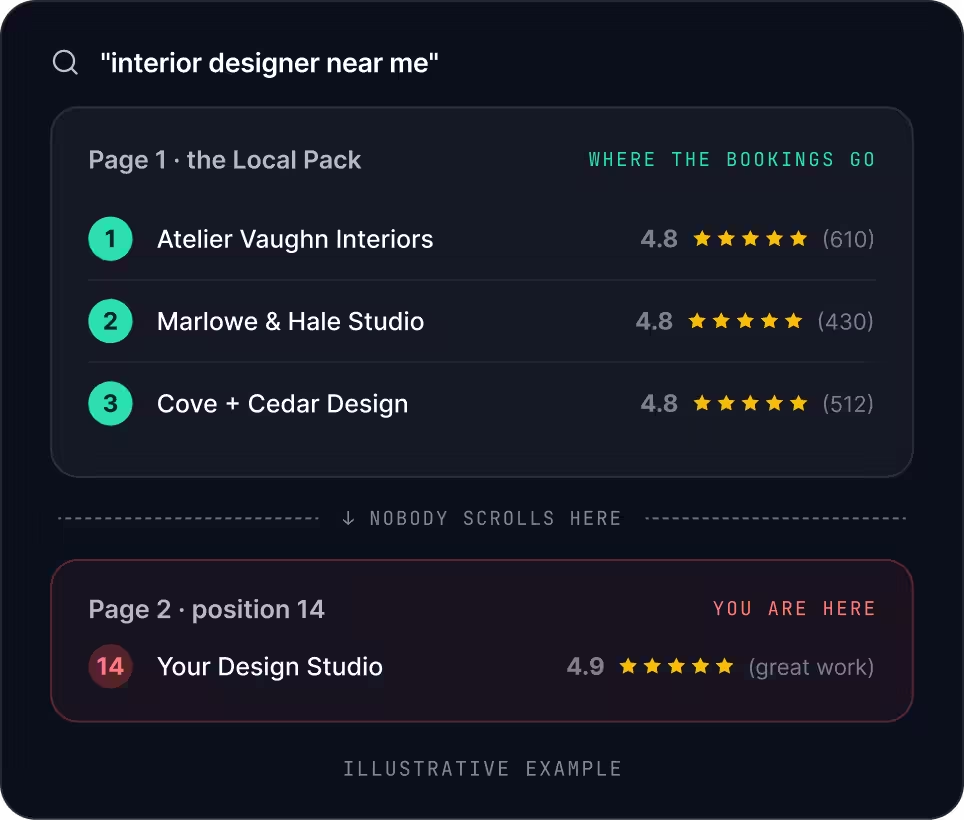
Own “interior designer near me.”
Rank in the Map Pack across every city you serve — the searches homeowners run when they’re ready to hire a designer this month, not next year.
Local SEO →More Booked Design Consultations. From First Search to Signed Contract.
Comrade is the interior design marketing agency built for studios and firms selling a visual, high-ticket, high-consideration service — combining SEO, Houzz & Pinterest visibility, AI search, and paid media into one Revenue Engine that turns admirers into booked consultations.
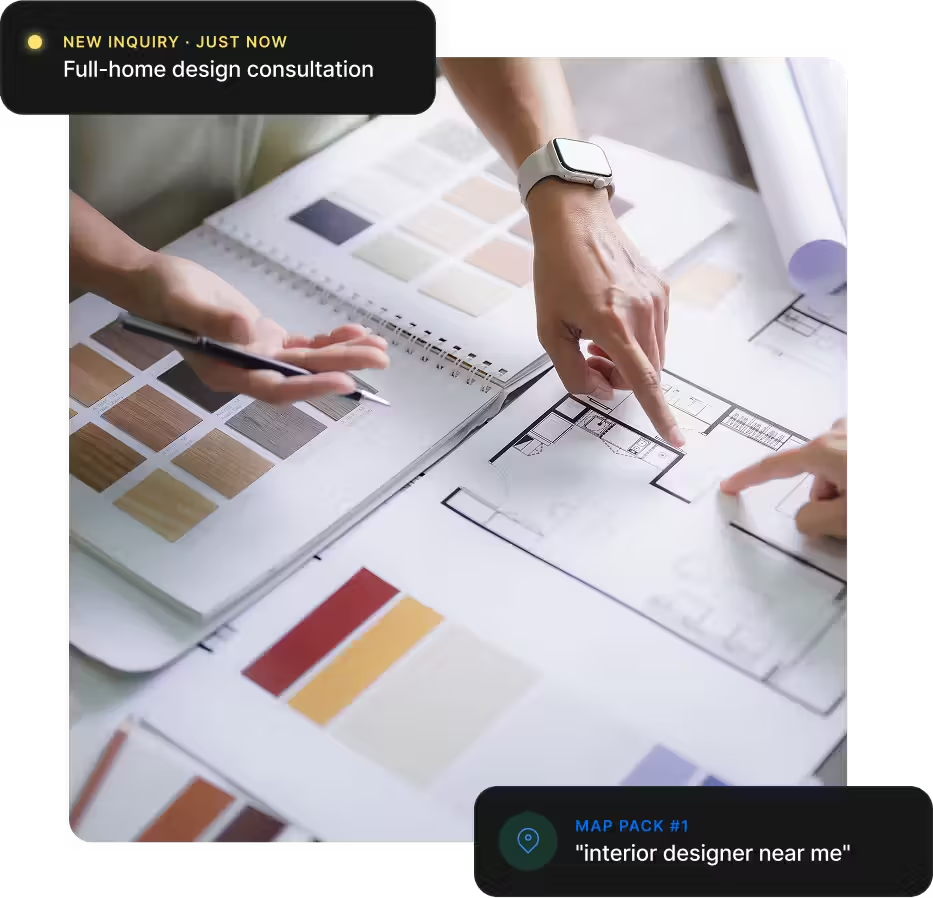
Year 1 median results. Tracked through Growth Portal against total marketing investment. Results vary by market, competition level, and starting position.
Homeowners planning a high-end project don’t hire the first designer they find — they browse Pinterest and Instagram, search Google and Houzz, and quietly build a shortlist over weeks. When they’re finally ready to reach out, the designer who shows up, looks unmistakably high-end, and answers first wins the consultation. If your beautiful work is buried below directories and generalist firms, you’re invisible for the exact projects that pay the most.
Interior design marketing isn’t one-size-fits-all. A visual product, a long consideration window, and an affluent, fit-driven buyer create dynamics most agencies miss — or ignore.
3 sec to judge your work on sight — before a word is read.
A portfolio is the product. Homeowners judge you on imagery within seconds on Instagram, Pinterest, and Houzz, long before they read a word. Marketing that leads with text instead of work loses the client on sight.
6–12 wk from first inquiry to signed retainer.
A full-home project is worth many times a typical service job, but the decision stretches over weeks or months — a discovery call, a proposal, and a long procurement timeline. That gap is where designers lose revenue.
45% of homeowners now use AI to find local services.
Your buyer isn’t price-shopping; they’re choosing someone to trust with their home and taste. Volume tactics that work for contractors draw budget shoppers — winning here is a positioning and targeting problem.
Interior design demand doesn’t hum along evenly — it spikes after the holidays and again before them, then quiets over summer and December. Most agencies market only in the surges and go dark in the lulls, handing away the exact months where the next peak is won.
Homeowners who lived with it all holiday finally act
After weeks of hosting in rooms that don’t work, homeowners launch the projects they quietly planned over the holidays. One of the two highest-intent windows of the year — and if you ranked in December, you win it.
Refreshes, renovations, and new homeowners
Spring cleaning becomes spring redesigning, and real-estate season delivers new homeowners who need a designer for a house they just bought. The most consistent inquiry flow of the year.
Inquiries dip — the holidays get won here
Families travel, inquiries visibly dip, and most agencies pull back. But furniture runs 8–16 weeks — the homeowner who wants a holiday-ready home starts now, and the one browsing your Houzz today inquires in fall.
“I want it done before everyone comes over”
Routines return and the hosting countdown begins — the sharpest urgency spike of the year. The designer who shows up first and replies fastest books the project before the holidays.
The lull that seeds next year
New starts slow as clients get pulled into the season, so the industry goes quiet. But they’re in other people’s beautiful homes getting envious — they research now and inquire in January. Go dark here and you re-fight that peak cold.
Peaks and lulls shift by market, climate, and whether you serve primary homes, second homes, or new construction.
One system, one team, every inquiry tracked — the services that put your studio in front of high-intent homeowners on Google, Houzz, Pinterest, and AI.
Plug Into the Revenue EngineRank in the Map Pack across every city you serve — the searches homeowners run when they’re ready to hire a designer this month, not next year.
Local SEO →SEO built around “luxury interior designer,” “full-home interior design,” and the research-stage searches affluent homeowners run for weeks before they inquire.
SEO →Get named when a homeowner asks ChatGPT, Gemini, or Google AI Overviews to recommend a designer — the shortlist decided before they open a browser tab.
AI Search Optimization →Google Ads and Meta/Pinterest campaigns tuned to a high-ticket, fit-driven buyer — not a template built for $200 service calls.
PPC & LSA →The platforms where design clients actually discover and vet you. An optimized Houzz profile, Pinterest, and Instagram that turn browsing into booked calls.
Social Media Marketing →A gallery-led, portfolio-first website that turns admirers into booked design consultations — fast, editorial, with the inquiry path right where desire peaks.
Web Design →Turn 5-star reviews and press into the proof that closes a high-trust, high-ticket decision — the signal a homeowner needs to trust you with their home.
Stay top-of-mind through a weeks-long decision with editorial content, project stories, and nurture built for a considered, taste-driven buyer.
We don’t do generalist marketing. We build Revenue Engines for design professionals — and we know how each segment’s clients discover, compare, and decide.
The core of the field — full-home and single-room projects for homeowners who found you online and are ready to hire.
The highest-ticket, most taste-driven clients — where positioning and imagery matter more than volume.
Design and construction under one roof — longer cycles, bigger tickets, buyers who research for months.
Firms adding interiors to the offering, or seeking residential and commercial project inquiries online.
Room refreshes, staging, and virtual design services that need a steady flow of right-fit online inquiries.
Restaurants, offices, and boutique hospitality work — a different buyer, a different search, engineered for both.
Showrooms and product brands selling to designers and homeowners alike — visibility across both audiences.
Launch with a portfolio site, Google Business Profile, Houzz, and reviews engine that competes with studios 15 years older.
Growing studios that need consistent inquiry flow and local visibility across every designer and market.
Our sweet spot — where we do our best work: established residential and luxury studios and design-build firms ready to move from referral-dependent to a predictable, right-fit pipeline.
Unlike a plumber who quotes over the phone, an interior design engagement runs through a fit call, a scope-and-fee proposal, and a weeks-long decision before a homeowner signs and pays a retainer. Affluent clients aren’t price-shopping — they’re choosing who to trust with their home. The gap between the inquiry and the signature is where most designers lose their best-fit projects. We engineer that path.
An inquiry from Instagram, Houzz, a referral, or your site triggers an instant, on-brand reply — warm and loaded with proof (portfolio, press, reviews) — so an admiring homeowner doesn’t drift to the next designer while they wait. For a taste-and-trust decision, the tone of that first touch matters as much as the speed.
A short intake screens every inquiry for budget, scope, timeline, and aesthetic fit before it reaches your calendar. You spend consultation time only on right-fit, high-budget projects — and stop bleeding hours qualifying out the price-shoppers a generalist agency would have sent you.
The qualified homeowner books — and, if you charge for it, pays for — a discovery call, with an automated confirmation that primes them: process overview, recent projects, what to bring. They arrive ready to talk vision and scope, not reschedule.
Affluent clients compare one to three designers and deliberate for weeks. A sequence of portfolio stories, client results, and process content keeps you top-of-mind and lowers the perceived risk of a big, personal investment — reinforcing your authority instead of discounting your fee.
A clear scope-and-design-fee proposal, easy e-sign, and retainer invoice turn the yes into a signed contract — with expectations set up front on the long furniture and procurement timeline, so the client commits with confidence instead of cold feet.
Not projections. Actual work tracked through Growth Portal. View all case studies →



With CDM’s AI-powered Growth Portal, see exactly how your interior design marketing performs — real time, any device, between site visits.
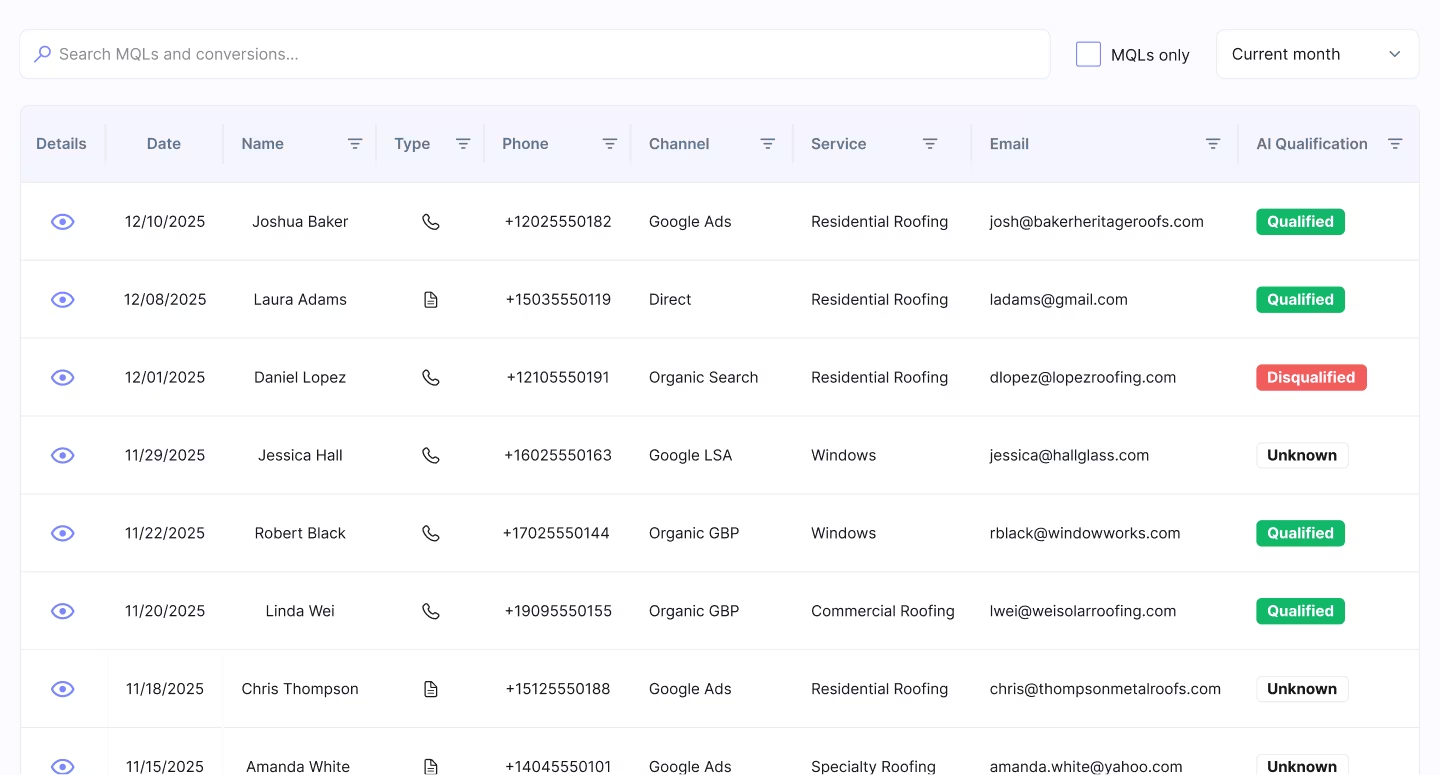
Every “interior designer near me” call, Houzz message, contact form, and Instagram inquiry recorded — and tied to the booked design consultation it produced, not just a raw lead count.
Know exactly what you paid to get that full-home or luxury project onto your calendar — the number that actually decides your marketing budget.
Separate browsers from ready-to-hire homeowners — and see which searches (residential, luxury, design-build) bring your best-fit, highest-ticket projects.
Check today’s inquiries between client meetings and site visits, from any device. No waiting for a monthly PDF.
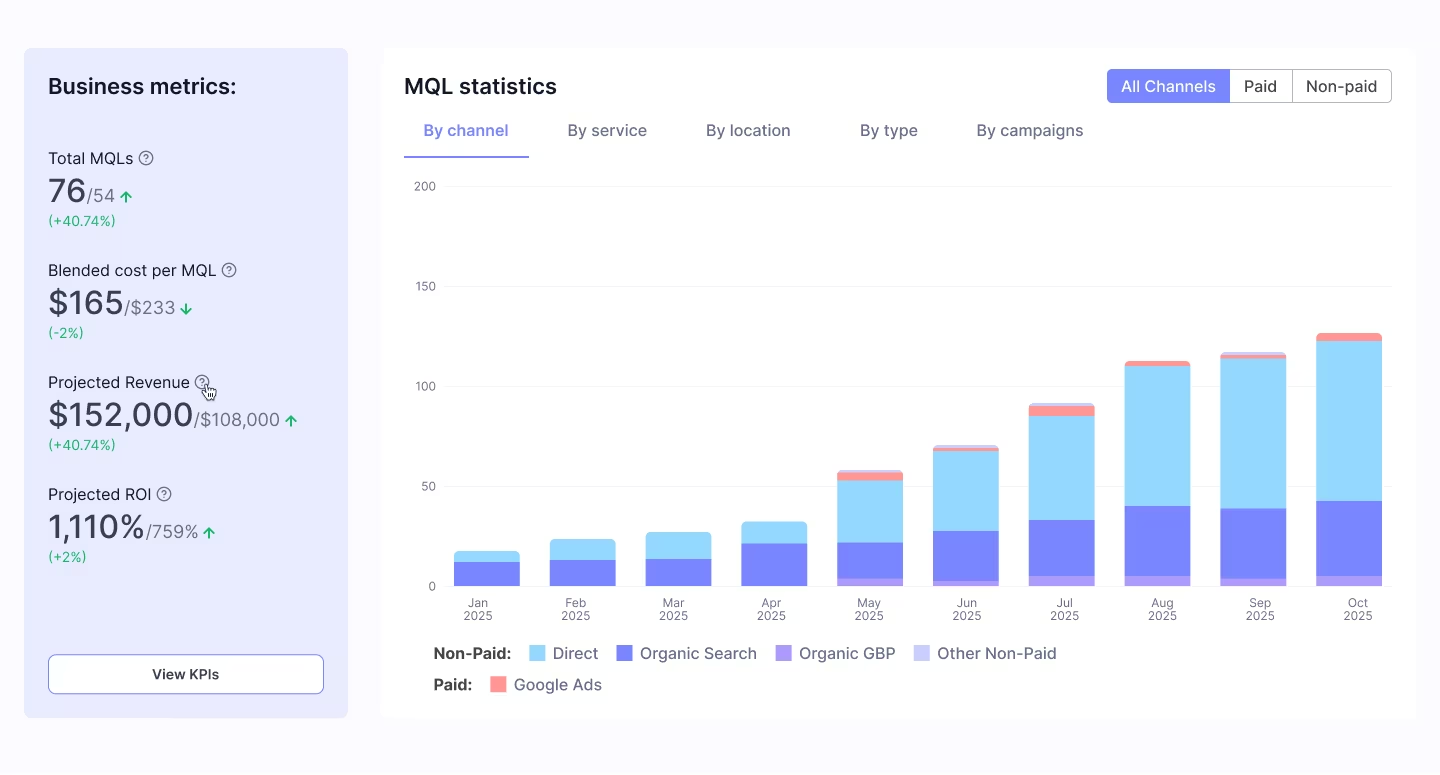
Local SEO, organic, Houzz, Pinterest, AI search, and paid side by side — for residential, luxury, and design-build inquiries alike.
Total marketing spend divided by signed design contracts — measured against your average project value, the number that actually decides margin.
Every booked project traced back to the keyword, portfolio page, ad, or AI citation that produced it — first click to signed retainer.
See which channels drive the multi-week decision window from research to signature, mapped to the interior design seasonality calendar above.
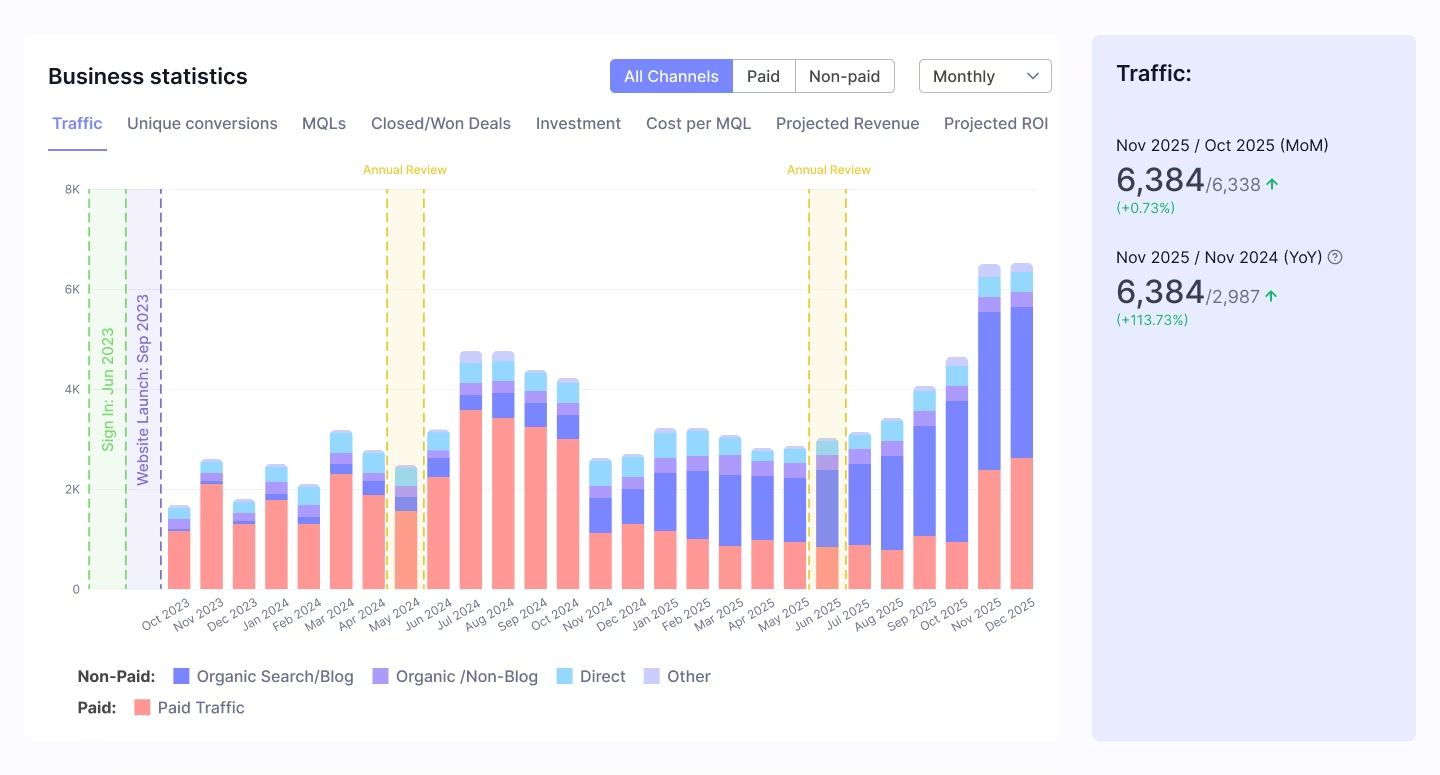
SEO, Houzz, Pinterest, AI search, and paid broken out separately — see exactly where your design inquiries come from.
Track your Google Business Profile and Local Pack position for “interior designer” and “luxury interior designer” across every market you serve.
See which neighborhoods and towns you own for residential, luxury, and design-build work — and where a new location page can win the next pin.
Watch demand shift across full-home, single-room, luxury, and e-design lines through the year — then publish before competitors do.
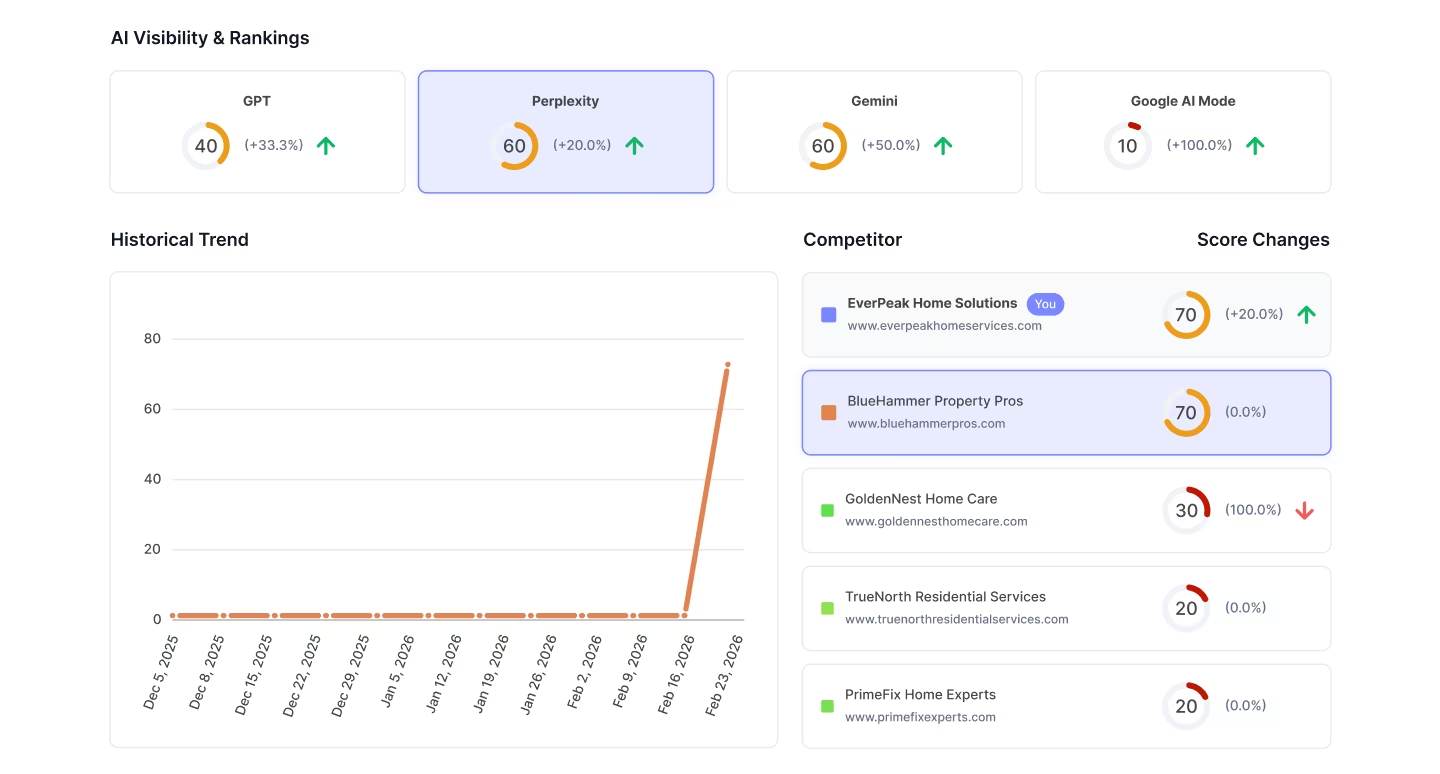
See whether ChatGPT, Gemini, Perplexity, and AI Overviews name you when a homeowner asks who to hire for a design project nearby — and where you’re missing.
Data-backed moves on which content and keywords to double down on each month, from design-cost guides to style-trend articles.
The portal flags keywords, markets, and services — like luxury or design-build — where you’re close to breaking into the top results.
See which local studios are gaining ground — and where larger firms are pushing into your market.
Homeowners increasingly ask ChatGPT, Gemini, and Google’s AI Overviews who to hire for a design project. AI names only a handful of designers — most are invisible to it.
45% of local searches now start with a homeowner asking AI, not Google — up from 6% a year ago.
68% of local searches now show an AI summary above the results.
~1.2% of local businesses get named by AI — be one that is.
AI search isn’t coming — it’s here. The design studios cited by ChatGPT and AI Overviews today will own those recommendations for years. AI traffic also converts ~4.4× regular search. Comrade is the interior design marketing agency that gets you in — before your competitor reads this page.
We’re a digital marketing agency for interior design — not a generalist that dabbles in designers between restaurant and dental clients, and not a boutique that can’t scale past social. We know a design client buys on taste and trust, that the decision can take months, and that the wrong leads cost you more than the right retainer.
Residential, luxury, design-build, and to-the-trade — we market each differently because a taste-driven, high-ticket design client discovers, compares, and decides unlike any other buyer.
100+ team. Measurable business growth since 2008 for design and home brands — residential studios, luxury firms, and design-build practices alike.
Transparent reporting tied to booked consultations and signed contracts, not vanity metrics like site traffic. Every number ties back to your Growth Portal.
Website, content, portfolio assets, review profiles, creative, data, and leads — yours from day one. No long-term contracts, no lock-in clauses, no hostage sites.
Deep understanding of a visual, high-consideration sale — from first admiring glance to signed retainer — not a template built for emergency service calls.
A dedicated account manager who understands how design clients buy — not a generalist splitting attention between a law firm and a restaurant client.


Interior designers deserve a marketing partner who treats your growth like their own — and proves it with data, from first admiring glance to signed retainer. You shouldn’t have to chase your agency or wonder where your inquiries went. You should own a system built for the way design actually sells — from the first search to the signed contract.








Most agencies measure success in clicks and rankings. We measure it in your MQLs, booked consultations, and revenue — and the numbers show the difference.
The realistic timeline our design clients experience — and what’s happening at each stage.
A complete growth system — all your interior design marketing services under one strategy and one team — built for studios ready to own their market.
Most designers invest $2,000–$8,000+/month, depending on market, services, and competition. Comrade’s full Revenue Engine starts at $4,000/month with ad spend billed separately — or start with a single service and scale up. The better question is cost per booked consultation, not cost per click.
Ad spend billed separately
Transparent monthly marketing for interior design studios — no setup hostage fees, no lock-in. Custom scope based on your market, competition, and goals. Best fit for design studios ready to invest in predictable growth.

Don’t see your question? Ask on the strategy call — it’s part of the free growth plan.
Ask on a callMarketing for interior designers typically costs $2,000–$8,000+ per month, depending on your market, services, and competition. A full Revenue Engine — SEO, AI search, website, paid media, and reputation combined — starts around $4,000/month with ad spend billed separately, or you can start with a single service like local SEO from about $1,500/month. The average cost to acquire one design client runs $1,000–$3,000, so the real question is cost per booked consultation, not cost per click.
Yes — digital marketing is worth it for interior designers who want a predictable pipeline instead of relying only on referrals and word of mouth. The SBA suggests service businesses reinvest roughly 9–10% of revenue to grow. The bigger risk isn’t the retainer — it’s a feast-or-famine pipeline and generalist campaigns that fill your calendar with price-shoppers instead of the affluent, right-fit clients your work deserves.
Most interior designers see early movement — more inquiries and stronger Google and Houzz visibility — within 30 to 90 days, with SEO and lead flow compounding over 6 to 12 months. Because interior design is a high-ticket, long-consideration purchase, affluent homeowners often research for weeks before reaching out, so the biggest pipeline gains show up once follow-up and content start catching clients who found you early and came back.
Interior designers attract luxury clients online by pairing a portfolio-first website with visibility on the platforms affluent homeowners use to find and vet designers — Google, Houzz, Pinterest, Instagram, and increasingly AI assistants. Volume tactics that work for contractors backfire here: they draw budget shoppers. Winning high-end clients is a positioning and targeting problem — the right imagery, the right search terms, and proof you belong in their price tier.
There’s no single best channel — the strongest interior design marketing combines Instagram and Pinterest for visual discovery, SEO and Google Business Profile for high-intent local search, and Houzz for homeowners actively hiring. Social builds desire during a long decision; search and Houzz capture clients ready now. The mistake is relying on one: Instagram alone builds an audience but rarely captures the homeowner Googling “interior designer near me” today.
Houzz is one of the most important platforms for interior designers because it’s where millions of homeowners actively research, compare, and hire design professionals — not just browse. It also ranks at the top of Google for many “interior designer near me” searches, so an optimized profile can win visibility twice. Most designers set one up and stop; those who optimize photos, reviews, tags, and completeness consistently pull ahead in their local Houzz results.
Yes — referrals and Instagram build awareness, but SEO captures the homeowners actively searching Google for a designer right now, which referrals and social miss. When a referred client hears your name, the first thing they do is search it — and if your site doesn’t rank or convert, you lose them to a competitor who looks more credible. SEO turns your reputation into found-you-on-Google inquiries instead of leaving them to chance.
You get recommended by AI tools like ChatGPT, Gemini, and Google’s AI Overviews by building the signals they trust — a clear, structured website, consistent listings across Houzz and Google, genuine reviews, and content that answers the questions homeowners actually ask. AI assistants name only a handful of designers, and most firms are invisible to them today. This is generative engine optimization (GEO), and it’s one of the biggest untapped advantages in the design space right now.
A specialist builds campaigns around how affluent homeowners actually choose a designer — visually, over a long consideration window — while a generalist reuses the same playbook it runs for plumbers and restaurants. The difference shows up in lead quality: generalist campaigns often produce price-shoppers who compare you to contractors, not clients who value design. A specialist targets right-fit, higher-budget projects, so you spend less time qualifying out the wrong inquiries.
Yes — every lead we generate is exclusive to your firm. We never resell the same homeowner to multiple designers in your area, unlike shared lead-generation and directory platforms that sell one inquiry to three or four competitors. You own the relationship, the data, and the client from the first inquiry.
No — we don’t lock you into long-term contracts, and you own 100% of your website, content, portfolio assets, and creative from day one. Nothing is held hostage if you ever decide to leave. We’d rather keep your business by proving ROI every month than trap it in a 12-month agreement.
Book a free 30-minute growth call. We’ll analyze your current marketing, build your Revenue Engine plan, and show you exactly how to win Google, Houzz, Pinterest, and AI in your market — the interior design marketing agency partnership that turns admirers into signed clients.