
Try this before you read anything else. Open Google, type your service plus your city: “roof repair in Denver,” or “emergency plumber Dallas,” and look at what comes back.
You’ll see a map with three businesses. Under it, a few service area pages. Somewhere above or beside it, an AI answer summarizing who to call.
If your company isn’t in any of those three places, the job goes to whoever is.
That’s the whole problem SEO (search engine optimization) solves for a home service business. Not rankings for their own sake, but rather calls from homeowners in your service area, at the moment they’ve decided to hire someone. SEO leads convert at 8.5X the rate of TV, radio, cold calls, and email, and most companies see traffic and lead movement within 3 to 6 months.
Below is the playbook we run for contractors, in the order we run it.
What Is Home Services SEO?
Home services SEO is the work of making a plumbing, HVAC, roofing, electrical, cleaning, or remodeling company easy for Google, other search engines, and AI tools to find, understand, and recommend to homeowners nearby. It covers three signals: who you are, what you do, and where you do it.
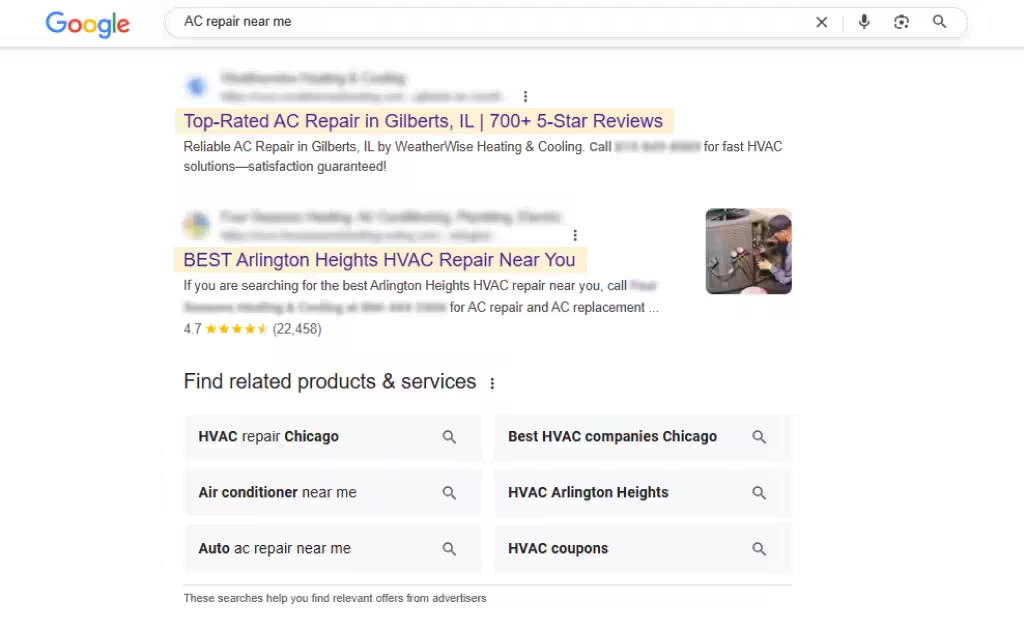
Nail these down, and you show up for local searches like “AC repair near me.” Get them wrong (or leave them vague), and Google shows a competitor instead.
Two numbers explain why this matters more for your industry than most:
- Nearly 46% of all Google searches have local intent.
- Over 60% of local searches happen on a phone, usually mid-problem.
SEO takes into account both those realities, making your site visible locally and mobile-friendly to capture a large slice of traffic. Remember, a homeowner with water on the floor is not comparison shopping. They tap, skim three reviews, and call.
Where You Can Win Home Service Jobs
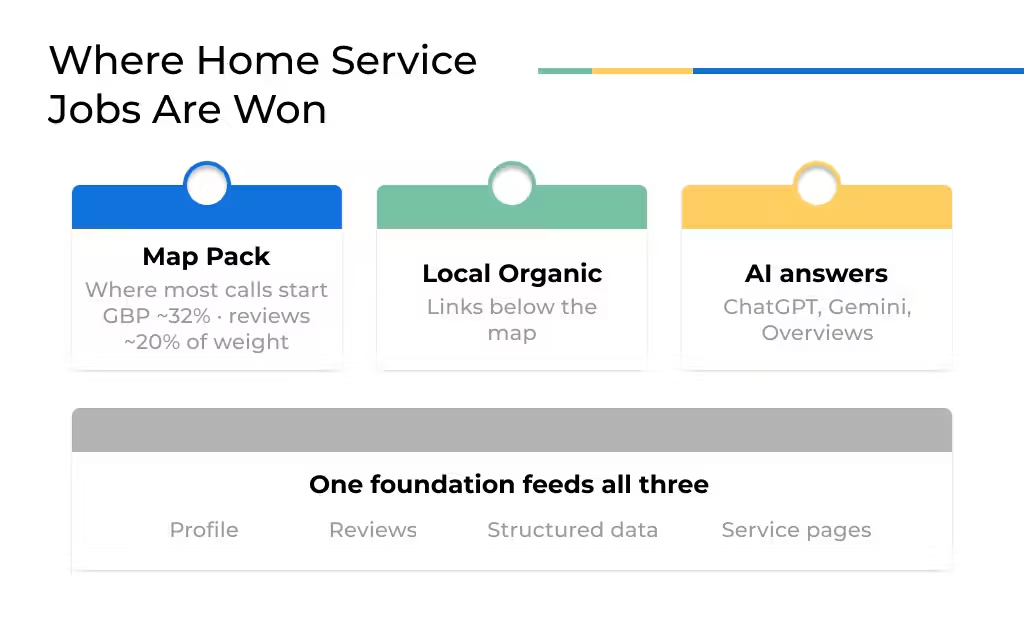
There are three surfaces worth your attention in 2026, and they don’t reward the same things.
The Map Pack. The three businesses shown with a map at the top of local search results. This is where most calls come from. According to BrightLocal’s Local Search Ranking Factors research, Google Business Profile signals carry roughly 32% of the ranking weight here, with reviews around 20%.
Local organic results. The blue links under the map. On-page signals, like how clearly your pages define a service and a place, do the heavy lifting.
AI answers. ChatGPT, Gemini, Perplexity, and Google’s AI Overviews don’t invent contractors. They pull from the same sources Google already trusts: your profile, reviews, structured data, service area pages. Answer engine optimization isn’t a separate discipline so much as an extension of the local work you’re already doing.
The practical takeaway: the same clean signals feed all three. You don’t need three strategies.
Case Study: Absolute Home Services
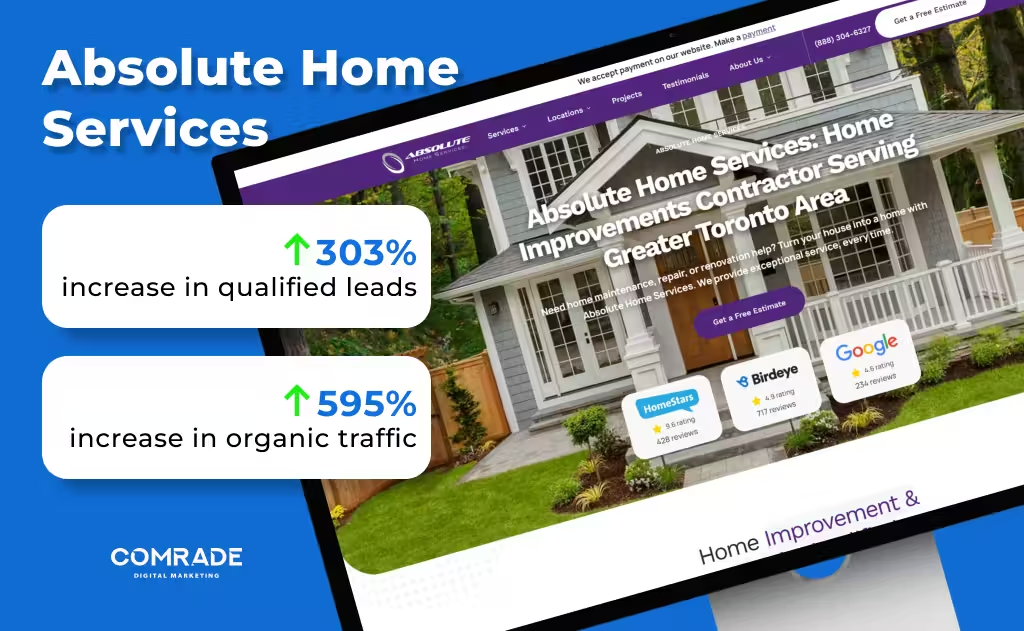
Absolute Home Services is a home improvement contractor in the Greater Toronto Area offering painting, landscaping, deck and fence building, and handyman work. Even with a solid reputation on the ground, they were still ceding local visibility to larger competitors online.
Our work was structural, not clever: a rebuilt website, five focused mini-sites for their highest-demand services, GBP optimization, NAP cleanup across every platform, and a local content program built around nearby projects and testimonials.
These were the results over the first fifteen months in their competitive local market:
- 303% increase in qualified leads
- 595% increase in organic traffic
- 81% decrease in cost per acquisition
- TOP-1 for “painting services” and TOP-3 for handyman terms across Ontario
Read the full Absolute Home Services case study →
The 10-Step Home Services SEO Plan
The order of this home services SEO plan is deliberate. Nail your keywords first and they tell you which pages to build; build those pages well and they feed your profile, your reviews, and eventually your phone.
1. Keyword Research and Competitor Analysis
Start with what homeowners type, not what your industry calls it. Nobody searches “residential HVAC solutions.” They search “furnace not turning on” and “heat pump replacement cost Phoenix.”
Where to find those local search results terms:
- Google Keyword Planner (free) for volumes and related searches
- Ubersuggest or SEMrush for long-tail phrases like “24-hour furnace repair Chicago”
- Google autocomplete and People Also Ask; this is free, and it reflects live search behavior
- Google Search Console, once you have data, to see what you already rank for on page two
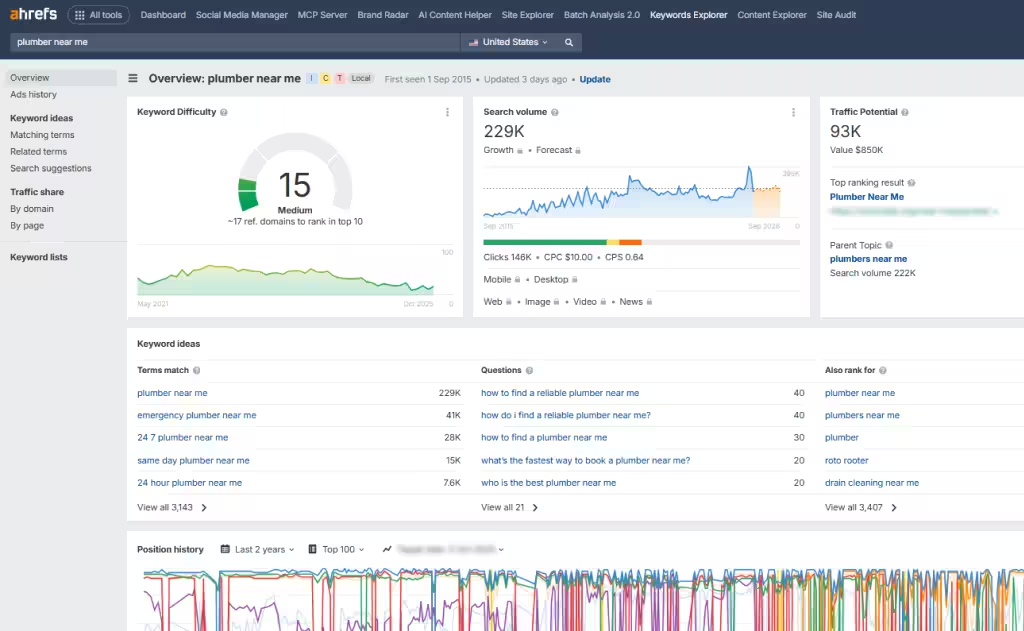
Then look at the three companies ahead of you. Run them through Ahrefs or SEMrush, note which service pages earn their traffic, check where their backlinks come from, and list the topics they cover that you don’t. That gap list is your content plan.
Mix both keyword types into your digital marketing plan. High-volume terms build online visibility in competitive local markets; intent-heavy phrases with “near me,” “emergency,” “cost,” or a city name bring the calls.
2. Google Business Profile Optimization
Your profile is the first thing Google inspects and the first thing a homeowner sees. Complete profiles are meaningfully more likely to convert a searcher into a customer, and profiles with photos get 42% more requests for directions.
What actually helps your GBP show up for more home services clients:
- Primary category is a gatekeeper. An HVAC company that picks “Heating contractor” instead of “HVAC contractor” will lose their AC repair visibility. Pick the one that matches your money service, then add secondary categories sparingly.
- Services, not products. List services the way homeowners say them: “emergency AC repair,” “tankless water heater installation,” “roof leak repair.” Skip product listings for equipment you don’t sell.
- Real photos, added regularly. Trucks in actual neighborhoods, crews on actual jobs, before-and-afters. Google’s search engine favors recent, original, geo-tagged photography over stock. This is also great for conversion optimization.
- Complete every field. Hours including holidays, service area, a local phone number, and all 750 characters of the description.
- Post when you have something to say. Seasonal services, a big project, a promo. Posting filler weekly does nothing.
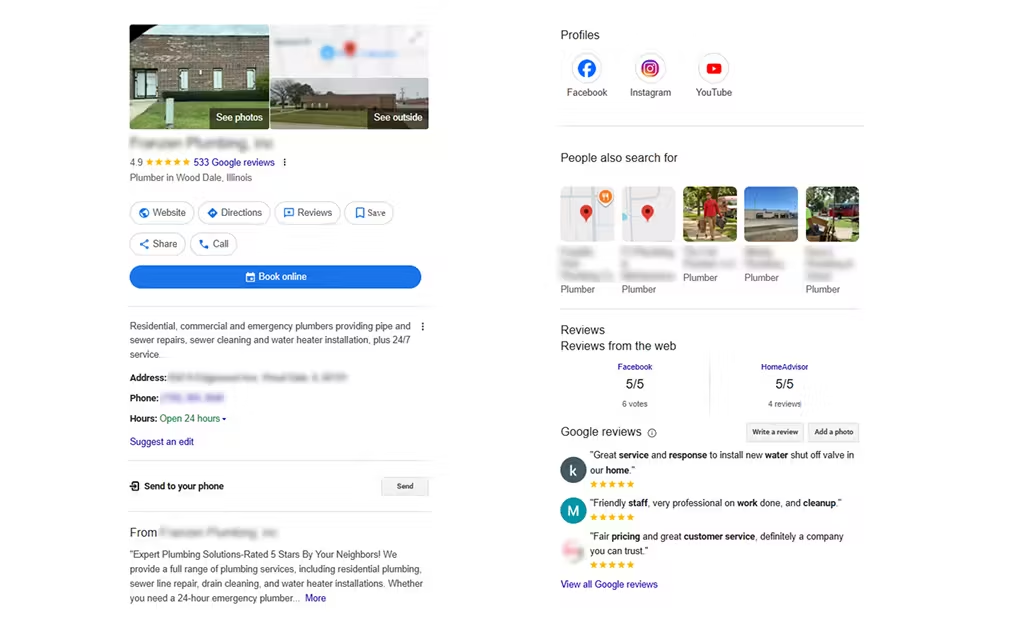
Check your GBP Insights monthly. Direction requests, calls, and photo views are behavioral signals, and they now carry weight of their own.
3. Reviews That Say Something Specific
Reviews influence both rankings and whether a homeowner picks you over the company one spot above.
Volume matters less than it used to. Recency is more vital. Ten recent reviews mentioning “same-day furnace repair” and a neighborhood name will outperform fifty old five-star reviews that say “great service.” Recency and specificity tell Google what you’re good at and where.
Build one habit: after every completed job, text the customer a direct link to your Google review page. Ask while they’re still happy about the work.
Respond to all of them. Thank people individually rather than pasting the same line, and take negative reviews offline with a real offer to fix the problem. Never buy reviews or trade them for discounts. Google filters these out and can suspend your profile.
4. Service Pages and Location Pages (They Are Not the Same Thing)
This is where most contractor sites lose ground, so it’s worth being precise.
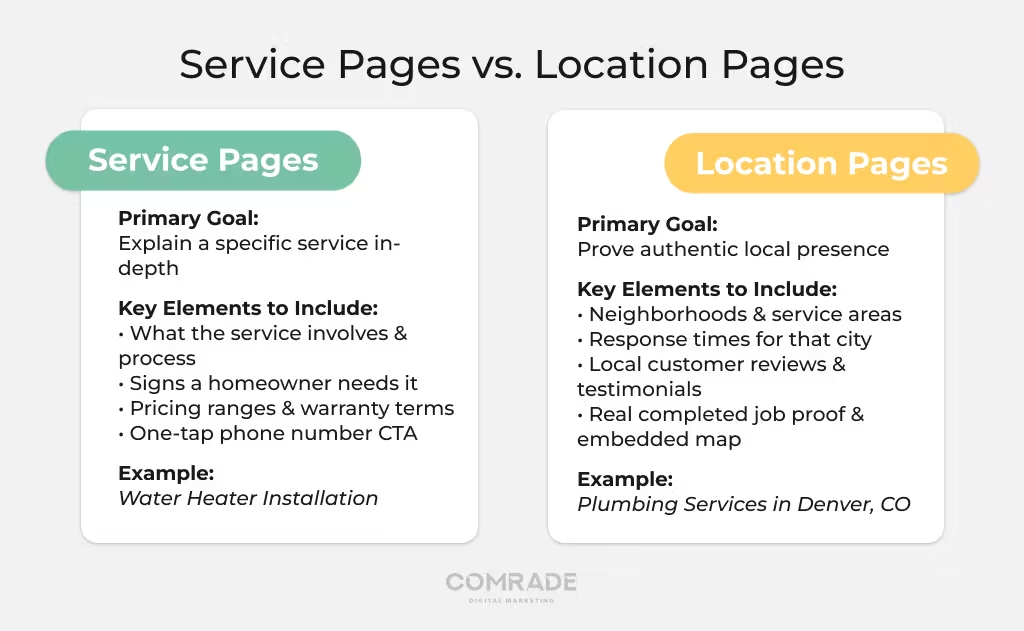
A service page answers “what is this job?” One service, one page. What it involves, signs a homeowner needs it, your process, warranty terms, pricing ranges if you can publish them, and a phone number that’s easy to tap. A page titled “Water Heater Installation in Denver” will outrank a general “Plumbing Services” page, as that’s what potential customers search.
A location page answers “do you actually work here?” Response times, the neighborhoods you cover, jobs you’ve completed there, testimonials from customers in that city, and an embedded map. These are vital for your local visibility across multiple locations.
We’ve personally seen clients blur the two, only for Google to struggle to place them. Duplicate a location page twenty times with the city name swapped, and it won’t rank at all. That pattern is easy to detect, and Google treats it as thin content.
We have to say this (although this may seem obvious): don’t claim service areas you can’t back up. SEO creates a stronger pipeline when you’re precise about where you operate. If your profile lists twenty cities but your site and reviews only reinforce two, the extra eighteen weaken the signal instead of extending it.
For examples of contractor sites that do the service/location split well, see our roundup of the best home services websites.
5. On-Page SEO
On-page work is how you tell Google what a page is about before it reads a word of body copy.
- Title tags and meta descriptions. Keyword-led, local, and honest about what the page delivers: “24-Hour Plumber in Phoenix | Same-Day Emergency Service.” Keep titles near 60 characters and descriptions near 155. Well-written ones earn 5–10% higher click-through rates.
- Heading structure. One H1 naming the service and the place. H2s for the subtopics a homeowner cares about. H3s for detail.
- Internal linking. Point service pages at the relevant location pages and back again. It helps homeowners, and it tells Google which pages belong together.
- Image alt text. Describe the photo and the job: “technician replacing a water heater in Austin, TX.”
While off-page is vital, your SEO success will be jeopardized if you ignore these on-page SEO techniques.
6. NAP Consistency and Local Citations
Your Name, Address, and Phone number should be identical everywhere they appear. “St.” on one listing and “Street” on another is enough to dilute the signal you’re trying to build.
Clean the core listings first on Google Maps, Bing Places, Apple Maps, Yelp, Angi, Houzz, HomeAdvisor, and BBB, then move to trade, chamber, and industry-specific directories.
We’ve seen this personally: fixing five conflicting listings does more than adding fifty new ones. This is how search engines understand and measure your online authority. And don’t skip manufacturer dealer locators: if you’re an authorized installer for a brand you actually carry, those pages give you a citation and a quality backlink in one.
7. Technical SEO, Site Speed, and Schema
Speed is a conversion problem before it’s a ranking problem. Pages that load in under two seconds keep roughly 70% more visitors. 53% of users abandon a page that takes more than three.
The technical checklist for most home service contractor sites:
- Test with PageSpeed Insights or GTmetrix, then compress images as they’re usually the culprit
- Confirm HTTPS across every page
- Fix broken links, submit an XML sitemap, keep crawl paths clean
- Watch Core Web Vitals rather than a single speed score
Google rewards businesses that make these baseline fixes. From here, add structured data. LocalBusiness schema on the homepage, Service schema on each service page, and FAQPage schema markup wherever you answer questions. Schema is how you hand Google and every AI assistant reading your site a labeled version of your business details instead of making them guess.
8. Mobile-First Experience
Google indexes the mobile version of your site, and that’s the version a homeowner sees when they are looking up contractors while in a crisis, after hours.
Four things to check on a phone right now: does the layout adapt without pinching, does one tap on the phone number start a call, can you reach any service in two taps, and is the “Call Now” button visible without scrolling? This is what mobile users need (at a minimum) to consider contacting you.
If the answer to any of those is no, fix it before you spend another dollar on content.
9. Content That Answers Real Homeowner Questions
Blogging on a calendar won’t magically boost your local rankings. You need content that removes a homeowner’s doubt. Companies that publish useful content generate 67% more leads than those that don’t, but only when the content earns its place.
Four formats worth the effort for home service contractors:
- Cost content. “What does a new furnace cost in Chicago?” with real ranges and an explanation of what moves the price. Homeowners search this constantly, and AI systems cite it.
- Comparison content. Repair or replace. Tankless or tank. DIY or call someone.
- Seasonal maintenance. Tied to your actual climate; winterizing advice is wrong for a year-round-warm market.
- Neighborhood content. Local building quirks, common issues in older housing stock, permit requirements in your county.
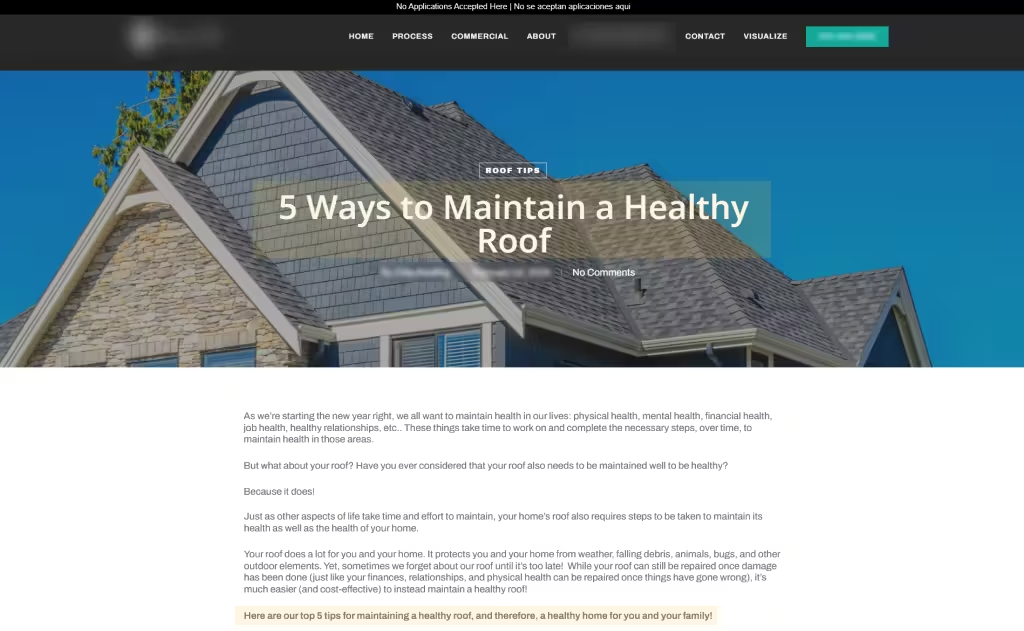
Write the direct answer in the first two sentences, then expand. That structure is what gets pulled into AI Overviews and assistant responses. Other than just writing the page, tools like SurferSEO, Clearscope, and ChatGPT are useful for finding those gaps.
Related: how to get ChatGPT to recommend your business, explained by Ivan Vislavskiy.
10. Local Backlinks and Local Authority
Generic backlinks do very little for your local rankings. Try to earn links that tie your business to a place.
Three that work for contractors:
- Sponsor a local team, event, or school program and get listed on their site
- Partner with adjacent local businesses like builders, realtors, property managers, and cross-link
- Offer seasonal expertise to local news outlets when weather makes your trade newsworthy
Strong link profiles can lift your organic search rankings by 20% or more. Community mentions also produce branded searches and social proof, which reinforce everything else.
Social plays a supporting role here. See how contractors use social media marketing for home services to build local authority.
How to Measure Home Services SEO
Track four things, monthly:
| Metric | Tool | What it tells you |
|---|---|---|
| Organic traffic and conversions | Google Analytics | Whether search is sending people who act |
| Keyword rankings and impressions | Google Search Console | Which terms are climbing and which are stuck |
| Calls, directions, photo views | Google Business Profile Insights | Whether your Map Pack presence is working |
| Booked jobs by source | Call tracking + CRM | The only number that helps with payroll |
Rankings without booked jobs mean your home services industry strategy is aimed at the wrong searches.
If you’re rebuilding lead flow from scratch, our guide to home services lead generation covers the channels beyond search.
How Much Does SEO for Home Services Cost?
It depends on market competition and how much you handle in-house. As a rough market picture: a freelance local SEO specialist typically runs $500–$1,500 per month, and a specialized agency program generally starts around $1,500–$3,000 per month and scales with the number of services across the single or multiple cities you target.
To measure if SEO is a worthy investment, don’t just look at the cost per month. Look at cost per booked job against what you currently pay for lead-gen platforms and paid clicks. See Comrade’s SEO packages and local SEO packages for how that’s structured.
SEO vs. Google Ads vs. Local Services Ads
Most contractors who build a sustainable lead generation engine run more than one.
| Local SEO | Google Ads | Local Services Ads | |
|---|---|---|---|
| Speed | 3–6 months | Immediate | Fast, after verification |
| Cost model | Fixed monthly investment | Per click | Per lead |
| When it stops | Keeps working | Stops instantly | Stops instantly |
| Best for | Compounding, defensible visibility | Filling gaps and testing offers | High-intent calls with a Google Guaranteed badge |
Ads also perform better when your local SEO is strong. A homeowner clicks the ad, checks the Map Pack, reads online reviews, then decides. If the profile behind the ad looks thin, the click is wasted.
Make every ad dollar count. Our PPC for home services guide shows you how.
Five Mistakes That Tank Your SEO and Waste Money
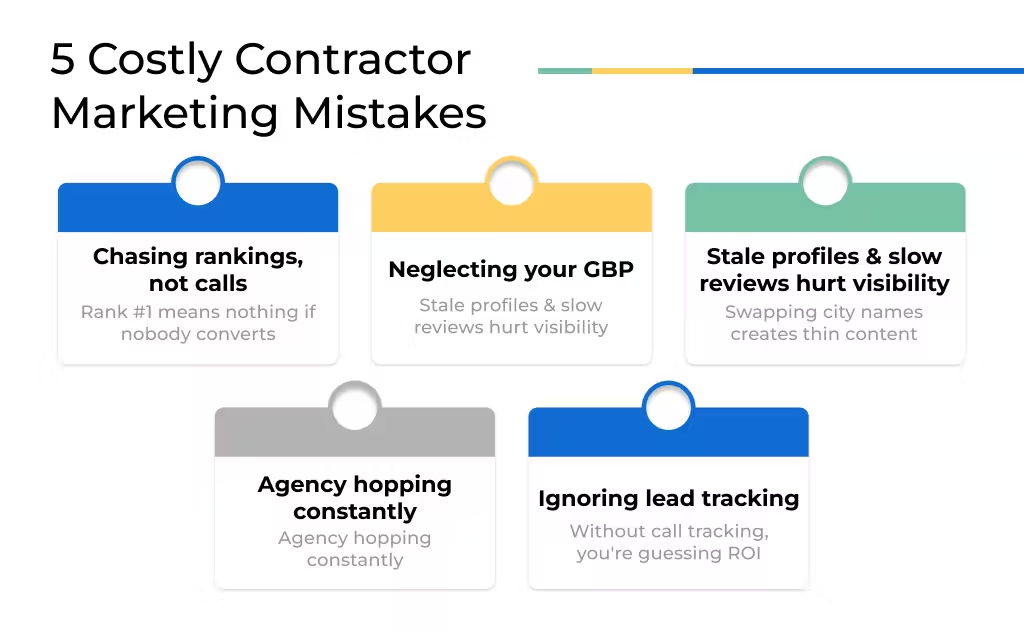
Most home services SEO advice tells you what to do. But contractors rarely lose ground by skipping a step; they lose it by quietly doing one of these five. None of them looks like a mistake from the inside: reports come in, rankings shift a little, and the phone stays quiet. Here they are.
Get Your Home Services SEO Handled
Here’s the short version of the SEO home services marketing system to follow:
- Fix the profile first. Google Business Profile signals carry the most weight in the Map Pack.
- Separate services from locations. One job, one place, one page.
- Make reviews recent and specific. They rank you, and they close the homeowner.
- Keep the site structure fast and clean. Under two seconds, HTTPS, schema on every service page.
- Answer real questions. Cost, comparison, seasonal, neighborhood in that order.
- Measure booked local jobs, not traffic or impressions.
The catch is that this is a monthly discipline, and you already have crews to run.
That’s the part we take off your plate. As a home services SEO company working with contractors since 2008, Comrade builds the profile, the pages, and the reporting. We focus on booked jobs, not vague screenshots.
Get Your Free SEO Audit → or call (872) 242-1074
SEO for Home Services FAQ
-
What is SEO for home services?
SEO for home services is the process of optimizing a contractor’s website, Google Business Profile, and online listings so homeowners nearby find the business when they search for a service. It combines local SEO, on-page optimization, technical fixes, reviews, and content built around pressing homeowner questions.
-
How long does SEO take for a home service business?
Most home service companies see measurable ranking movement in 3 to 6 months and meaningful lead growth between months 4 and 12. Google Business Profile improvements can show results within weeks. Competitive markets like HVAC and roofing in major metros usually take closer to a year.
-
How much does SEO cost for a home services company?
A freelance local SEO specialist typically charges $500–$1,500 per month. Agency programs generally start near $1,500–$3,000 per month and increase with the number of services and cities targeted. The right budget depends on market competition and how many locations you need to rank in.
-
Do I need a separate page for every city I serve?
Yes, if you genuinely serve that city and can write something specific about it. Each location page needs unique content, local landmarks or neighborhoods, and testimonials from that area. Duplicated pages with only the city name changed will not rank and can hurt the rest of the site.
-
How many Google reviews do I need to rank in the Map Pack?
There’s no fixed number. Reviews account for roughly 20% of Map Pack ranking weight, and recency plus specificity matter more than total count. Ten recent reviews naming a specific service and neighborhood typically outperform fifty older generic ones.
-
Why does a competitor farther away rank above me?
Proximity is only one factor. Google also weighs relevance and authority via category accuracy, service clarity, review recency, website consistency, and engagement with your listing. A slightly farther competitor with cleaner signals will outrank a closer business with vague ones.
-
Does SEO still matter if homeowners use ChatGPT?
Yes. AI assistants pull from sources Google already favors: business profiles, reviews, structured data, and service pages. Strong local SEO is what makes a contractor citable in AI answers, which is why answer engine optimization builds on local SEO rather than replacing it.
-
What’s the single fastest SEO fix for a contractor?
Complete and correct your Google Business Profile. Fix the primary category, list services the way customers say them, add recent job photos, and confirm hours and service area. It’s free, it affects your most visible placement, and most contractor profiles have real gaps.
-
Should I run paid ads while building SEO?
Usually yes, especially in the first six months. Local Services Ads and Google Ads produce immediate calls while organic rankings develop. Many contractors keep running both because they occupy different positions on the results page.