Local SEO
Own the research phase.
Rank when developers, boards, and owner's reps search for firms in your specialty and market: the searches that happen long before an RFP exists.
Local SEO →The Architecture Marketing Agency That Gets You Shortlisted.
Comrade is an architecture marketing agency that builds the SEO, website, content, and AI-search presence putting your firm in the room before the RFP is even written, while you focus on the work, not the marketing.
Year 1 median results. Tracked through Growth Portal against total marketing investment. Results vary by market, competition level, and starting position.
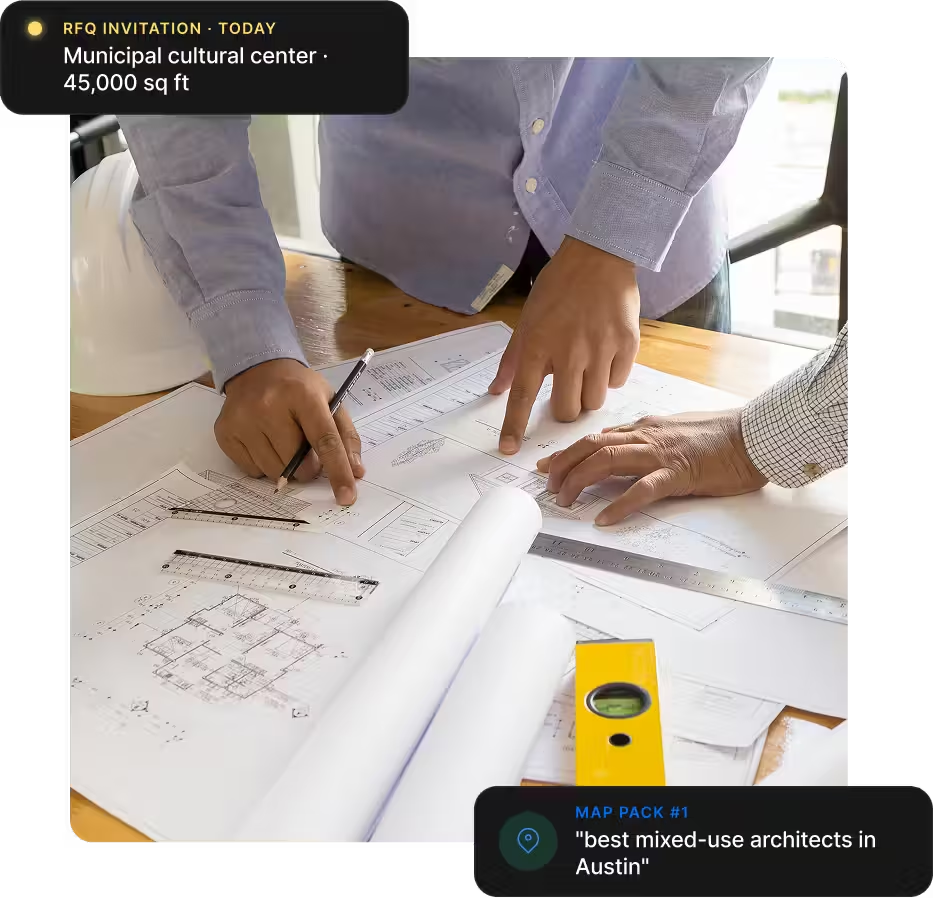
Selection committees (developers, owner's reps, boards, facilities directors) build their shortlist long before a project is announced. By the time an RFQ goes out, the decision is largely made. The firm that wins is usually the one that was already visible, already searchable, and already trusted when the research started. That research phase is where business development for architecture firms is actually won or lost.
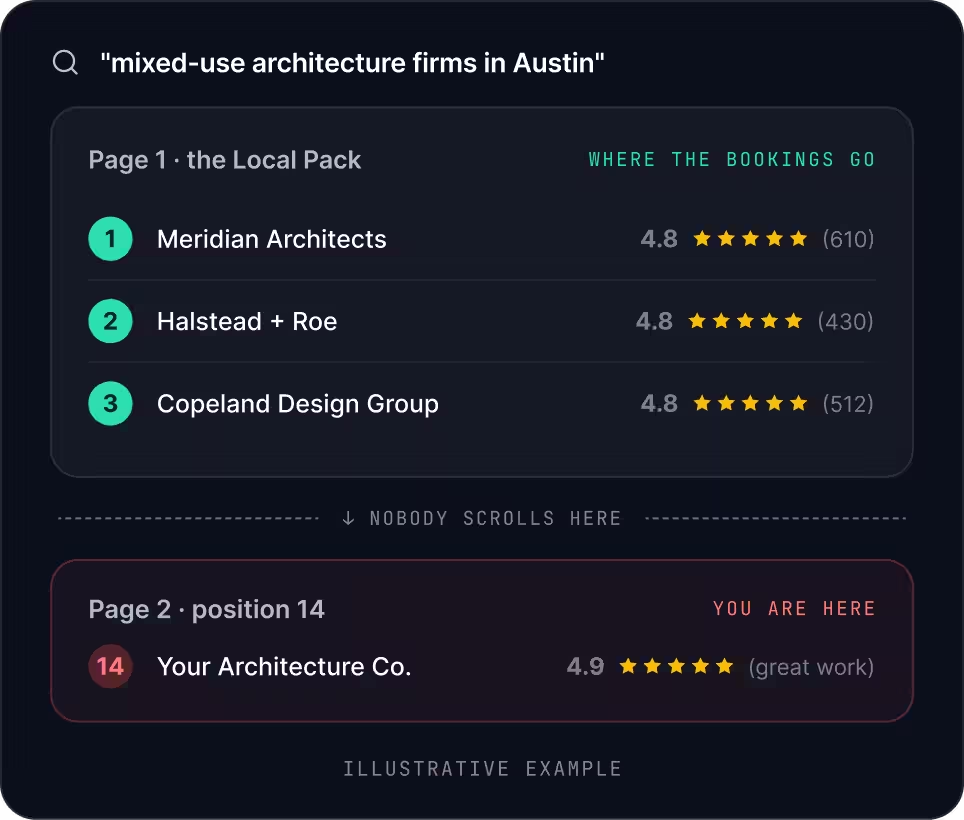
Architecture firms sell expertise to committees across long decision cycles. The marketing strategies that fill a service calendar don't build a pipeline of pitches.
people sign off on the firm you are competing against.
There is no single buyer to persuade. A board member, a facilities director, and an owner’s rep each research differently and each need proof of a differently and each needs proof of a different kind, which is why one landing page and one lead form never carries the decision.
conversion asset and it isn't a lead form.
A portfolio organized by sector and project type does more selling than any CTA button. We structure it so it works twice: readable proof for a committee, and structured data Google and AI models can actually parse, including schema by project type, geography, size, and style.
AI engines a committee may consult before it ever calls you.
A developer asks ChatGPT, Gemini, or Perplexity who the best mixed-use architects in a market are, and the model answers from what is already structured about each firm on the web. AI does not call references; it returns the firms it already understands.
Architecture demand follows budget cycles, not weather. Budgets lock in during Q1, RFPs follow in two clustered waves tied to fiscal- and school-year timing, and the decision was already made months earlier, in the budget line most agencies never track.
Lowest RFP volume of the year, highest opportunity to get positioned
Public and institutional budgets get finalized here, and developers set next year's capital plans. Nobody has posted an RFP yet, but this is exactly when committees start forming an opinion of who belongs on it.
Fiscal-year budgets convert into posted RFQs and RFPs
As fiscal-year budgets get adopted, the first wave of institutional and public RFPs hits the street, timed to break ground once the summer construction window opens. This is the highest-intent search period all year.
Residential and developer clients research for months before they commit
Institutional clients are heads-down building what got approved in spring. But luxury residential and developer prospects are quietly comparing portfolios right now, deciding who gets the call when they are ready.
The federal fiscal year and school-district planning drive a second wave
The federal fiscal year starts October 1, school districts finalize next year's capital asks, and developers lock in pipeline before year-end. A second RFP surge, and the firms that stayed visible over summer are already on the list.
RFP volume drops, and so does most agencies' effort
Search and RFP volume falls off, so most agencies pull back too. But committees are still quietly forming next year's shortlist over the holidays. This is the gap that separates firms building position year-round from firms re-fighting the same RFP every spring.
Fiscal-year timing varies by state, agency, and client type. This reflects the common July–June municipal and October–September federal cycles. Your firm's actual RFP calendar gets mapped during onboarding.
Architecture is a visual, portfolio-driven business, so the marketing has to be visual too. We turn your renderings, drawings, finished projects, and design process into the pages, galleries, and content that rank on Google, get cited by AI, and build the visual identity a committee trusts during months-long shortlist research.
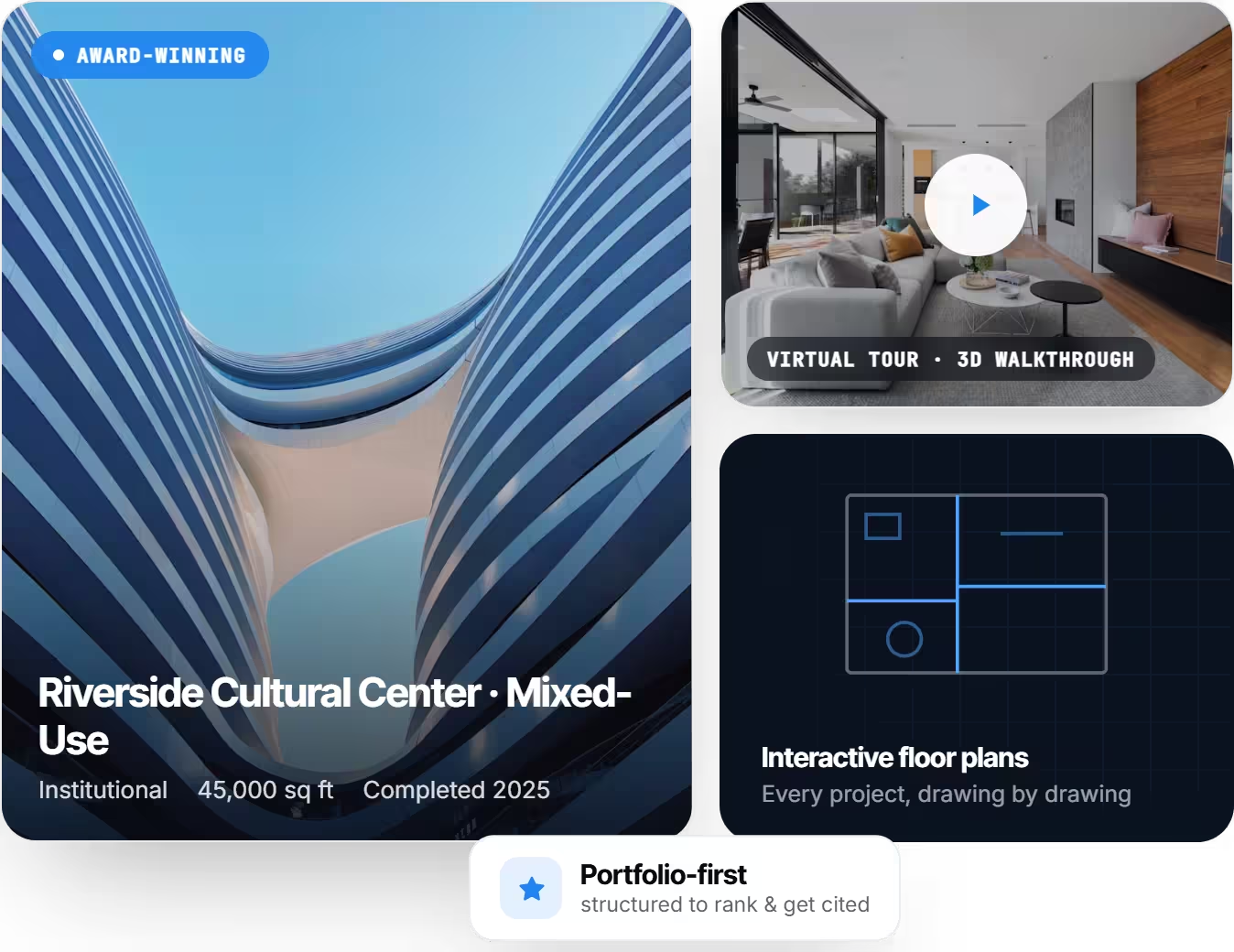
Dedicated pages for every project, organized by sector and type; the ones committees land on months into their research, not a chronological archive.
Design-process pages and floor plans that let a committee evaluate how you think, not just the finished photos.
Landing pages for award submissions and press coverage that turn recognition into a lasting search asset.
Case studies and thought-leadership pages that position your principal as the go-to expert in the sectors you want to win next.
One system, one team, every inquiry tracked: the architect marketing services that put your firm in front of developers, boards, and owner's reps while they're still researching, on Google and in AI answers alike.
Plug Into the Revenue EngineRank when developers, boards, and owner's reps search for firms in your specialty and market: the searches that happen long before an RFP exists.
Local SEO →SEO for architects built on sector pages, project narratives, and thought-leadership content, written to rank on Google and to feed AI answers.
SEO →Structure your portfolio and site so ChatGPT, Gemini, and Perplexity can find, trust, and recommend your firm by sector and project type.
AI Search Optimization →LinkedIn and Google campaigns targeted by project type, sector, and geography, reaching decision makers, not broad local-service intent.
PPC & Google Ads →Projects-first web design and web development: sector-organized galleries, principal profiles, and a brand identity structured for humans and search engines alike.
Web Design →SEO content and design-process writing that turns your principals' expertise into authority a committee can find months before the pitch.
Social media management built around project milestones and visual storytelling, so your firm keeps showing up between RFP waves, not just during them.
Case-study pages built twice over: as a search asset that ranks for sector and typology, and as proof your team pulls straight into the next RFP response.
We organize strategy around the client you're trying to win: a developer, a school board, and a private homeowner research your firm in completely different places.
High-net-worth clients and custom homes, where the portfolio and the principal's reputation do the selling.
Developers and investors for whom the architectural solution is the project's value proposition.
Universities, municipalities, and cultural institutions buying through structured RFQ and RFP processes.
Offices, retail, and brand-driven commercial clients where design carries the brand identity.
Firms working across architecture, engineering, and construction that need one story per sector.
Our sweet spot: Architecture and AEC firms doing $2M–$50M in annual revenue, competing for developer, institutional, or high-end residential work, not solo practitioners relying purely on referrals.
Committees, owner's reps, and developers increasingly open ChatGPT, Gemini, Perplexity, or Google AI Overviews at the start of their research, asking things like "best mixed-use architects in Austin" or "who should design our new school." The models answer from what is already structured about each firm on the web, and most architecture firms have published nothing a model can use.
firms get named in a typical AI shortlist answer. Everyone else is invisible to it.
of quiet research happens before an RFP exists, and AI is in the room for all of it.
of businesses get named by AI at all. Be one of the firms that is.
AI doesn't call references. It returns the firms it already understands, in the sectors it already associates them with. The firms structured for it today will hold those recommendations through the next several budget cycles.
Unlike a contractor who quotes over the phone, architecture procurement runs through a multi-week evaluation: RFQ, portfolio review, interview, reference checks, fee negotiation. The gap between "inquiry submitted" and "contract signed" is where most firms lose ground to competitors who follow up faster and more credibly. We engineer that path.
Response times shown are the standard we build toward. Final SLAs are set against your team's real capacity during onboarding.
Committees and developers typically contact three to five firms in the same week. The firm that replies first with a specific, relevant response (not a generic "thanks for your interest") sets the tone for the entire evaluation. Speed signals organization; relevance signals fit.
Every inquiry triggers a reply matched to the sector and project type in the request, like the right portfolio examples, the right principal, the right case study, so a fast response is backed by proof of fit, not just a form-confirmation email.
Sector case studies at week 1, press and awards proof at week 3, a check-in before the RFP deadline or interview, keeping the firm top of mind across a decision window that runs months, not days. This is the same quiet stretch shown in the budget cycle above: most firms read committee silence as "no" and stop following up exactly when persistence would win the pitch.
For firms with multiple principals or sector specialists, inquiries route to the person with relevant experience instantly; a healthcare inquiry reaches the healthcare-experienced principal, not whoever picks up first. Committees notice when the first call is with someone who has actually done the work.
Not projections. Actual results tracked through Growth Portal for design, permitting, and build clients running the same Revenue Engine. View all case studies →



Results tracked through Growth Portal across design, permitting, remodeling, and construction clients, not architecture-specific engagements. Results vary by market competition and starting position.
With Comrade's Growth Portal, see exactly how your architecture marketing performs, including every project inquiry, RFQ invitation, and target sector, from civic and mixed-use to luxury residential, in real time.
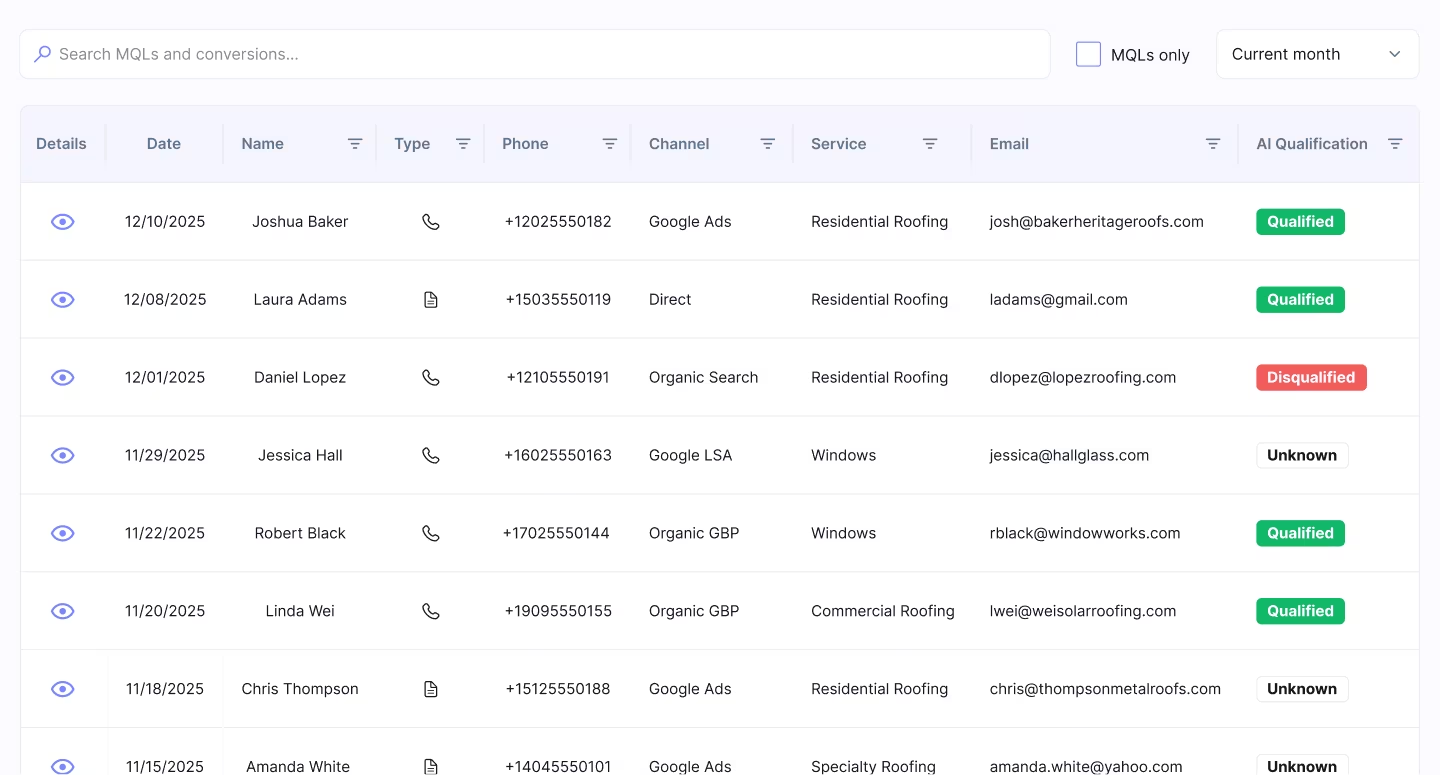
Each RFQ, project inquiry, and referral form tagged by sector, typology, and square footage, not just a raw lead count.
See which sector and typology searches your firm appears for during the months before an RFP is ever posted.
Separate fee-shopping homeowners from funded, committee-backed projects, and see which project page or case study brought each one in.
Follow an inquiry from first click to RFQ invitation to shortlist interview, so marketing is measured against your pitch pipeline, not clicks.
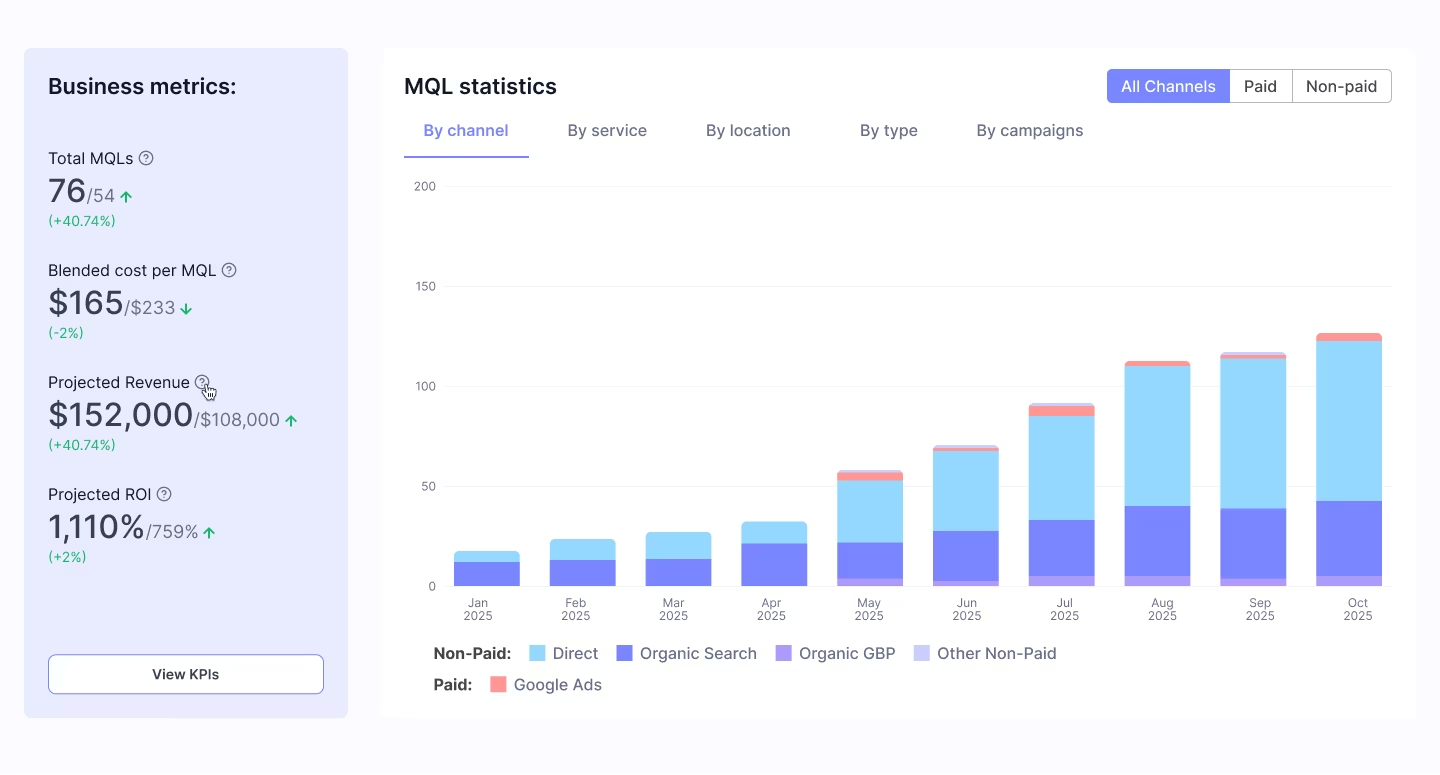
Organic search, AI search, content, and paid side by side across every sector you target: civic, mixed-use, institutional, residential.
Total marketing investment against signed design contracts and fee value, measured over the real 12–18 month architecture cycle.
Every signed project traced back to the project page, sector case study, or AI citation that started the committee’s research.
See which channels carry the spring and fall RFP waves, and which build position in the quiet Q1 and holiday windows between them.
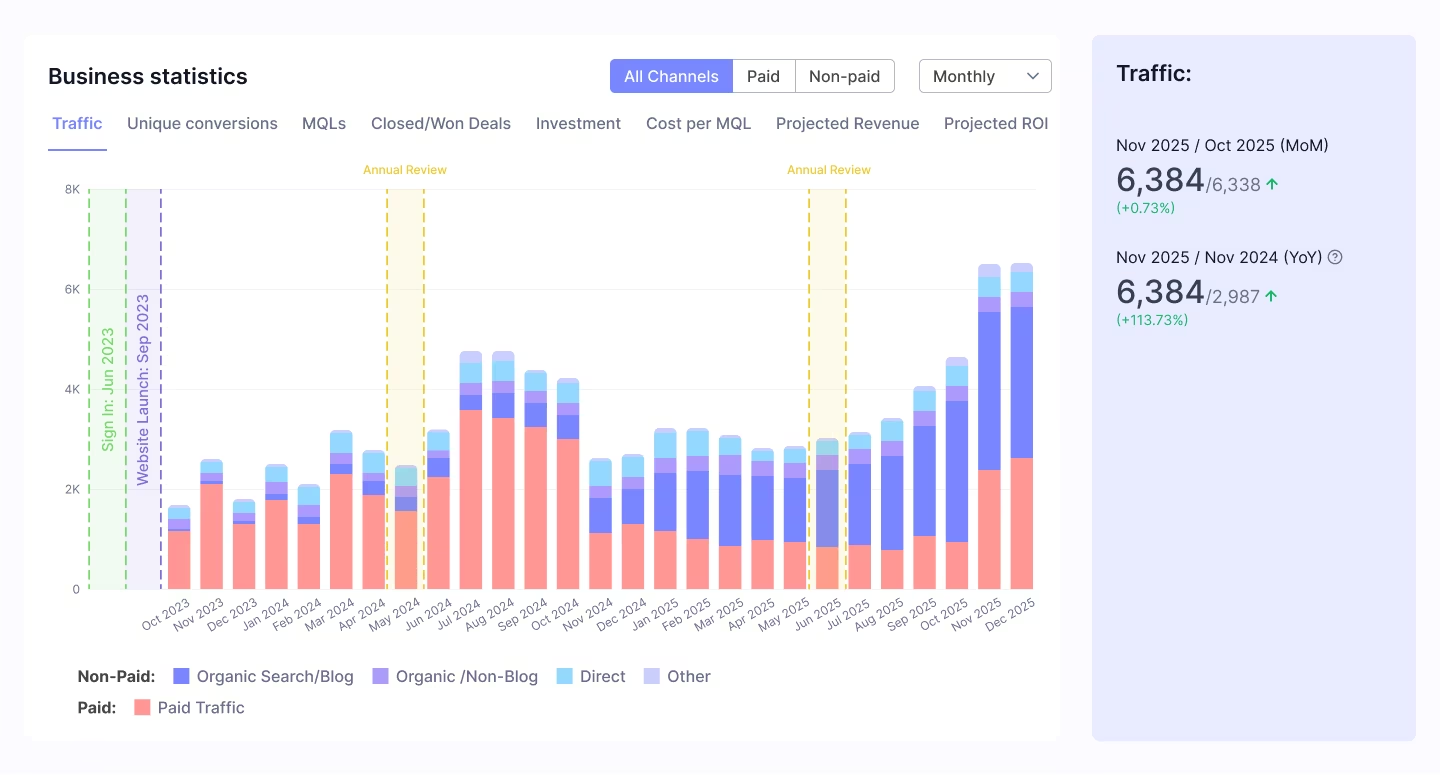
Organic, AI search, content, LinkedIn, and paid broken out separately; see exactly where your project inquiries come from.
Track positions for the project-type searches committees actually use: “mixed-use architects,” “school design firm,” “adaptive reuse architect,” market by market.
Which project pages, renderings, and floor plans committees spend time on, and which sectors still need a case study you have not published yet.
See which cities and sectors you already own, and where one new sector page can put you on the next shortlist.
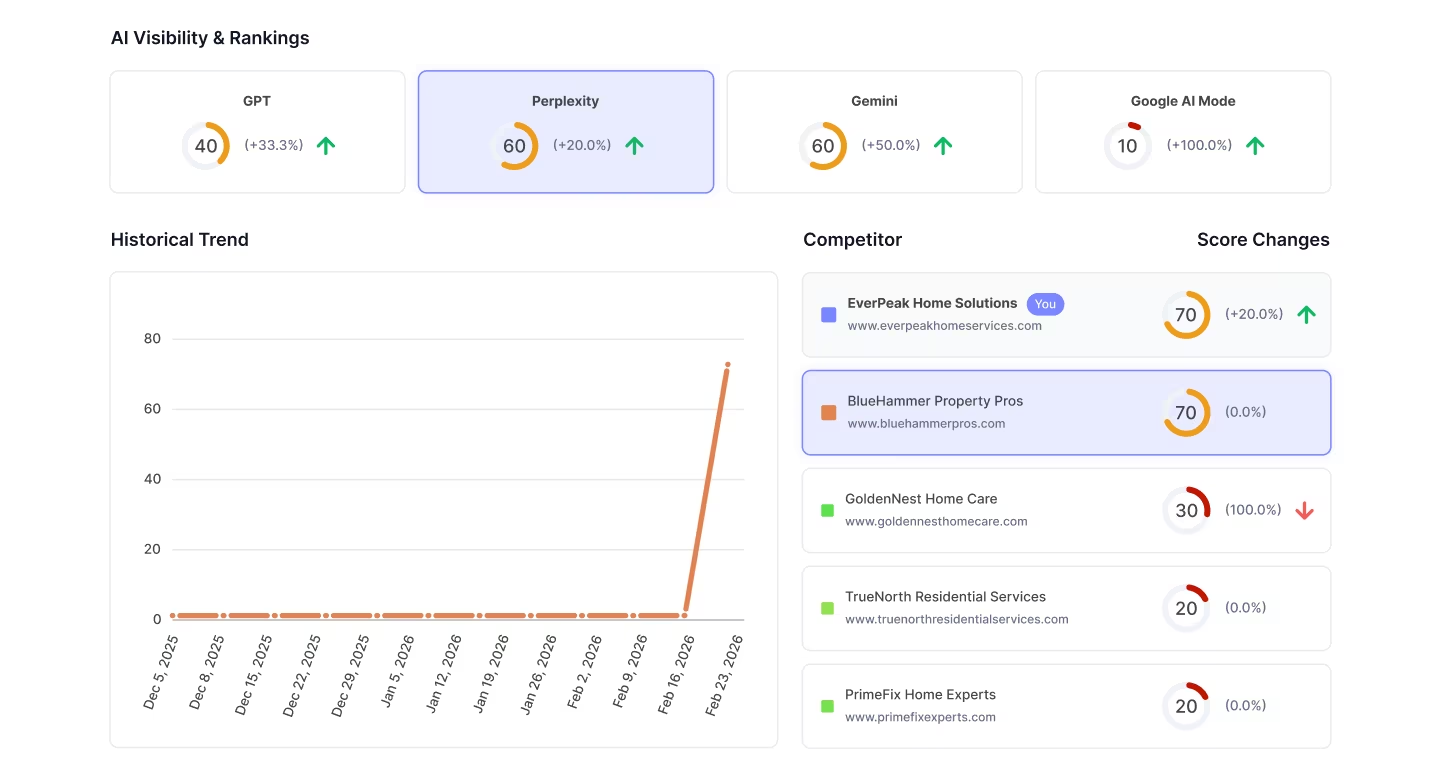
See whether ChatGPT, Gemini, Perplexity, and AI Overviews name your firm when a developer asks who to shortlist, and which sectors you are missing from.
Data-backed moves on which sector content and project pages to publish next, based on where citations are within reach.
The portal flags typologies and markets where your firm is one project page away from breaking into AI answers and top results.
See which architecture firms are gaining ground in your target sectors, and which of their project pages the models keep citing.
We build the findability half of the equation: the website, portfolio structure, content, SEO, and AI visibility that make an already-credible firm easy to find and easy to trust when a committee starts researching. There are cheaper agencies, but very few will show you exactly what your marketing produced, from first search to signed contract.
Institutional, mixed-use, luxury residential, corporate workplace, and multi-disciplinary AEC firms: we market each sector differently because committees research each one differently.
100+ team. We have marketed professional-services firms through every Google algorithm update, and now through AI search.
Research-phase visibility, AI citation rate, sector rankings, and proposal invitations, not just clicks. Every number ties back to your Growth Portal.
Website, project pages, content, data, and inquiries are yours from day one. No lock-in clauses, no hostage sites.
Every strategy starts with your target sectors, the firms you lose to, and the real search and AI landscape for the project types you want next.
A senior strategist who understands committee-based selection and a 12–18 month cycle, not a junior account manager reading from a generic playbook.


Architecture firms deserve a marketing partner who treats your growth like their own, and proves it with data, from the first search a committee runs to the contract you sign. You shouldn't have to chase your agency or wonder where an inquiry came from. You should own a system built for the way architecture is actually chosen; quietly, months in advance.








Most agencies measure success in clicks and rankings. We measure it in qualified inquiries, proposal invitations, and revenue, and the numbers show the difference.
A complete growth system: all your architecture marketing services under one strategy and one team, built for firms competing for developer, institutional, and high-end residential work.
Architecture marketing programs typically run $4,000–$15,000+ per month for ongoing SEO, content, and AI-visibility work, or $15,000–$60,000+ as a project fee for branding and website engagements. Most agencies in this niche won't tell you a number until after the pitch call. We publish ours.
Ranges estimated from market data
Transparent monthly pricing, no setup hostage fees, no lock-in. Custom scope based on your target sectors, markets, and starting visibility. Built for architecture and AEC firms doing $2M–$50M in annual revenue.
Architecture marketing compounds the way a portfolio does: every project page, sector case study, and award write-up keeps earning visibility years after it ships. Search and AI presence move first; signed contracts follow the RFP and budget calendar, not the campaign calendar.




Don't see your question? Ask us on a strategy call. It's part of your free Growth Plan.
Ask on a callArchitecture marketing programs typically run $4,000–$15,000+ per month for ongoing SEO, content, and AI-visibility work, or $15,000–$60,000+ as a project fee for branding and website engagements. The right number depends on firm size, how many sectors you are targeting, and whether you are starting from scratch or already have search visibility.
Marketing builds and operates the digital systems (website, SEO, portfolio structure, AI search visibility) that make a firm findable and credible when a committee researches it. Public relations earns third-party validation through press placements, awards submissions, and media relationships. The two work together, but they are different disciplines: no marketing agency can replace a PR firm’s media relationships, and PR alone won’t fix a firm that is invisible in search and AI answers.
Most architecture firms see measurable movement in search rankings and AI visibility within 3–4 months. Signed contracts typically take longer (6 to 18 months) because architecture is chosen by committees over long decision cycles, not booked same-day like a home-service call. The firms that start building visibility a full budget cycle ahead of an RFP are the ones already shortlisted when it is posted.
No. Structured correctly, architecture marketing does not look like advertising; it looks like credibility. It means organizing your portfolio by sector, publishing case studies that show how you think, and making sure a committee researching your firm finds proof of expertise instead of a sales pitch. Firms that grow purely on referrals are still researched and compared online before the phone ever rings; the only question is whether what a committee finds helps or hurts.
We don’t write RFP responses directly; that’s your team’s expertise. What we build is the case-study library, structured portfolio, and proof points your team pulls from when writing a proposal, so every RFP response draws on content that is already organized, current, and sector-specific instead of being assembled from scratch each time.
Architecture buyers are usually committees (developers, boards, facilities directors) making decisions over 12 to 18 months based on portfolio and reputation, not homeowners calling same-day for an emergency repair. That difference changes the entire strategy: long-cycle nurture and sector-specific portfolio SEO matter more than instant lead capture.
ChatGPT, Gemini, Perplexity, and Google AI Overviews recommend architecture firms based on structured, consistent information already published across the web: schema-marked project pages, consistent bio and firm data, press mentions, and clear sector positioning. We audit and build these signals through AI Search Optimization, then track whether your firm actually gets named when someone asks.
Most growing firms benefit from both. An in-house lead manages day-to-day content and client relationships, while a specialized agency brings the technical depth (SEO, AI visibility, web development) and sector experience an in-house hire rarely has time to build alone. If you already have a marketing team, we typically extend it rather than replace it.
Our sweet spot is architecture and AEC firms doing $2M–$50M in annual revenue, competing for developer, institutional, or high-end residential work, not solo practitioners relying purely on referrals. If that is not you yet, our resources and blog are free to use regardless.
Yes. Most firms that come to us are already working with a generalist agency that is not AEC-specific. We start with a free audit comparing your current visibility against your target sectors, and because you own your website, content, and data from day one, switching does not mean starting over or losing what is already built.
We track visibility in the research phase — search rankings for sector and project-type keywords, AI citation rate, and portfolio traffic from target sectors — alongside inquiries and proposal invitations. Clicks and form fills matter less in architecture than whether your firm shows up when a committee is quietly building its shortlist months before an RFP exists.
Look for an agency with named, verifiable architecture or AEC client work, not just a generic portfolio, published or transparent pricing, and reporting tied to search visibility and shortlist activity rather than vanity clicks. Ask whether you will own your website, content, and data if you ever leave, and whether the agency specializes in AEC or treats it as one vertical among many.
Book a free 30-minute growth call. We'll review your current visibility, map your portfolio against the sectors you want to win, and show you exactly where your firm stands in Google and AI answers today — before the next budget cycle starts without you.