
“By failing to prepare, you are preparing to fail.”
We couldn’t agree more.
You could operate without a roofing business plan, but that’s one of the main reasons 45% of businesses fail in the first 5 years.
On the road, they see painfully slow months, make bad pricing decisions, and waste precious marketing dollars.
Save yourself the headache and build a strong roofing business plan.
In this guide, we’ll walk through 4 steps to create a solid business plan that includes your team, competitors, and even the top funding considerations.
Bonus: We’ll also drop a practical 10-point template for a roofing business plan! Let’s go.
Key Takeaways
- Create a roofing business plan: It helps you define your services, pricing, and growth strategy.
- Research your local market: Understand demand, pricing, and nearby contractors.
- Use a roofing business plan template (included below): It’s easier to organize your goals, marketing, finances, and operations.
- Define your target customers: Decide whether you serve homeowners, insurance claims, or commercial projects.
- Set financial projections: Estimating startup costs, equipment expenses, and revenue expectations.
What is a Roofing Business Plan?
A roofing business plan is a strategic, written roadmap outlining your company’s goals, operational structure, marketing strategies, and financial projections for the next 3-5 years.
That way, you’re not just “winging it” from job to job.
What does a strong roofing business plan include?
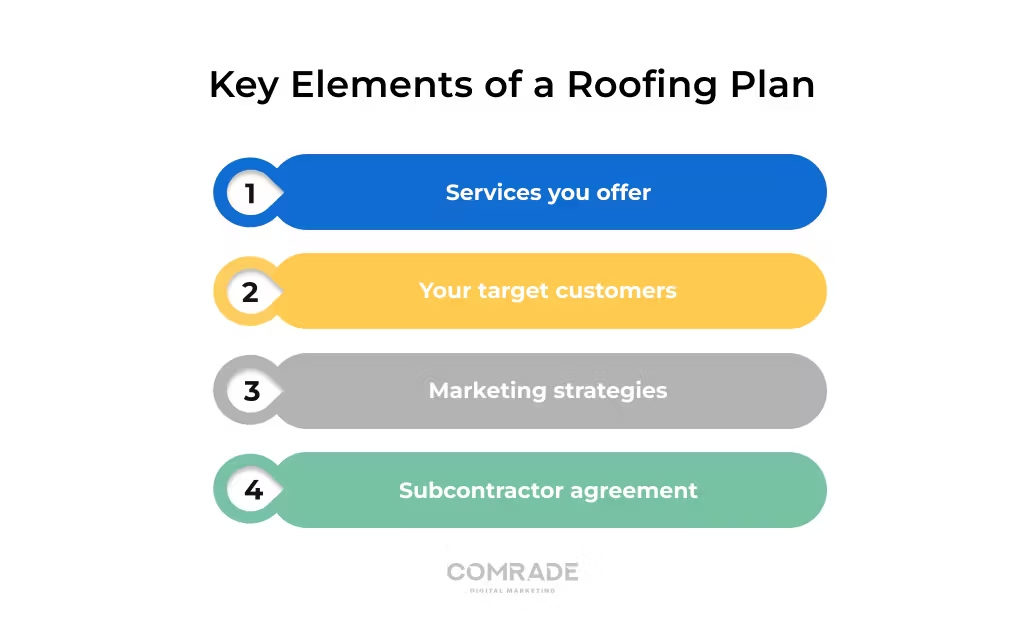
- Services you offer (repairs, replacements, inspections, storm damage work)
- Your target customers (homeowners, property managers, commercial clients)
- Marketing strategies to generate leads and book jobs
- Financial projections like startup costs, revenue, and profit margins
According to Investopedia, businesses with formal plans grow 30% faster than those without one.
That kind of edge is BIG in the roofing industry.
Why Do I Need a Roofing Business Plan?
Without a roofing business plan, you risk chaotic operations, financial instability, and a high chance of failure within 5 years… all due to a lack of focus on profitability.
We don’t mean to be negative Nancys when we say this:
38% of startups fail not because of a bad idea, but because they run out of cash, which is often linked to poor financial planning.
A strong business plan for roofing contractor businesses helps you:
- Estimate startup costs and revenue so you avoid cash-flow problems.
- Understand your competition and position your company in the local market.
- Plan your marketing strategy to generate consistent leads and jobs.
- Set clear goals and growth targets so your business expands intentionally.
As the saying goes, “‘If you build it, they will come’ is one of the BIGGEST myths in business.”
We literally couldn’t agree more!
Look, while it is possible to succeed without a business plan, the road there will be riddled with pythons, sharp rocks, and dead ends. No thanks.
How to Create a Good Roofing Business Plan
Luckily, it’s not hard to create a strong plan (we promise).
But it does need to be thoughtful, realistic, and grounded in real market conditions.
This guide was written for new roofing business owners and successful roofing businesses alike.
If you’re writing a roofing business plan, these 4 steps will be your North Star:
1. Keep It Real
A good roofing business plan starts with realistic expectations.
You’re probably not going to make $1,000,000 in the first 6 months.
Many new contractors SERIOUSLY underestimate their startup costs, marketing expenses, and the time it takes to build a steady customer base.
That’s why your plan should clearly outline:
- Startup costs (equipment, insurance, licensing, vehicles)
- Monthly expenses
- Expected job volume
- Revenue projections
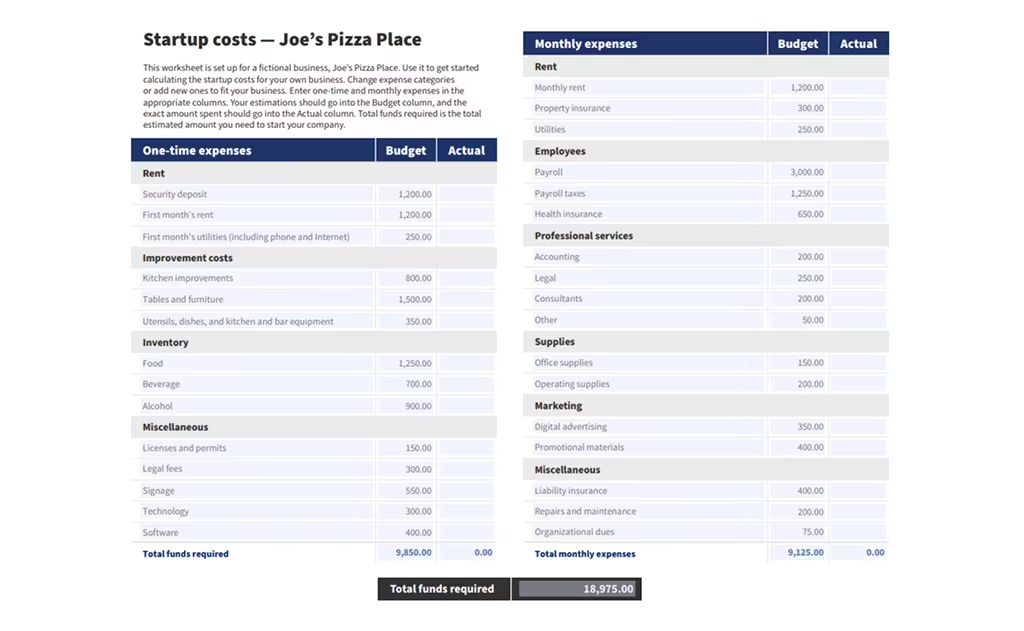
We found a pretty cool start-up cost calculator guide by the SBA. Enter your start-up costs, and it gives you the total funding required to build a successful roofing company.
2. Focus on Your Company Purpose
Take a moment to define why your roofing company exists.
Contractor Plus points out, “Small contractors grow faster because they choose a narrow lane and dominate it. They do not try to be everything to everyone.”
So, ask yourself, are you focused on:
- Storm damage and insurance claims?
- Residential roof replacements?
- Commercial roofing projects?
- Premium roofing services?
Your purpose will shape your pricing, branding, and marketing strategies. When starting a roofing business plan, define your niche early.
3. Establish Company Values
Strong companies are built on strong values.
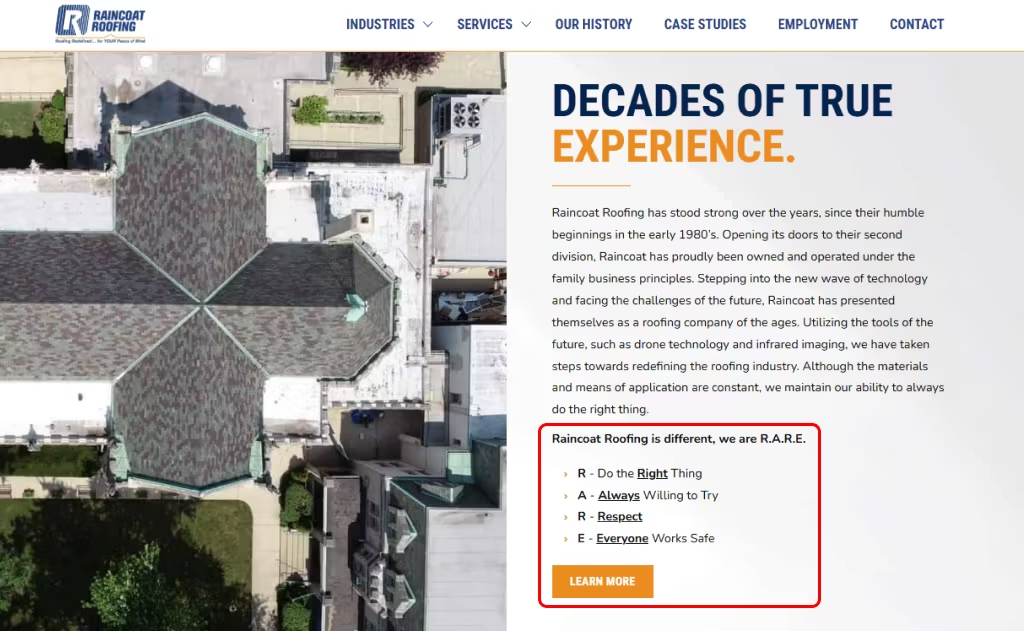
Raincoat Roofing does a brilliant job with their R.A.R.E. values. Check it out, and you might be inspired.
Likewise, your roofing business should clearly define the principles that guide how you work with customers and employees:
- Honest estimates and transparent pricing
- High-quality workmanship
- Safety-first job sites
- Reliable timelines and communication
In industries like roofing (with word-of-mouth and reviews), your values can be one of your biggest competitive advantages.
4. Enlist Initiatives and Goals
A roofing business plan shouldn’t just describe your company. It should guide your growth.
Harvard Business Research found that people who write down their goals are 42% more likely to achieve them.
To build a successful business, set clear yearly goals such as:
- Revenue targets
- Number of completed roofing projects
- Hiring new crew members
- Expanding service areas
Keep this in mind when starting a roofing business plan. You’ll grow intentionally rather than taking whatever jobs come your way.
Your Free Roofing Business Plan Template
Ready to start building your plan?
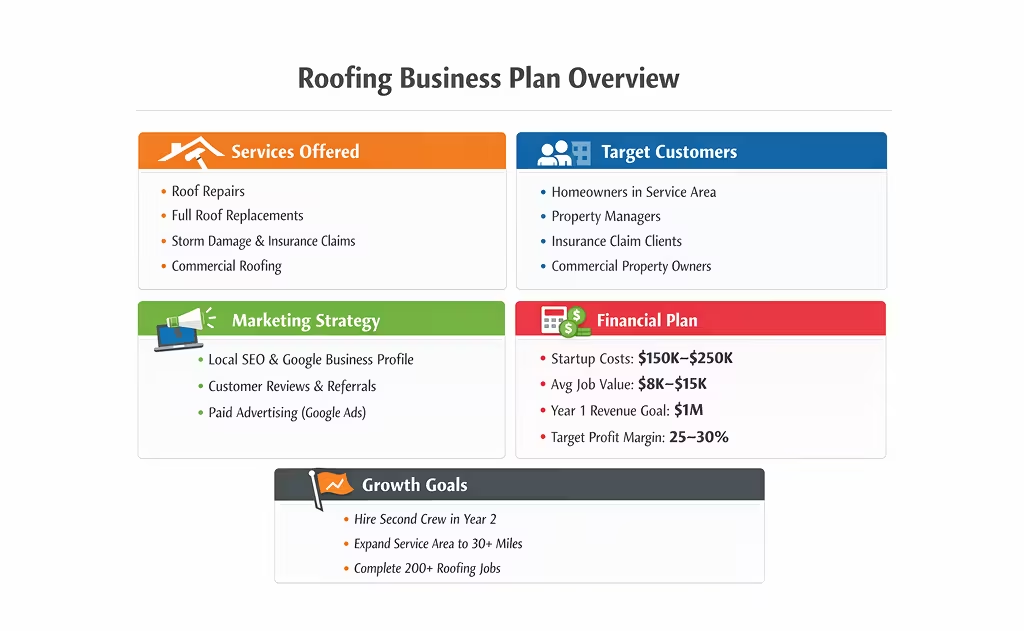
This roofing company business plan template is your start.
It outlines literally every essential section you need. Use it to organize your strategy, finances, and growth goals as you launch or expand your roofing company.
- Executive Summary
- Company Description
- Business Structure
- Business Opportunity
- Competitive Analysis
- Target Market (Your Typical Customer)
- Marketing Plan
- Financial Summary (Budget & Expenses)
- Your Team Info
- Funding Requirements
Let’s break each one down.

1. Executive Summary
This is your elevator pitch.
Whether you’re a new business or an old one, this is a vital first step.
Your executive summary highlights your company’s vision, mission, services (e.g., residential asphalt, commercial flat roofs), target market, competitive advantages, and financial goals.
Keep it short and concise!
Remember, lenders often read this first. If it’s weak, they may not read the rest.
2. Company Description
This is where you tell your story.
It details what your roofing business does and what makes it stand out from the competition. Outline what you want to achieve in the short and long term.
The more specific you are, the easier it is to stand out.
Pro tip: Businesses with a clear value proposition tend to convert more leads because customers instantly “get” what you do.
3. Business Structure
Your business structure affects taxes, liability, and how you operate daily. There are 4 main types:
- Sole Proprietorship
- Partnership
- LLC (most popular for contractors)
- Corporation
Most roofing companies choose an LLC for liability protection in their business strategy.
Small Business Administration points out, “The business structure you choose influences everything from day-to-day operations, to taxes and how much of your personal assets are at risk.”
4. Business Opportunity
Why now? Why your market?
This section proves there’s real demand for your services. Maybe your area has aging roofs, frequent storms, or rapid housing growth.
35% of businesses fail due to a lack of market need, as per the U.S. Chamber of Commerce. Don’t let this be you.
Prove that people need what you offer. That’s one of your main jobs as a new business owner.
5. Competitive Analysis
You’re not the only roofer in town. Why should someone pick you?
Give that some serious thought by analyzing:
- Competitor pricing
- Reviews and reputation
- Services offered
- Marketing presence
Then find your own business’s edge. Maybe it’s something like, “We beat any written quote by 5%. Guaranteed.”
Make sure to follow the 3-Cs rule: Keep it concise, customer-focused, and concrete.
6. Target Market
To quote the famous saying, “It’s better to have 100 people love you than 1,000,000 people that sort of like you.”
For long-term success, define exactly who you want:
- Age Range: 30–65 homeowners
- Income Level: $75K–$250K+ households
- Property Type: Single-family
- Location: 10–30 mile service radius
- Urgency: Storm damage, leaks, aging roofs
- Customer Type: Homeowners
- Buyer Behavior: Price, quality, and convenience-focused
Remember, your marketing, pricing, and messaging depend on it.
For example, if you’re targeting insurance jobs, you already know these are going to be higher-ticket jobs with a longer sales strategy cycle.
7. Marketing Plan
Without clients, you don’t have a business.
Detail how you will inform, persuade, and reach customers, whether through:
- A Google Business Profile
- Local SEO (search engine optimization)
- Reviews and referrals
- Paid ads
- In-person networking
- Radio ads or billboards
Pro Tip: Build a website and invest in SEO at a minimum. Nearly 97% of people search online to find local businesses, so you absolutely need to be there.
8. Financial Summary (Budget & Expenses)
Money, money, money… It’s not so funny.
A financial summary keeps your roofing business grounded in reality. It shows exactly what you’re spending, what you’re earning, and whether you’re actually profitable.
Your financial summary should outline:
- Startup costs
- Monthly expenses
- Revenue projections
- Profit margins
Every well-crafted business plan has a realistic budget. You don’t want to run out of money while you’re still waiting to get paid on completed roofing jobs.
9. Your Team
Who’s actually running the show? The people want to know!
Make sure your roofing business plan covers vital info about:
- Owner/founder
- Crew members
- Sales or project managers
- Admin support
Roofing is execution-heavy. A strong team is non-negotiable.
Even a small, reliable crew will outperform a larger, disorganized one. If you plan to scale, show how your team will grow with your workload.
10. Funding Requirements
Need money? Spell it out clearly.
If you plan to use loans, investors, or outside capital, this section explains exactly how much funding your roofing business needs.
Lenders don’t just want a number. They want to see a clear, well-thought-out plan behind it. Include:
- How much funding you need
- What it will be used for (equipment, trucks, marketing, hiring)
- Expected return on investment (ROI)
Be specific. “$150K for equipment and marketing” is far stronger than vague estimates.
Lenders are far more likely to approve funding when they understand how their money will generate revenue.
But Hey, a Business Plan is Not Enough. You Still Need Top-Tier Marketing.
Congrats! You have our 10-point business plan template.
That is just the foundation. Marketing is what fills your schedule.
You still need consistent jobs (that you can count on!), steady revenue, and knowing exactly where next month’s jobs will come from.
Partner with Comrade today. Since 2008, we’ve grown 130+ home services businesses with our world-class Revenue Engine (it unifies SEO, PPC, AI search optimization, and web design).
Clients often see 400% more leads on average in the first year, along with an 820% ROI!
Get jobs while your competitors get left out in the cold.
Book your free consultation today.
($499 Value – Free for a limited time)
Roofing business plan FAQs
-
How much does it cost to start a roofing company?
Startup costs typically range from $150,000 to $300,000, depending on equipment, trucks, insurance, and labor. When learning how to start a roofing company, budgeting properly is critical to avoid cash flow issues early on.
-
What are some funding sources for roofing companies?
Common funding options include small business loans, equipment financing, lines of credit, and private investors. Many contractors also start with personal savings or partnerships to reduce risk and maintain control over their business.
-
What is the average profit margin for roofing?
Roofing companies typically see profit margins between 20% and 40%, depending on job type, efficiency, and overhead. Higher-ticket projects like full replacements and insurance jobs often deliver stronger margins than small repair work.
-
What business type should I choose?
Most roofing contractors choose an LLC (Limited Liability Company) because it offers liability protection and flexible taxes. Sole proprietorships are simpler but riskier, while corporations are more complex and suited for larger operations.
-
What equipment do I need when starting my business?
Essential roofing equipment includes ladders, safety gear, nail guns, compressors, trucks, and roofing tools. You’ll also need materials storage and possibly a trailer to transport equipment efficiently between job sites.