
Wildlife removal is a rollercoaster.
Raccoon calls flood in every spring, bat calls spike in late summer, but the rest of the year, your phone goes strangely silent.
The animals aren’t the problem. Your lead flow is.
You can’t run a business with that kind of inconsistency; that’s the primary reason why 50% of all small businesses fail before the 5-year mark.
So, what do you do next? Since 2008, we’ve been marketing wildlife removal companies. Across 100+ clients, we’ve built the following 9-point system to bring in better calls and keep the revenue growing year-round.
Wildlife Removal Marketing Key Takeaways
- Local SEO takes 4–12 months, but delivers the lowest cost-per-lead of any channel. Start with specific keywords like “raccoon removal in [city].”
- Your Google Business Profile is your most valuable piece of real estate. Fill it out, post weekly, and collect reviews.
- Your website needs to load in under 3 seconds, be mobile-friendly, and have a clickable phone number above the fold.
- Spring (newborn season) and fall (pre-hibernation) are your biggest revenue windows. Your campaigns need to be live 3–4 weeks before the spike hits.
- Track calls. Use CallRail alongside GA4 to discover the primary source of calls and booked jobs.
Why is Marketing for Wildlife Removal Companies Critical?
Wildlife removal can be a very sporadic business. Homeowners rarely plan for a raccoon in their attic or a skunk under their porch.
But when an emergency hits, they need a solution ASAP.
84% of those homeowners rush to Google before choosing a contractor, and 76% of those searches result in a same-day call or appointment.
Your visibility here is a must.
In 2025, we ran into this with a wildlife removal company out of Charlotte. They had strong word-of-mouth referrals, but a pretty poor digital presence. 6 months into a structured marketing program with SEO and PPC, their inbound call volume doubled from 6 to 130 calls per month. Marketing (good marketing) works!
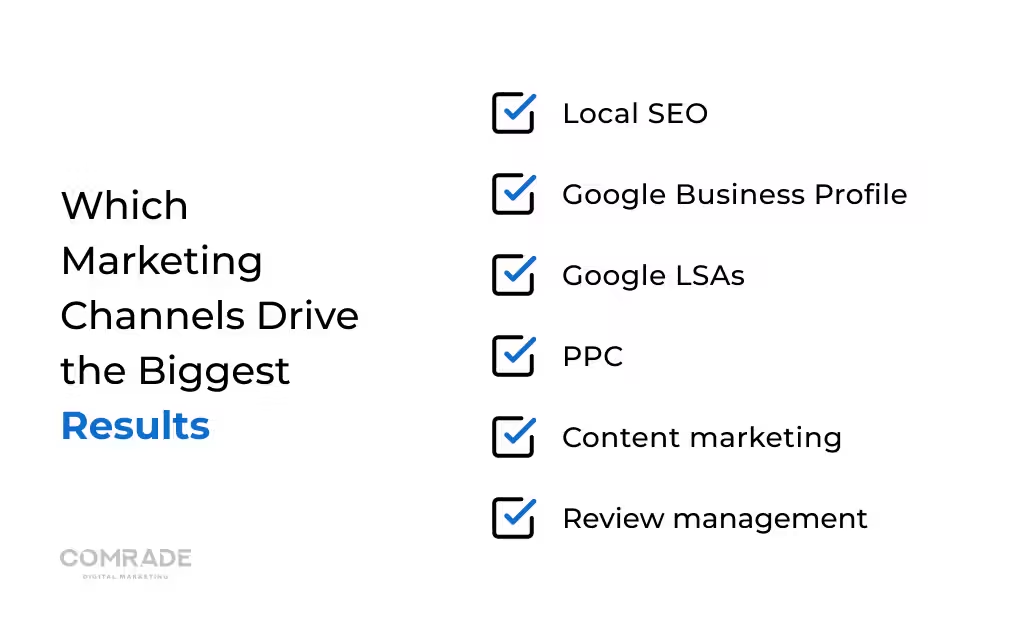
Which marketing channels drive the biggest results?
| Channel | Benefits | Estimated ROI | Timeline |
|---|---|---|---|
| Local SEO | Organic visibility in your service area | Lowest cost-per-lead long-term; $15–$40 per lead at maturity | 4–12 months to mature |
| Google Business Profile | Map pack placement for local and emergency calls | Free to maintain; high-intent traffic with no ad spend | Results visible within 30–60 days of optimization |
| Google LSAs | Top-of-page placement with the Google Guarantee badge | $20–$80 per verified lead; highest trust signal in paid search | Live within 1–2 weeks of approval |
| PPC | Fast visibility for searches like “rat removal in Charlotte, NC” | $20–$60 per click; species-specific campaigns convert 30–45% higher | Calls within the first week |
| Content marketing | Seasonal traffic spikes; spring and fall demand surges | Compounding returns over 12–24 months | 3–6 months for early traction |
| Review management | Credibility before the phone rings; 97% of customers read reviews before calling | Higher close rate on inbound calls; reduces price shopping | Ongoing; impact felt within 60–90 days |
Sick and Tired of Those Slow Seasons? Book Wildlife Jobs 12 Months a Year at Comrade.
9 Strategies for Marketing Your Wildlife Removal Business
We’ve tested these 9 tactics across dozens of wildlife removal companies since 2008. Clients have seen an ROI as high as 820% in the first 12 months.
Some tactics move fast, some take months to compound, but all of them work.
1. Rank for Key “Near Me” and City Searches with Local SEO
By optimizing your website with locally relevant keywords such as “wildlife removal in [City]” or “humane animal control near me,” you can improve your chances of appearing in search engine results when potential customers are looking for immediate help. For example, if your company operates in Atlanta, targeting keywords like “Atlanta raccoon removal” or “Atlanta bat removal services” will ensure your business ranks higher when someone in that area searches for those services.
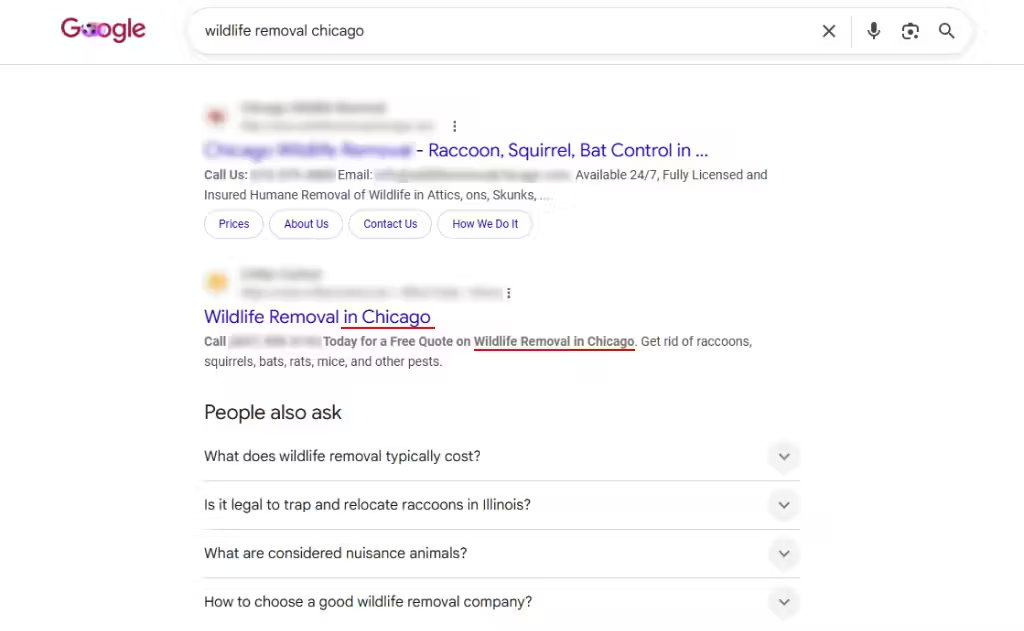
In addition to keyword optimization, creating local content that addresses the specific wildlife issues common to your service area can further enhance your SEO efforts. For instance, a blog post titled “How to Handle Snake Infestations in [City]” not only educates your audience but also incorporates geographically relevant keywords, making it more likely to appear in local searches. This localized content helps search engines understand the areas you serve, increasing the likelihood of your business appearing in local search results and Google Maps.
Furthermore, building a strong backlink profile by earning links from reputable local websites, such as local news outlets, community blogs, and business directories, can significantly boost your site’s authority and ranking.
Keep in mind, local SEO takes 4–12 months to mature. It’s not a quick fix, but it is the foundation everything else builds on.
Plus, it delivers the lowest cost-per-lead of any channel once it kicks in, often $15–$40 per lead compared to $60–$120 for paid ads.
Want to rank higher on Google? Discover the power of wildlife removal SEO and get more customers! Read now.
2. Attract More Local Calls with a Google Business Profile
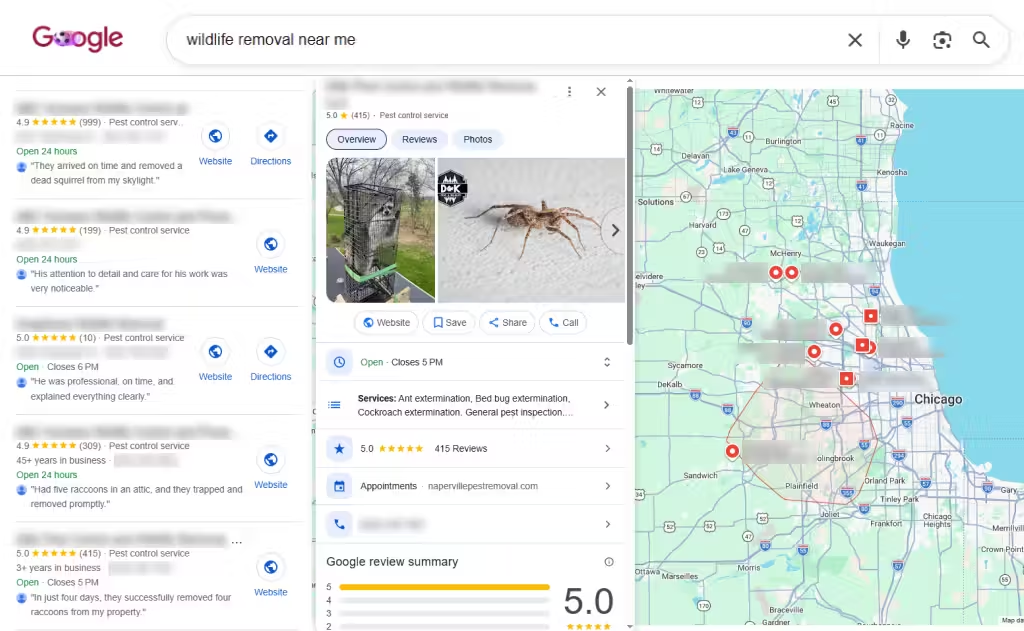
A Google Business Profile (GBP) is a free tool that lets you manage how your business appears on Google Search and Maps. It displays key details like your address, phone number, operating hours, website, and customer reviews.
It typically appears for local searches like “wildlife removal near me.”
One of our clients in the Phoenix area had a half-built GBP (no photos, inconsistent hours, no posts). After a full optimization, they jumped from position 7 to position 2 in the Map Pack within 60 days. Call volume went up 40% the following month.
Wish you had that kind of growth? Then optimize your GBP:
| GBP Element | Action | Benefit |
|---|---|---|
| Business info | Name, address, phone, hours, accurate and consistent everywhere | Inconsistencies tank your local ranking |
| Photos | Team, vehicles, completed jobs, before/after | Profiles with photos get 42% more requests for directions |
| Emergency services | List 24/7 availability explicitly in your services and description | Captures high-intent after-hours searches |
| Posts | Weekly updates, seasonal offers, species-specific tips | Signals to Google your profile is active |
| Reviews | Actively request after every job; respond to every one | Review velocity directly impacts Map Pack ranking |
| Q&A | Pre-populate with common questions about your services | Builds confidence and controls the narrative |
Really important: Be sure to explicitly add your emergency services to your GBP.
Wildlife removal is one of the few home service categories where after-hours calls are common. If your profile doesn’t clearly communicate 24/7 availability, those jobs go to whoever does.
3. Use Effective Wildlife Removal Lead Generation Sources
A bad lead is someone who Googled “how to get rid of raccoons,” found your number, and wants to know if they can buy a trap.
A good lead is a homeowner in your service area with a raccoon problem, who needs you there quickly.
That’s why the lead source matters. Across home services, the average lead conversion rate sits at just 7.8%.
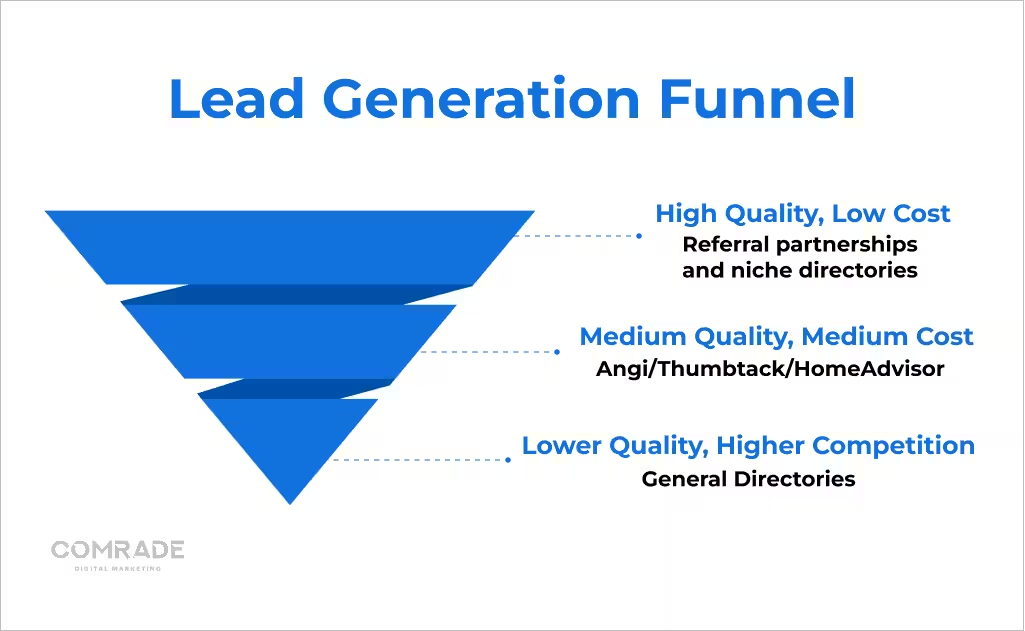
But you inch that number higher if you find the right lead source (like AAAnimalControl.com). That’s worth 3X the calls from a general directory.
Where do the best leads come from?
Pest control referral partnerships are the most underutilized source in this niche. Most pest control companies don’t handle raccoons, squirrels, or bats, but they get those calls constantly. Build relationships with 5–10 local pest control operators. These leads arrive pre-qualified!
Niche directories outperform general ones. Get listed on AAAnimalControl.com, your state Wildlife Control Operators (WCO) association directory, and national trapper directories.
Referral platforms like Angi, Thumbtack, and HomeAdvisor still drive volume, but treat them as a secondary channel.
Community sponsorships like local little leagues, neighborhood Facebook groups, and HOA newsletters to build low-cost brand recognition in the exact zip codes you serve.
| Lead Source | Lead Quality | Estimated Cost | Best For |
|---|---|---|---|
| Pest control referral partnerships | Very high | Near zero | Warm, pre-qualified bookings |
| Niche directories (AAAnimalControl.com, WCO) | High | Low (listing fees) | Serious searchers, licensed-pro seekers |
| Angi / Thumbtack / HomeAdvisor | Medium | $30–$80 per lead | Volume when calendar has gaps |
| Community sponsorships | Medium | Low | Brand visibility in target zip codes |
| General directories (Yelp) | Low–medium | Free–low | Supplementary presence only |
4. Bump Up Your Reputation to Stand Out in a Sea of Contractors
Wildlife removal isn’t a service people shop around for based on price. They’re stressed, they want the animal gone, and they want to know the person showing up is licensed, insured, and legitimate.
Trust really sells here.
Review automation is a must. ~50 reviews can put you in the Map Pack! Use automation tools (like Jobber, NiceJob, Podium, and Birdeye) to send a review request the moment a job is marked complete.
Bonus: AI tools like ChatGPT now pull from your Google Business Profile, BBB listing, and Yelp profile when deciding whether to recommend you.
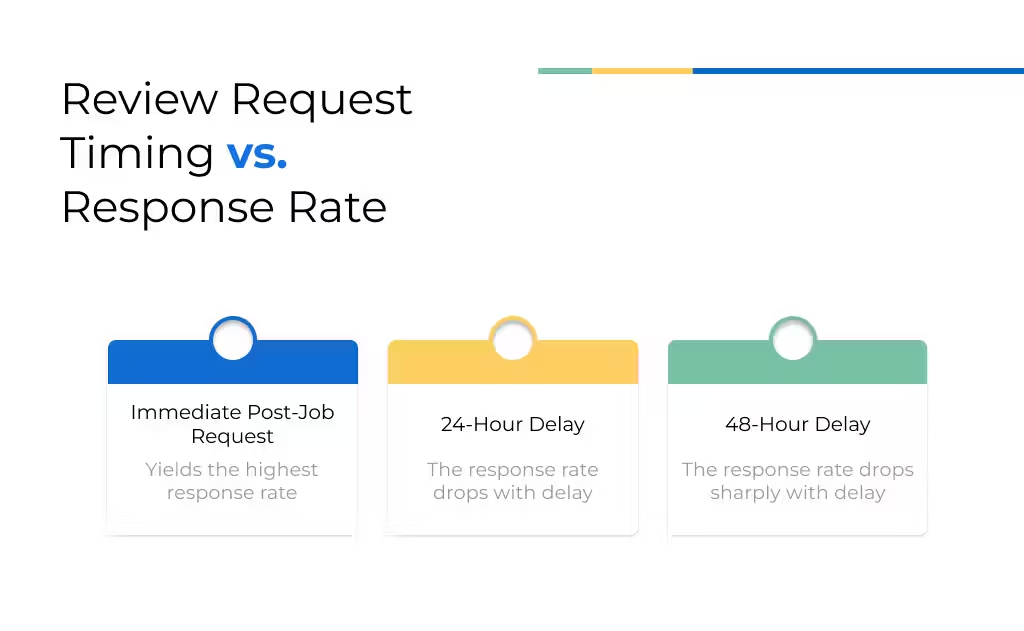
Nextdoor is underused in this niche. A single recommendation in a neighborhood thread: “these guys got a raccoon family out of my attic in Nashville, highly recommend” can generate 8–10 calls from that zip code alone.
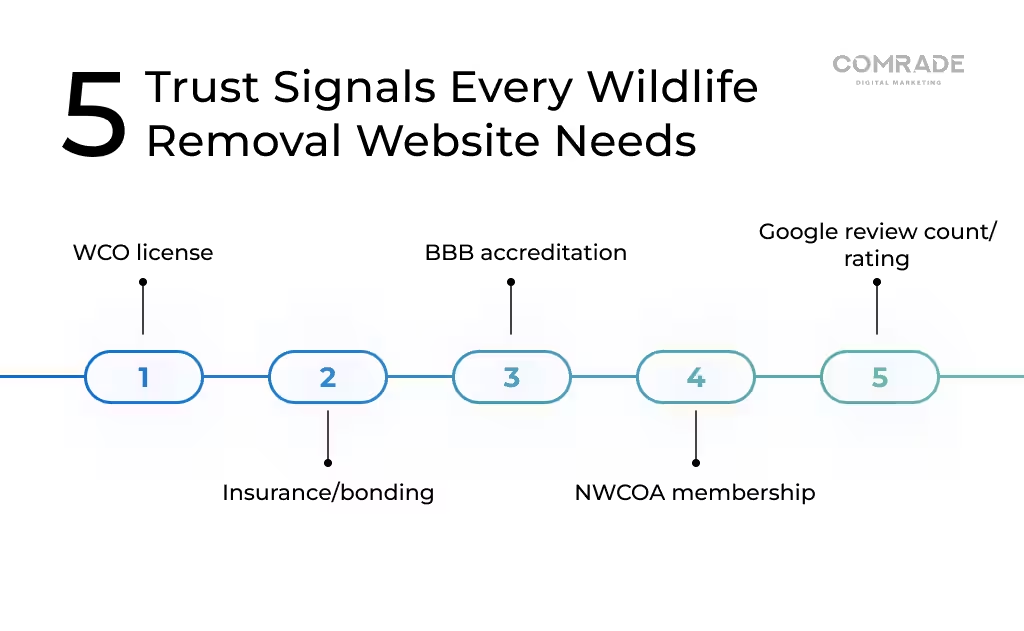
Licenses and credentials need to be visible everywhere: your website, GBP, and email signature. Display your WCO state license, proof of insurance, bonding, and BBB accreditation prominently.
Humane treatment is one of the most underused tools. NWCOA membership, humane trapping certifications, and an explicit no-harm guarantee resonate strongly with homeowners who are conflicted about the removal process.
We've Removed the Job Stress for 100+ Companies. Let Us Do the Same for Yours.
5. Capture Emergency Calls with PPC and Google Local Services Ads
Intrusive wildlife is something you can’t put off.
When your neighbor has a bat flying around their living room, they’re probably rushing to Google and clicking the first thing at the top of the page.
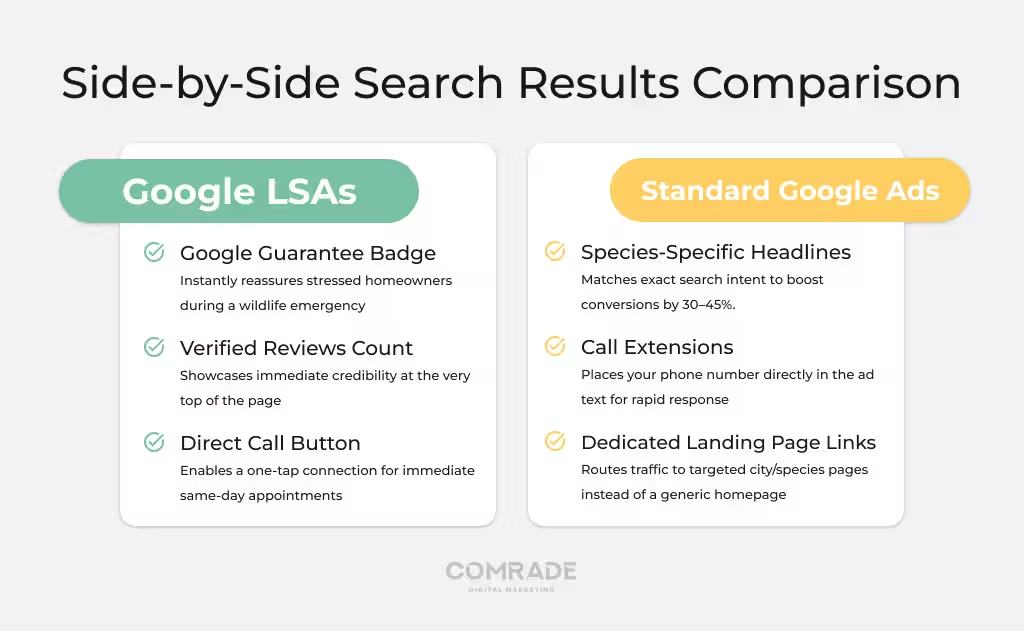
Cue PPC and Google Local Services Ads! These offer top placement with an average conversion rate of 4.8%. This means out of every 1,000 clicks, 48 people contact you.
Google Local Services Ads (LSAs) should be your first paid investment. Unlike standard Google Ads, LSAs display a “Google Guarantee” badge next to your business name. That’s valuable, as wildlife is a space where people are stressed about who they let into their home.
Google Ads layer on top of LSAs for broader keyword coverage. Expect to pay $20–$60 per click in most markets for wildlife removal terms. That sounds steep, but species-specific campaigns like “bat removal in Columbus OH,” convert 30–45% higher than generic terms like “wildlife removal.”
To really dial up your PPC performance:
- Build dedicated landing pages for each species and city combination, and outperform sending traffic to your homepage every time
- Use negative keywords like “wildlife photography,” “pest control DIY,” and “animal sanctuary” to filter out clicks that will never convert
- Add call extensions so your phone number is directly in the ad, and customers can call with one tap
- Add 24/7 ad scheduling, as wildlife emergencies don’t happen between 9 am and 5 pm
Want traffic fast? Learn the key differences between SEO vs SEM today!
6. Improving Your Website Speed and Usability
Your website has one BIG job: Get them to call you.
The average visitor decides whether to stay or leave in under 3 seconds. That’s pressure, right there.
Plus, 70% of home service searches happen on mobile, and in wildlife removal, that number skews even higher due to on-the-spot calls.
This is why your website must have a few non-negotiables:
- Phone number is clickable and visible without scrolling
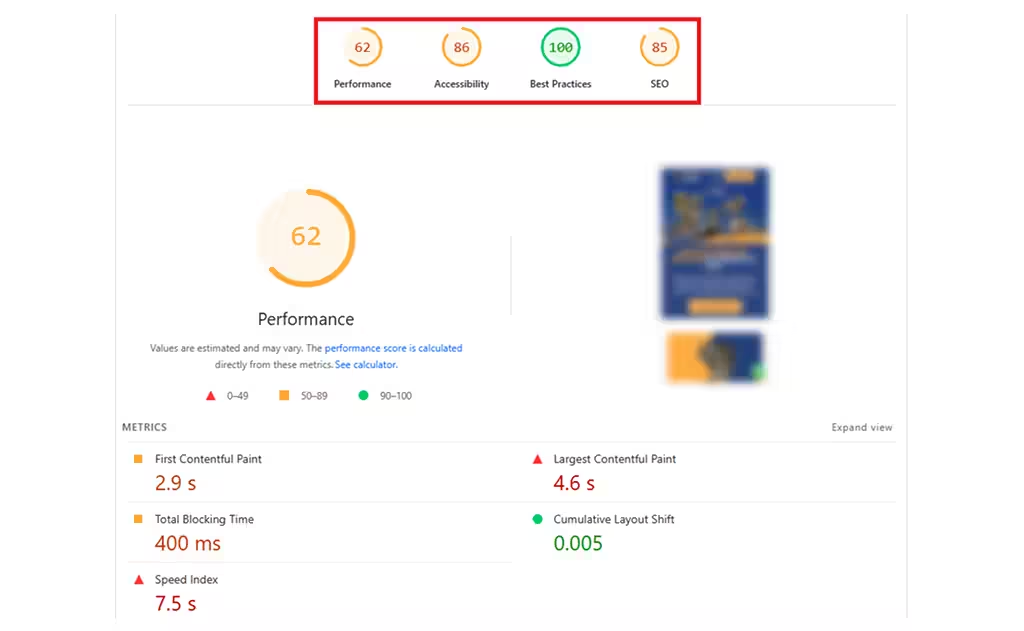
- Page loads in under 3 seconds on mobile
- Forms short enough (3 fields max) to fill out with one thumb
- No pop-ups blocking the screen on mobile devices
Page speed directly affects your conversions and rankings. Every additional second of load time reduces conversions by 7–10%. Compress images, enable browser caching, and minimize unnecessary scripts. Run your site through Google PageSpeed Insights to see your performance.
| Website element | Fix this | Benefit |
|---|---|---|
| Page load speed | Compress images, enable caching | Every extra second costs 7–10% in conversions |
| Mobile phone number | Clickable tap-to-call above the fold | 70% of searches happen on mobile |
| Navigation | “Emergency Service,” “Species,” “Service Area” in main menu | Visitors need answers in under 3 seconds |
| CTAs | “Call Now,” “Get a Free Inspection” on every page | Removes friction between visit and call |
| Forms | 3 fields maximum on mobile | Longer forms kill mobile conversions |
| Page speed score | 90+ on Google PageSpeed Insights | Affects both rankings and bounce rate |
7. Create Resourceful Local Content
A well-maintained blog can serve as a hub of knowledge for potential clients, addressing common questions and concerns while establishing your company as an expert in the field. For example, a blog post titled “5 Signs You Have a Squirrel Problem in Your Attic” can provide valuable insights for homeowners, guiding them on what to look for and when to call in professional help.
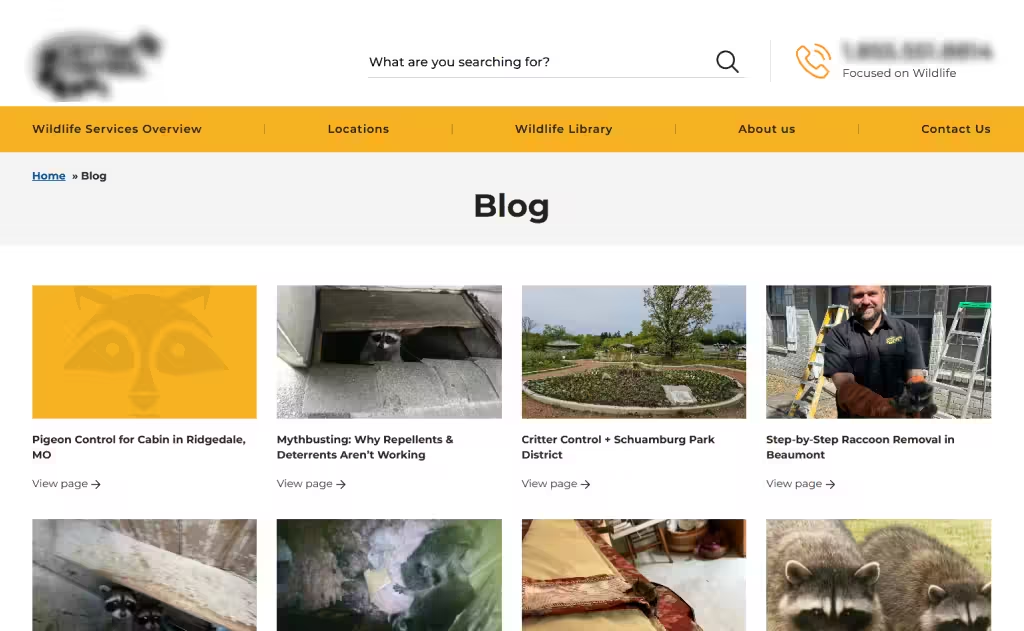
Blog posts can also be used to educate the public about the importance of humane wildlife removal methods and the dangers of DIY attempts. Articles like “The Risks of Trying to Remove Bats on Your Own” can highlight the expertise required for safe and legal wildlife removal, encouraging readers to choose professional services over attempting risky tasks themselves.
How a Simple Blog System Boosted Inbound Calls By 233.33%
In 2024, a wildlife removal company out of Denver came to us with a very sparse lead flow (they were seeing maybe 3 to 5 jobs a month).
We built them a full content system: 14 location pages and a monthly blog around topics like “How to handle raccoon denning season in Colorado.” Within 8 months, organic traffic had increased by 210% and inbound calls leaped from 30 to 100 per month.
Incorporating local SEO strategies into your blog content can also improve your search engine rankings. By including location-specific keywords and addressing wildlife issues common to your service area, you increase the likelihood of your blog posts appearing in local search results. For instance, a post like “Understanding the Wildlife Laws in [City]” not only educates but also helps your site rank higher for local searches.
8. Stay Visible with Social Media Marketing
Social media platforms like Facebook, Instagram, and Twitter offer unique opportunities to showcase your expertise in humane wildlife removal and control. For example, posting before-and-after photos of successful wildlife removal jobs or sharing videos that demonstrate safe removal techniques can highlight your skills and commitment to ethical practices, making your company more relatable and trustworthy.
Social media is also a powerful tool for community engagement. By sharing informative posts about local wildlife, such as tips on preventing animal intrusions or recognizing signs of an infestation, you can position your company as a valuable resource in your community.
Encouraging followers to ask questions or share their wildlife encounters can further increase engagement and foster a sense of community around your brand. Additionally, responding promptly to comments and messages demonstrates your company’s responsiveness and customer service, which can be a deciding factor for many potential clients.
How a Dormant Facebook Page Generated 2 Jobs in 90 Days
This isn’t just us saying it. Back in 2023, a wildlife removal operator in Nashville had a Facebook page of 180 followers and hardly any posts. We asked them to post 3 times a week: before and after job photos, short exclusion videos, and weekly local wildlife tips.
Nothing fancy. Within 3 months, the page had grown to 1,100 followers. More importantly, 2 booked jobs that month came from homeowners who said they’d been following the page!
Running targeted social media ad campaigns can further amplify your reach. For instance, promoting a seasonal offer on wildlife removal services during peak times, like spring or fall, when animal activity increases, can drive more traffic to your website and generate leads. By carefully selecting your target audience based on location, demographics, and interests, you ensure that your ads reach homeowners and businesses likely to need your services.
Your Competition is Already Trapping the Best Leads. Time to Set Your Own Snare.
9. Drive Repeat Business with Email Marketing for Wildlife Removal
Sending follow-up emails after a service has been completed is an excellent way to ensure customer satisfaction, address any lingering concerns, and remind clients of your other services. For example, after a successful raccoon removal, you might send an email thanking the client for their business, offering tips on preventing future infestations, and suggesting a follow-up inspection in a few months.
Promotional emails can also be highly effective in driving new business, especially when tied to seasonal needs.
By segmenting your email list, you can tailor your messages to different groups, such as offering a special deal to first-time customers or providing exclusive discounts to loyal clients who have used your services in the past.
Automation can streamline your email marketing efforts, ensuring that timely and relevant emails are sent without the need for manual intervention. Automated drip campaigns can nurture leads by providing educational content, testimonials, and case studies over time, gradually building trust and guiding prospects toward booking a service.
How Much Should You Budget for Wildlife Removal Marketing?
The standard benchmark for home service businesses is 5–10% of your annual revenue reinvested into marketing.
For a wildlife removal company doing $200,000 a year, that’s $10,000–$20,000.
But your budget allocation should shift by season. Front-load spend into Q2 and Q3 (the weeks before spring denning season and fall exclusion season), when conversion rates are highest.
Here’s how we typically recommend splitting a wildlife removal marketing budget:
| Channel | % of Budget | What it covers |
|---|---|---|
| Local SEO and AI search optimization | 45% | Service pages, local content, citations, link building |
| PPC + Google LSAs | 20% | Emergency keyword campaigns, species-specific ad groups |
| Website + UX | 15% | Speed, mobile optimization, landing pages, conversion rate |
| Content marketing | 10% | Seasonal blog content, location pages, FAQ content |
| Social + email | 10% | Retention campaigns, seasonal reminders, Nextdoor presence |
Budget by revenue tier:
| Annual Revenue | Recommended Budget | Monthly Spend |
|---|---|---|
| $100,000–$200,000 | $8,000–$16,000 | $650–$1,300 |
| $200,000–$500,000 | $16,000–$40,000 | $1,300–$3,300 |
| $500,000–$1,000,000 | $40,000–$80,000 | $3,300–$6,600 |
Start with LSAs and local SEO. LSAs produce calls within the first week.
SEO takes longer but compounds. Once both are running, layer in email and social to fill the gaps between paid campaigns.
How to Track Your Marketing Results
Most wildlife removal companies track website visits or rankings.
As we like to say, those do not pay the bills.
In this niche, you must track calls, jobs booked, cost per lead, and revenue. Set up 2 tools and connect them:
Google Analytics 4 (GA4) — the current standard since Universal Analytics was discontinued in 2023. In GA4, navigate to Reports > Acquisition to see which channels are driving traffic, and Reports > Engagement to see which pages are holding attention. Set up Key Events for form submissions and call button clicks under Admin > Events.
CallRail — tracks which ads, keywords, and pages are generating phone calls and feeds that data back into GA4 and Google Ads as offline conversions. Without it, half your conversion data is invisible.
| Metric | Tool | What does it tell you |
|---|---|---|
| Calls by source | CallRail | Which channel is driving real leads |
| Cost per call | GA4 + CallRail | Where your budget is working hardest |
| Landing page conversion rate | GA4 | Which pages turn visitors into callers |
| Seasonal call volume | CallRail | When to increase and pull back spend |
Take Action to Book Consistent, Profitable Wildlife Jobs
You just read 9 wildlife removal marketing strategies, all with one goal: filling your schedule with qualified jobs that don’t dry up in January.
But to execute this system well, it takes 10+ years of expertise and constant attention. Google’s algorithms change frequently, and staying ahead requires 40+ hours every week, along with a deep, technical knowledge of marketing.
Partner with Comrade today. We’ve been doing this since 2008 with dozens of wildlife removal clients across dozens of markets and every budget size. Our clients average an 820% ROI from SEO and Google Ads and see their leads grow by 400% in the first 12 months.
Never stress about a slow season again.
Book Your Free Strategy Call — let’s fix it.
Frequently Asked Questions
-
Should I consider hiring a digital marketing agency for my wildlife removal company?
Yes, if you’re serious about growing, you should consider hiring a digital marketing agency for your wildlife removal company. A good agency handles SEO, PPC, and content while you focus on running jobs. The key is finding one with at least 15 years of home service experience, not a generalist who’ll treat you like any other client.
-
How often should I update my digital marketing strategy?
Review it every 6 months at a minimum. The bigger triggers are seasonal shifts, a drop in call volume, or a competitor suddenly outranking you locally. Don’t wait for a full year if something stops working.
-
What are the most common marketing mistakes wildlife removal companies make?
Ignoring local SEO, running generic PPC campaigns instead of species-specific ones, not asking for Google reviews after every job, and treating your website like a placeholder instead of a lead generation tool are the most common marketing mistakes wildlife removal companies make.
-
How much does digital marketing cost for a wildlife removal company?
Budget 5–10% of annual revenue. A company doing $200,000 a year should plan to spend $10,000–$20,000 on marketing. Start with Google LSAs and local SEO, both deliver strong returns before you add anything else.
-
What is the best source of leads for a wildlife removal business?
Referrals from pest control companies that don’t handle wildlife, combined with strong local SEO and Google LSAs are the best source of leads for a wildlife removal business. Referral leads convert at nearly 6 times the rate of cold paid leads and cost almost nothing to generate once the relationships are in place.