
Do you have an HVAC business plan?
Brand-new HVAC businesses use it to define services, pricing, startup costs, and early marketing.
Seasoned companies use it to plan growth, hire staff, or expand into new service areas.
We strongly recommend building one. It acts like a crystal ball, helping prepare for challenges before they affect your operations. A solid business plan is also mission-critical if you’re applying for financing!
In the next 20 minutes, we’ll walk you through how to build an HVAC business plan, and drop a sample business plan template you can borrow. Keep scrolling!
Ready to 2.5x Your Lead Generation?
Join 330+ contractors who've transformed their business with our proven marketing strategies
What Is a Business Plan?
In simple terms, a business plan is a written roadmap for your HVAC business. It spells out:
- What the company actually does
- Who it serves
- How it makes money
- How it will grow without blowing up cash flow
For an HVAC company, that means putting on paper how the HVAC business model works:
- Which HVAC services are offered (repairs, installs, maintenance, IAQ, commercial contracts)
- How those services are priced
- How new HVAC customers are found and kept
- What the financial plan looks like over the next 1–3 years
Instead of hoping and praying you make good decisions, this is a document that guides you on hiring, marketing, pricing, and equipment expenses.
Why Do You Need an HVAC Business Plan?
Most HVAC businesses fail for business reasons, not technical reasons. The techs know how to fix air conditioning systems and furnaces. The trouble usually shows up in areas like:
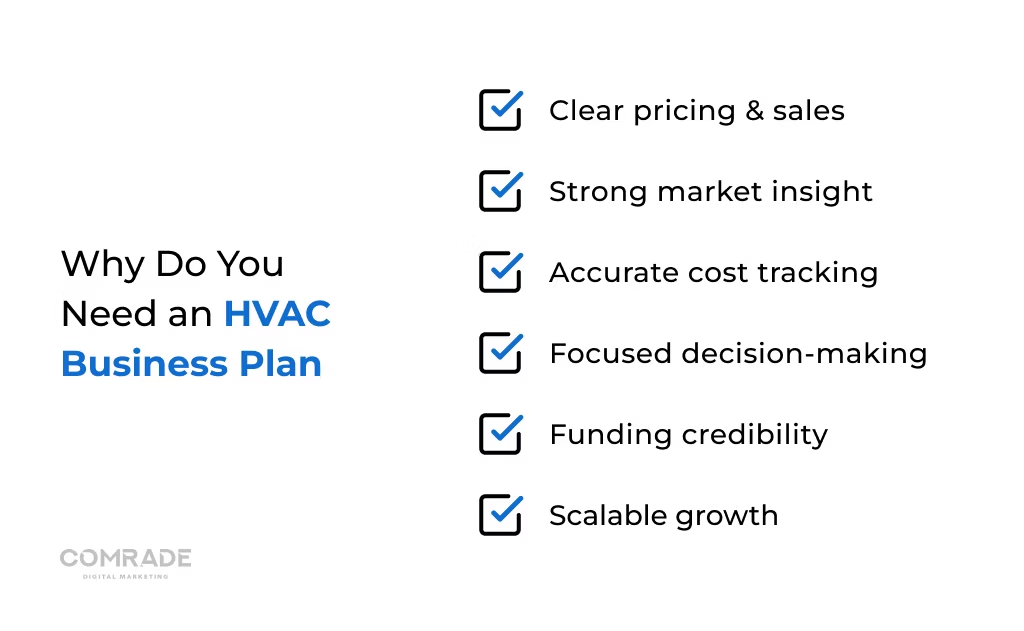
- No clear pricing strategy
- No predictable sales strategy
- No written marketing plan
- Weak understanding of the local HVAC market and competitors
- Poor tracking of cash flow and costs involved in each job
71% of businesses with a clear business plan report achieving their growth targets.
A solid HVAC business plan helps in three big ways:
- Direction and focus: The owner stops chasing every idea and starts asking: “Does this move the company toward the main business goals?”
- Funding and credibility: Banks, partners, and potential investors want to see real numbers and real planning. A clean HVAC company business plan is the language they speak.
- Scalable operations: As more HVAC techs, more trucks, and more service calls pile up, problems multiply. A written plan for business operations keeps the company from collapsing under its own growth.
Whether starting an HVAC business from scratch or trying to organize an existing one, an effective HVAC business plan becomes the backbone of a successful business.
Stop DIYing it. Learn how HVAC marketing agencies can skyrocket your growth. Read the blog.
How to Create a Great HVAC Business Plan
The goal isn’t a thick document but a clear one built around four ideas that matter more than anything else.
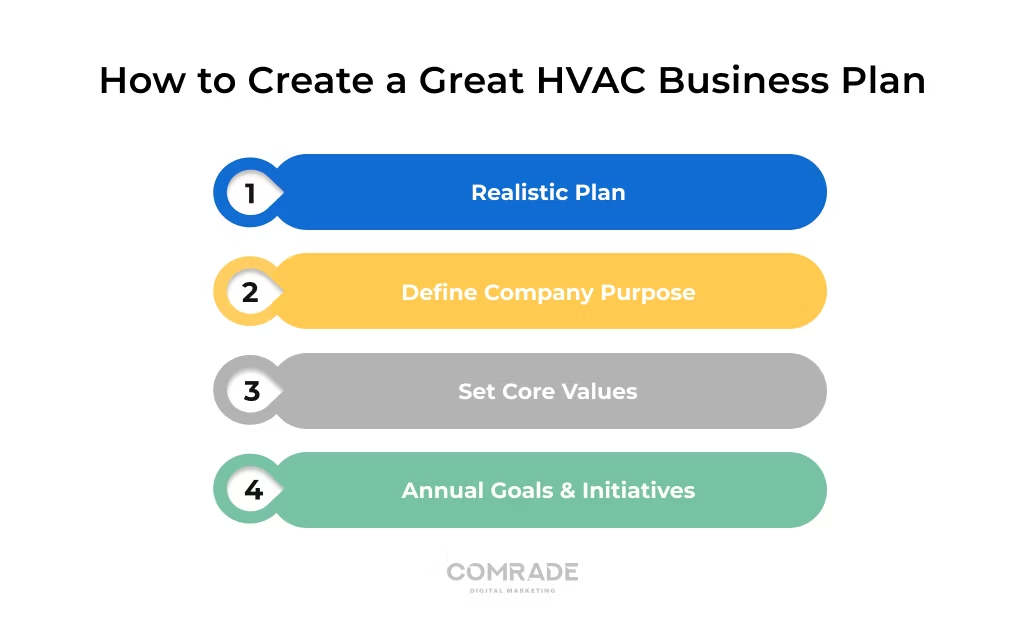
1. Have a Realistic Plan
A realistic HVAC startup business plan does not assume “we’ll just double every year.”
Revenue targets should be based on real numbers:
- How many jobs can each tech realistically run per day
- What the average ticket is now, and what it could be with a better sales process
- How much marketing it takes to generate enough service calls
If the HVAC business is doing $400K right now, going to $800K next year may be aggressive but possible. Jumping to $4M in 12 months with the same number of HVAC technicians and trucks is a fantasy.
2. Think About Your Purpose for Your Company
A strong HVAC business plan starts with a purpose that the team can rally around. For example:
- Keeping families in a specific area safe and comfortable all year long, with honest advice and clear pricing
- Helping small commercial buildings lower energy bills and avoid emergency breakdowns through smart maintenance
That purpose becomes the mission statement inside the plan. It also drives your company culture and the way service techs communicate with homeowners or facility managers.
79% of small businesses with a defined marketing plan report an increase in revenue.
3. Establish Certain Company Values
Values are the practical rules for how work gets done, shaping both customer satisfaction and internal behavior.
Examples that fit a modern HVAC company:
- Educate before selling; customers should understand options, not feel pushed
- Arrive on time or communicate clearly if delayed
- Protect the home or job site as if it were the technician’s own
So, HVAC techs know what “excellent customer service” actually means day to day.
4. Enlist Yearly Initiatives and Goals
A plan without goals is just a story.
For the next 12 months, the HVAC business plan should lock in clear, measurable targets, such as:
- Total revenue and profit margin
- Number of active maintenance agreements or memberships
- Average ticket for service calls and installs
- Number of new customers per month from digital marketing, referrals, and other channels
- Hiring needs for HVAC technicians, CSRs, and management
Once those are on paper, every marketing tactic, hiring decision, and major purchase can be judged against those goals.
A truly effective HVAC business plan is short enough to read, clear enough to act on, and flexible enough to update when reality changes.
HVAC Business Plan Template
The following sections form a practical HVAC business plan template. Each part can be expanded or shortened depending on the size and maturity of your company.
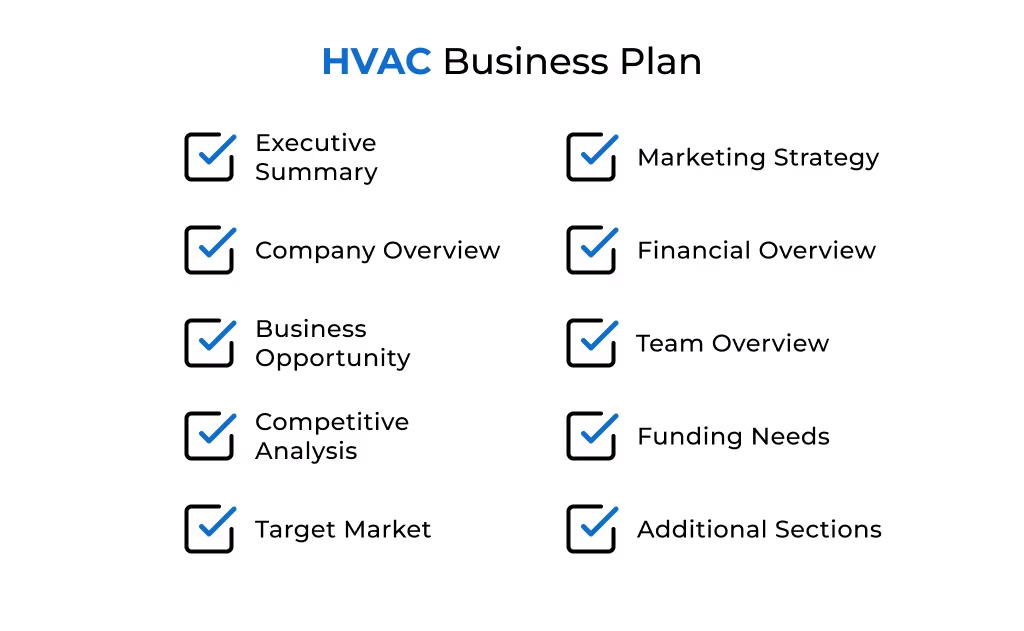
1. Executive Summary
The executive summary is a one-page overview of your entire plan. It is usually written last but appears first.
It should include:
- Business name, location, and basic company summary
- Mission statement
- Main HVAC services offered (residential or commercial, repair, installation, maintenance, IAQ, etc.)
- Description of the HVAC business model (one-off jobs, service agreements, replacement focus, memberships, commercial contracts)
- Target market and service area
- Brief financial snapshot (current revenue, target revenue, profit goals, estimated startup costs if new)
- Competitive advantage compared to most HVAC contractors in the area
Anyone reading just this page should understand how the HVAC business intends to grow and make money.
2. Your Company Description
This section gives more context and background covering:
- How and when the company started (or when it will launch)
- Legal business structure (sole proprietor, partnership, LLC, corporation)
- Ownership details and any key partners
- Trade name and branding, if different from the legal name
- Service area and basic description of the market
- Company culture, vision, and long-term goals
Think of this as the “about the business” page inside the plan, similar to a business overview on a website but more detailed.
3. The Business Opportunity
Here, the plan explains why this HVAC company should exist in this specific market.
Key points to explore:
- Current industry trends in the local HVAC market: aging housing stock, growth in new builds, extreme weather patterns, demand for energy-efficient and smart air conditioning systems
- Gaps in available HVAC services: slow response times, lack of 24/7 coverage, poor communication, no financing options, weak maintenance offerings
- Positioning of the company: emergency-focused, comfort-focused, energy-efficiency experts, indoor-air-quality driven, or another clear angle
This is also a good place to briefly describe any HVAC business model innovation your company plans to bring in, such as unique memberships, performance guarantees, or flexible subscription-style service contracts.
4. Competitive Analysis
The HVAC business plan should identify:
- The main competitors in the service area (both big brands and strong local independents)
- What those competitors do well: visibility, branding, aggressive offers, financing, long history, large teams
- Where they fall short: weak online reviews, slow response, confusing pricing, no real marketing strategy, and poor customer communication
This market analysis does not need to be complicated. A few evenings of reviewing websites, Google reviews, and visible marketing tactics can reveal a lot.
The goal is to define how your company will stand out.
Dominate your market with HVAC local SEO. See how in the blog.
5. Your Target Market
Not every potential customer needs to be served; a clear target market keeps both marketing costs and operations under control.
An effective HVAC business plan example will define:
- Residential, commercial, or mixed focus
- Income level and typical home or building value
- Age and type of properties in the main service area
- Typical problems those customers experience (frequent breakdowns, old systems, high utility bills, poor air quality)
- How often they typically need HVAC services, and what triggers most service calls
Clarity here makes it easier to select neighborhoods for direct mail, keywords for SEO and paid ads, messaging for social media marketing, and offers that actually resonate.
6. Marketing Plan
Your HVAC business marketing plan turns “we need more customers” into a specific strategy plus specific actions.
It should describe:
- Your core marketing message: what the company stands for and why prospective customers should care
- The key channels: website and SEO, Google Business Profile, Google Local Services Ads, paid search, social media marketing, email and SMS, direct mail, and referral programs
- How each tactic will be used: what is posted, what is mailed, what is advertised, how often, and with what budget
- How leads will be tracked and attributed, so the company knows which campaigns generate profitable jobs
Modern HVAC customers live online, so it’s essential to remember they search, check reviews, fill out forms, and text. A strong digital marketing plan helps the company show up at every step, while traditional methods like direct mail and door hangers can still play a role in the right neighborhoods.
Want more bookings? Get the lowdown on HVAC digital marketing. Read the blog now.
7. Financial Summary
This section of your HVAC business plan often matters most to lenders and investors. It answers the question: “Will this actually make money?”
A strong financial plan will outline:
- Your startup costs (if new): vehicles, tools, initial inventory, insurance, licensing, office, branding, launch marketing, and software
- Ongoing fixed costs: rent, insurance, software, admin staff, marketing retainers, phone systems
- Variable costs: employee pay for HVAC techs, fuel, materials, and equipment expenses tied to each job
- Pricing strategy: hourly rates vs flat-rate pricing, markups on parts and equipment, service call fees, membership pricing
- Sales forecast: expected number of service calls, average ticket, close rates on replacement leads, seasonal peaks and slow periods
- Cash flow expectations and minimum cash reserve targets
Even a simple spreadsheet with monthly revenue and expense projections for 12-24 months can help you avoid surprises, especially in shoulder seasons where work slows.
60% of small business failures are attributed to poor cash flow management.
8. Team Info
This section should briefly describe:
- Your management team and their responsibilities
- Key HVAC professionals and their certifications or experience
- How your company plans to hire, train, and retain HVAC technicians and CSRs
- Long-term staffing plans: how many techs, installers, and support staff will be needed as certain revenue milestones are reached
Investors and banks like to see that there is leadership in place, or at least a clear plan for building a reliable management team over time.
9. Funding Requirements
When you need an external, clarity here is critical. Your calculations should include:
- How much funding is required
- How it will be used (trucks, tools, marketing, working capital, hiring)
- The time frame for the deployment of funds
- The expected impact on revenue and profitability
Numbers do not have to be perfect, but they should be reasonable and connected to your sales forecast and marketing strategy earlier in the plan.
Before you burn more cash, read our HVAC PPC tips. Fix your ads today.
10. Other Inclusions for Your HVAC Business Plan
Beyond the mentioned sections above, you can also cover in your plan:
- A day-to-day operations plan: your dispatch process, job costing, inventory systems, supplier relationships
- Customer service standards and guarantees: arrival windows, communication expectations, satisfaction policies
- Training programs: how new hires, especially apprentices, are trained up
- Risk analysis: what could disrupt your business (supply issues, seasonality, economic downturns) and how the company would respond
These additions help turn your plan into a real operating guide.
An HVAC Business Plan Is a Plan for Your Success
Most HVAC techs know how to fix systems… BUT, the ones who end up owning a successful HVAC business should go one step further and learn how to design a clear, effective HVAC business plan.
That plan connects the dots between your HVAC business model, market analysis, sales strategy, digital marketing, operations, and financial reality.
With it, growth stops being a gamble and starts becoming a process. Without it, even busy HVAC businesses can stall out or quietly bleed cash.
The core structure is simple: use our HVAC business plan template, tailor it to your market, and refine it as you go. This habit sets successful HVAC companies apart.
Boost your business with our HVAC marketing services!
HVAC Business Plan FAQs
-
How much investment will I need to start an HVAC business?
The costs involved in starting an HVAC business depend on how big the launch should be. A lean start with one truck and the owner as the primary HVAC contractor requires significantly less capital than launching with multiple crews and a shop.
Startup costs typically include at least one reliable vehicle, a full set of tools, initial stock of common parts and equipment, licensing, insurance, a basic office setup, HVAC business software, branding, and an initial marketing push.. -
What are some funding sources for HVAC companies?
Common funding options include personal savings, bank loans, SBA loans, equipment financing, lines of credit, and sometimes outside investors or partners. Strong financial projections inside the HVAC business plan example are what typically persuade lenders to say yes.
Vendors and suppliers may also offer terms that effectively provide short-term financing for equipment, as long as job costing and cash flow are carefully monitored.. -
What equipment do I need when starting my business?
Every sample HVAC business plan pdf tends to include an equipment list, and for good reason. The core items generally include a dependable van or truck, hand tools, diagnostic tools, gauges, vacuum pump, recovery machine, ladders, and safety gear.
Your company will also need phones, a basic office setup, and software for dispatching, invoicing, and customer management. Even a very small operation benefits from a simple CRM that tracks service calls and customer history.